Demolition and Asbestos Removal: How to Plan the Work Safely
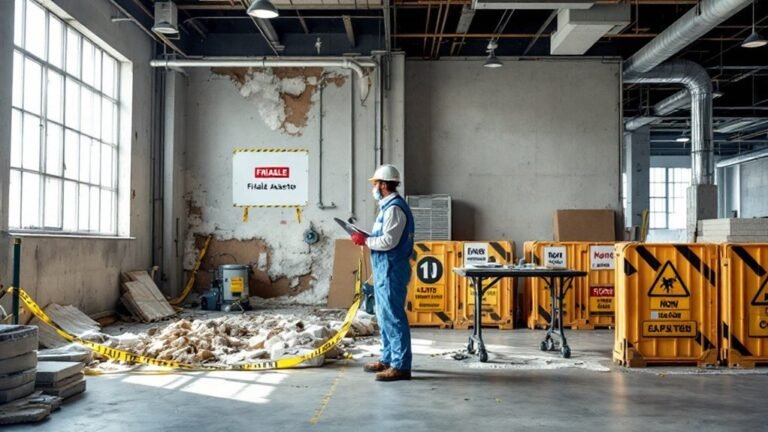
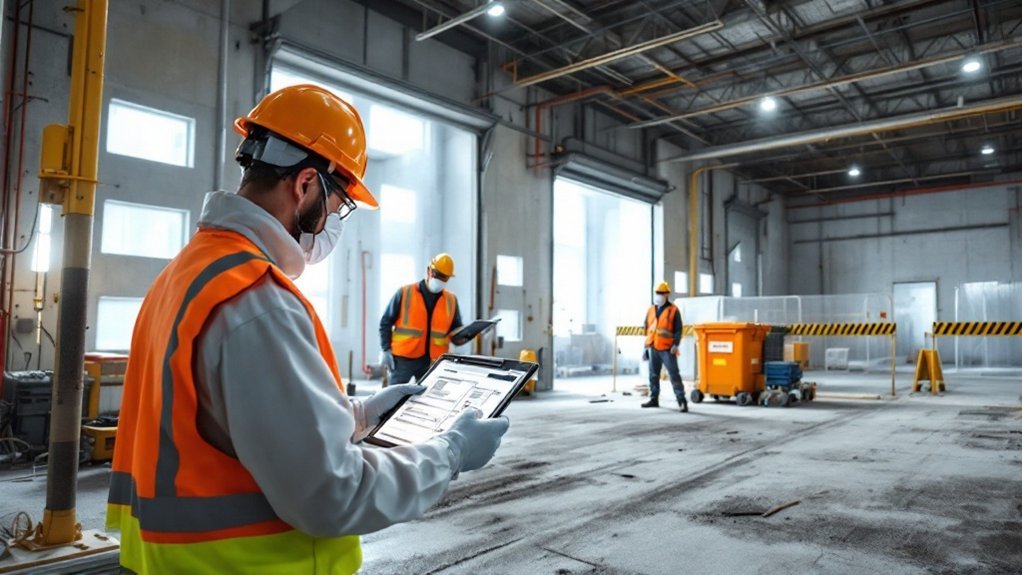
We’ll treat hidden building fabric as suspect until sampling proves otherwise, and stop work immediately if asbestos appears. We’ll verify WHSQ, council, demolition and asbestos licences, submit required notices, and check removalist credentials. We’ll secure exclusion zones, confirm the ARCP, train workers, fit-test PPE, wet ACM, contain runoff, monitor air, obtain clearance, and dispose of sealed, labelled waste at authorised facilities. The steps below show how to sequence those controls safely before structural demolition begins.
Test Hidden Materials Before Demolition Starts
Where do we start? We start by treating concealed building fabric as suspect until proven otherwise.
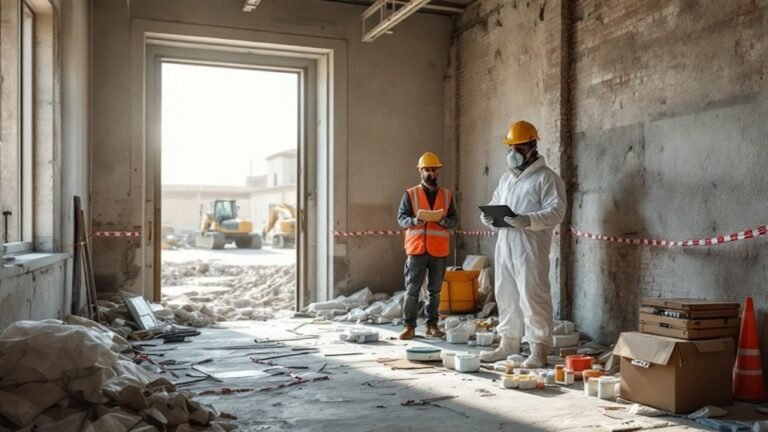
Asbestos registers and hazardous materials surveys often rely on non-intrusive inspections, so they can miss materials hidden behind wall sheeting, floor coverings, wet area tiles, cladding, and even bath linings.
If the asbestos content is uncertain, we either arrange sampling and analysis by a competent person or presume asbestos is present.
We don’t let drawings, age, or visible condition close the risk assessment.
Buildings constructed or renovated before 2000 can contain concealed asbestos.
Before demolition sequencing begins, we inspect intrusive access points, test latent hazards, and adjust the work method so machinery doesn’t break unknown material and expose workers or the public during each work stage before stripping.
Check WHSQ, Council, and Licence Requirements
Before we approve demolition, we’ll verify the asbestos licence class with you: Class A is required for any friable asbestos, and Class A or B may be required when more than 10 m² of non-friable asbestos will be removed.
We’ll also confirm whether the licensed removal or demolition work must be notified to WHSQ at least five business days before it starts.
Finally, we’ll check the local council’s approval requirements and any WHS Regulation demolition licence obligations before work proceeds.
WHSQ Notification Requirements
When we plan demolition or asbestos removal in Queensland, we’ll confirm WHSQ notification requirements, local council approvals, and licensing obligations before work starts.
Before notifying WHSQ, we’ll classify the work. Licensed asbestos removal of more than 10 m² of non-friable asbestos needs an A or B class licence; all friable asbestos removal needs class A. A demolition licence may be required under the WHS Regulation, separate from asbestos licensing.
| Work type | WHSQ action |
|---|---|
| Licensed asbestos removal | Submit notification content covering licence, location, dates, asbestos type |
| Certain demolition | Submit separate notification; observe notification timing at least five business days before starting |
We’ll submit WHSQ notices at least five business days before work begins, using separate notices for licensed asbestos removal and demolition where both apply.
Council Approval Checks
Alongside WHSQ notification checks, we’ll confirm council demolition approval and licensing requirements before any demolition or asbestos removal starts.
We’ll review the local authority’s demolition permits, development consent conditions, and site-specific controls, including exclusion zones, dust, noise, traffic, and waste handling.
Where a DA, CDC, or council approval is required, we’ll confirm it’s issued, current, and matched to the planned scope before work is scheduled.
We’ll also check whether neighbour consent or formal neighbour notification is needed, including any required timing such as seven days before commencement.
For unit-titled blocks, we’ll coordinate with body corporate obligations and applicable management legislation.
These checks reduce enforcement risk and help keep workers, occupants, and adjoining properties safe.
We’ll record approvals, conditions, correspondence, and inspection evidence on file.
Licence Class Verification
Licence class verification is our gate check for lawful asbestos removal and demolition. We confirm the removalist’s licence class against asbestos type and quantity: any friable asbestos needs Class A, while more than 10 m² of non-friable asbestos requires Class A or Class B under the WHS Regulation.
We complete Licence expiry checks, match the contract entity, and verify cross state reciprocity before relying on an interstate licence.
We check WHSQ records, then arrange required notification for licensed asbestos removal and demolition before work starts. If SafeWork NSW applies, we’ll allow at least five business days and lodge separate notifications.
We’ll also confirm council demolition approval and any WHS demolition licence. We then verify an Asbestos Removal Control Plan exists before controlled site demolition.
Prepare the Required Asbestos Removal Control Plan
Before demolition starts, we’ll confirm the licensed asbestos removalist prepares the Asbestos Removal Control Plan (ARCP), the written control document that governs the asbestos removal task.
| Control item | Required ARCP detail |
|---|---|
| Safe work | Task-specific methods, sequencing, isolation, tools, wetting, and exposure limits. |
| Worker training | Competency records, supervision, PPE use, fit testing, and toolbox talks. |
| Decontamination | Worker, equipment, and removal-area cleaning, waste transfer, and hygiene controls. |
| Waste disposal | Containment, labeling, transport, disposal records, and contaminated-material segregation. |
We’ll review the ARCP against the *How to Safely Remove Asbestos Code of Practice 2021* before work proceeds. It must set clear roles, responsibilities, health monitoring requirements, and emergency procedures for incidents, exposure, fire, or system failure. We’ll also check decontamination procedures and waste containment protocols are task-specific, not generic, so crews can follow them under site conditions before any demolition disturbance begins on this project using agreed controls.
Notify WHSQ, Council, Neighbours, and Occupiers
With the ARCP confirmed, we’ll lodge all required notices before any disturbance occurs.
- We’ll notify WHSQ at least five business days before licensed asbestos removal starts.
- In New South Wales, we’ll submit separate demolition and asbestos removal notifications to SafeWork NSW, also five business days ahead.
- We’ll check council approval and any Development Application consent, including neighbour notification periods, such as seven days.
- We’ll provide neighbours within two properties of pre-2000 buildings a letter and demolition information pack, documenting neighbour consent where required.
- We’ll inform owners, occupiers, and tenants early, confirming tenant relocation, work dates, and site contacts.
We’ll keep evidence, approvals, delivery confirmations, and approved correspondence on the project file so inspectors, owners, and affected parties can verify compliance without delay before mobilisation.
Barricade the Work Area and Stop Work if Asbestos Appears
Before demolition starts, we’ll establish a clearly signposted exclusion zone with barricades to keep unauthorised people out of the asbestos removal area.
We’ll position perimeter air monitors before removal begins and keep them running until structural demolition is complete so fibre escape can be detected early.
If asbestos-containing material appears unexpectedly, we’ll stop work immediately, make the area as safe as practical, and won’t resume until it’s removed in accordance with Part 9 of the Code of Practice.
Secure Work Zone
Once we’ve confirmed the asbestos removal area, we’ll establish a signposted, barriered exclusion zone before work starts, using fencing and fence wrap to prevent unauthorised access as required by the *How to safely remove asbestos Code of Practice 2021*.
- We’ll place clear work zone signage at every entry, showing the expected start date, demolition schedule, and contractor contact details.
- During barricade installation, we’ll fit fence wrap tightly, with no gaps, so no one enters the exclusion zone.
- Air monitors must be fixed to the perimeter fence before removal starts and stay until structural demolition ends.
- We’ll inspect barriers each shift to confirm signs remain visible, readable, and correctly positioned.
- If asbestos-containing material appears, we’ll secure the affected area until licensed removal is fully completed.
Stop Work Immediately
After the exclusion zone is secured, we’ll treat any unexpected asbestos discovery during demolition as an immediate stop-work event.
We’ll shut down plant, stop cutting or breaking, and keep workers out until controls are confirmed.
The suspect material stays undisturbed, the contaminated zone is signposted with asbestos warning signs, and physical barricades prevent unauthorised access.
We’ll contact a licensed asbestos removalist, not general demolition labour, to assess and remove the material.
We’ll also document the emergency response, notify supervisors, and preserve records for compliance review.
Demolition can’t restart after an inspection delay; it resumes only after independent air monitoring and clearance inspection by a competent person or licensed assessor confirms the area is safe.
We’ll verify barricade integrity before handover to the demolition supervisor.
Train Workers and Select PPE by Risk
Two controls must be in place before work starts: we’ll verify that every worker holds the VET certification specified in the ARCP, and we’ll train them on asbestos hazards, ACM recognition, safe removal methods, and the site-specific safe work statements.
We’ll maintain Worker oversight, training records, and incident documentation, so any exposure is traceable and corrected.
- We’ll select PPE from the risk assessment: safety boots, boot covers, disposable coveralls, and respiratory protective equipment.
- We’ll brief workers on ACM locations, damage indicators, and stop-work triggers.
- We’ll fit-check respirators and confirm compatible cartridges before entry.
- We’ll inspect for tears, seal failures, or contamination before use.
- We’ll double-bag single-use masks and coveralls in heavy-duty plastic bags, twist, fold, tape-seal, and label bags as asbestos waste after removal.
Wet, Scrape, and Control Runoff During Removal
Moisture is our primary fibre-suppression control during removal: we’ll use the wet spray method to saturate asbestos-containing surfaces before and throughout disturbance.
| Step | Visual | Control |
|---|---|---|
| Wetting | Damp, not dripping | Fibres stay bound |
| Soil scrape | 30–50 mm depth | Double 200 µm wrap |
| Runoff | Bunded sump | No off-site spread |
We add wetting agents when they improve particle suppression, but saturation must remain visible. We’ll keep nozzles ready so the wet spray stays effective during cutting, pulling, and handling. All run-off must be diverted to bunded areas, sumps, or lined containment before it contaminates ground or drains. After demolition, our soil scrape should remove 30–50 mm beneath the footprint. We’ll wrap contaminated soil in two layers of 200 µm polythene, seal and label it for lawful disposal.
Monitor Air and Get Clearance Before Demolition
Before structural demolition starts, we’ll set up air monitoring as a live control, not a paperwork step.
- For class A asbestos removal, we’ll engage an independent licensed asbestos assessor to conduct mandatory air monitoring.
- We’ll position air monitors on perimeter fences before removal begins and keep them operating until structural demolition is complete.
- We’ll use passive monitors and real time analysis to detect fibre movement early and trigger containment adjustments.
- Before demolition, we’ll arrange clearance inspection by a licensed asbestos assessor for class A work, or an independent competent person for class B.
- We won’t proceed until an independent Asbestos Clearance Certificate is issued; if visible asbestos debris remains, we’ll remove it and reassess.
Soil sampling is unnecessary once visible asbestos debris is gone.
Double-Bag and Dispose of Asbestos Waste
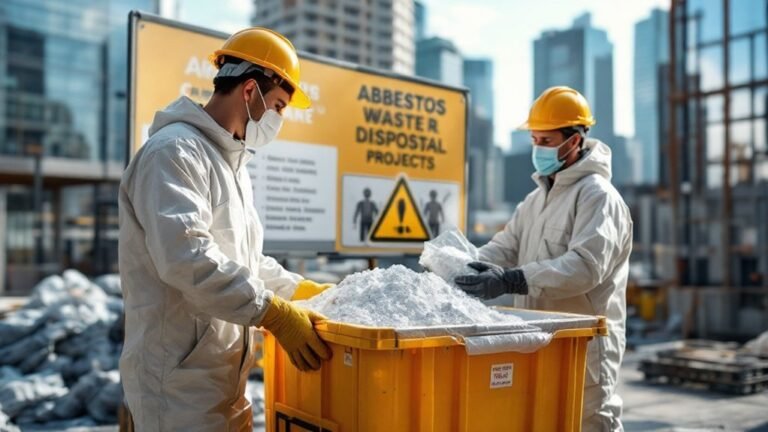
Once asbestos-containing material, PPE, and disposable items are removed, we’ll double-bag all asbestos waste in heavy-duty plastic bags at least 200 µm thick. We’ll twist each bag at the neck, fold the neck over, and seal it tightly with adhesive tape so fibres can’t escape during handling.
Every sealed bag must then be marked “Asbestos Waste,” matching regulatory labelling requirements before it leaves the controlled area. We won’t place it in ordinary skips or wheelie bins, because many providers refuse asbestos.
Before transport, we’ll confirm the receiving site is authorised for special waste and arrange approved disposal. We’ll complete the required special waste disposal declaration, record bag thickness, and keep paperwork available for inspection.
Prompt disposal reduces storage risk and protects workers, occupants, visitors.
Frequently Asked Questions
How Much Does Asbestos Testing Usually Cost?
Asbestos testing usually costs $25–$50 per sample, or $250–$800 for a residential survey. We’ll explain that accurate pricing depends on sample types, lab methods, access complexity, and required documentation for safe work planning before disturbance.
How Long Does Full Asbestos Removal Typically Take?
Full asbestos removal typically takes one to five days for contained residential areas, longer for complex sites. We’ll plan containment setup, air monitoring, clearance testing, and disposal to reduce Renovation delays, safety risks, and rework.
Does Homeowners Insurance Cover Asbestos Removal?
Usually, we don’t expect homeowners insurance to cover asbestos removal unless a covered peril caused the damage. We’d review Policy exclusions, document hazards, follow the Claim process, and hire licensed abatement contractors for safety compliance.
Should Utilities Be Disconnected Before Demolition?
Yes, we’ll isolate utilities before demolition. We’ll verify gas safety, cap water mains, shut electricity, and secure telecoms. We’ll document permits, lockouts, tests, and competent supervision to prevent ignition, flooding, electrocution, and hazardous releases onsite.
How Are Heritage-Listed Properties Handled Differently?
We treat heritage-listed properties differently: we preserve fabric before demolition, so you’ll need a structural survey, heritage consent, and documented controls. We don’t claim safety exemptions; we sequence work to protect people and significant materials.
Final Thoughts
We’ll treat asbestos as a live demolition risk until testing, licences, notifications, controls, and clearance prove otherwise. We’ll plan the work with WHSQ and council requirements, isolate the area, train every worker, and use PPE matched to exposure. If suspect material appears, we’ll stop, wet it down, and reassess. We’ll bag, label, transport, and dispose of waste lawfully. Together, we’ll keep dust contained, records complete, and people protected before demolition proceeds and throughout the project.