Asbestos in Eaves: What to Know Before Demolition
Before demolishing older homes, we must recognize that asbestos often hides in eaves, sealed behind paint or newer layers. Visual checks aren’t reliable; only licensed inspectors can safely confirm asbestos presence through testing. Disturbing asbestos can release hazardous fibers, risking health and causing costly delays. Professional removal involves strict containment and clearance certification to guarantee safety. Understanding these critical steps helps us manage risks, timelines, and costs effectively, with further details outlining how this process unfolds.
Why Asbestos in Eaves Is a Hidden Danger in Older Melbourne Homes
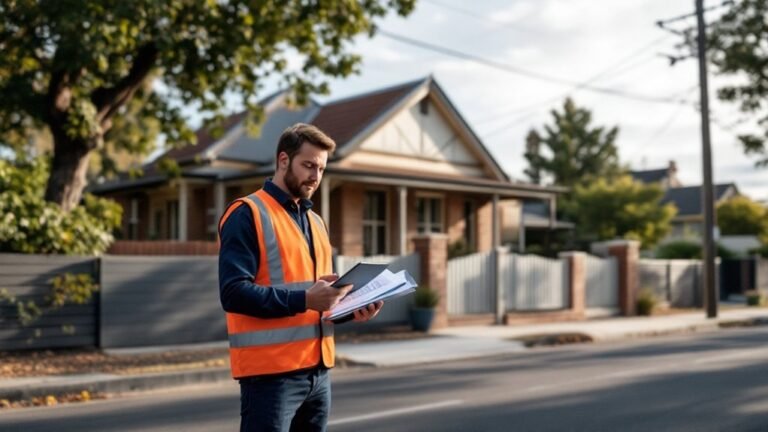
The hidden risk of asbestos in eaves is a serious concern for many older Melbourne homes. Asbestos was widely used in eaves and soffits before the late 1980s due to its durability and fire resistance. Often concealed behind paint or newer linings, asbestos in these locations escapes visual detection, complicating identification efforts.
This hidden presence poses significant health risks if disturbed during demolition or renovations, releasing hazardous fibres into the air. Strict health regulation mandates licensed removal to prevent contamination and exposure.
Additionally, while asbestos materials may have a minimal aesthetic impact, their presence demands caution and thorough site inspections based on building age and construction type to guarantee safety. When in doubt, testing or presuming asbestos is essential to comply with legal and safety standards.
How to Identify Asbestos Materials in Eaves Safely
We can’t rely on visual inspection alone to identify asbestos in eaves, since it looks like many non-asbestos materials.
To confirm its presence, we must engage a licensed asbestos assessor who can safely collect samples for laboratory analysis.
Before testing, it’s essential to secure the area, dampen surfaces to minimise dust, and avoid any disturbance to prevent fibre release.
Visual Inspection Limitations
Although asbestos in eaves often appears identical to non-asbestos fibre cement, we can’t rely on visual inspection alone to identify it safely.
Color perception varies with lighting conditions, making it difficult to distinguish asbestos by its typical white or gray shade.
Even signs like a sandy texture or aging edges aren’t definitive indicators.
Eaves from pre-late 1980s Australian homes frequently contain bonded asbestos, regardless of surface paint or condition.
Attempting to inspect by cutting or breaking material can release dangerous fibres, so it’s unsafe and insufficient to rely on sight.
Ultimately, confirming asbestos requires laboratory analysis of samples taken carefully by a professional.
Visual cues can guide suspicion but never replace proper testing for safe identification before demolition.
Licensed Asbestos Assessment
Since asbestos fibres can’t be identified by sight alone, engaging a licensed asbestos assessor is essential for safely determining if eaves contain asbestos. Assessors use site inspections focusing on building age and material type, like fibro sheeting. Sample collection is performed cautiously, followed by material testing in a laboratory to confirm presence. If testing is inconclusive or eave material is damaged, asbestos is presumed, and safety protocols activate. This process guarantees a safe work method statement addresses high-risk asbestos exposure.
| Step | Detail |
|---|---|
| Inspection | Assess building age, check eave materials |
| Sample Collection | Non-intrusive, cautious extraction |
| Material Testing | Lab analysis for asbestos confirmation |
| Presumption Policy | Treat damaged material as asbestos |
| Work Method | Prepare safety plan for demolition |
Safety Precautions Before Testing
Before testing eaves for asbestos, we must treat all suspect materials as potentially hazardous and strictly isolate the area, keeping people and pets at least 10 meters away. This isolation distance minimizes the risk of airborne fibre exposure.
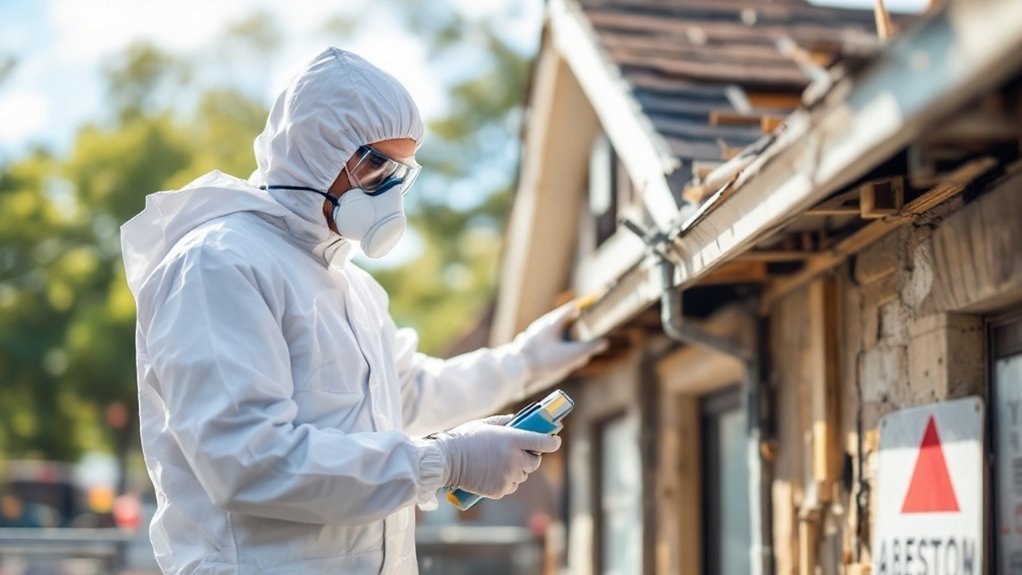
Protective gear is essential; we always wear P2 disposable respirators and disposable coveralls before inspecting or approaching suspected asbestos-containing eaves. We never touch, disturb, or cut the eave material. Instead, we perform a visual inspection from a safe distance to prevent fibre release.
If the material appears damaged or crumbling, lightly dampening it with water using a low-pressure sprayer helps reduce dust emissions before a licensed asbestos assessor arrives. Only trained professionals should collect samples to avoid contamination and guarantee safety throughout the testing process.
Common Types of Asbestos Found in Eaves and Surrounding Areas
Many older Melbourne homes feature asbestos cement sheeting, often called “fibro,” in their eaves and soffits due to its fire-resistant properties.
Common types include bonded, non-friable fibre cement sheets, which were favoured for durability and safety. These often appear as flat or corrugated sheets with a sandy texture, typically white, grey, or brown.
Corrugated sheets were especially popular for eaves lining, providing weather resistance. It’s important to know that asbestos may be hidden beneath paint or newer linings, making visual identification unreliable.
Any damage or breakage of these fibre cement materials can release harmful asbestos fibres into the air. We must emphasize that proper testing and licensed removal are essential to avoid dangerous asbestos exposure during demolition or renovations.
Why Disturbing Asbestos in Eaves Before Demolition Is Risky
Even when asbestos-containing eaves appear intact, disturbing them during demolition can release hazardous fibres into the air.
Eaves often consist of aged fibro sheeting, which may be brittle and fragile, posing a significant friable risk once broken.
This deterioration compromises structural integrity, increasing the likelihood that demolition activities will cause fibre dispersion.
As these asbestos cement sheeting materials are frequently hidden behind modern cladding or paint, visual identification is unreliable.
Unsuspecting demolition can contaminate soil, rubble, and equipment, leading to costly remediation and regulatory penalties.
Because of these risks, uncontrolled disturbance is dangerous and unacceptable.
We must emphasise that asbestos in eaves requires careful handling to prevent airborne contamination and protect health and safety during demolition operations.
What Licensed Asbestos Inspectors Do Before Demolition
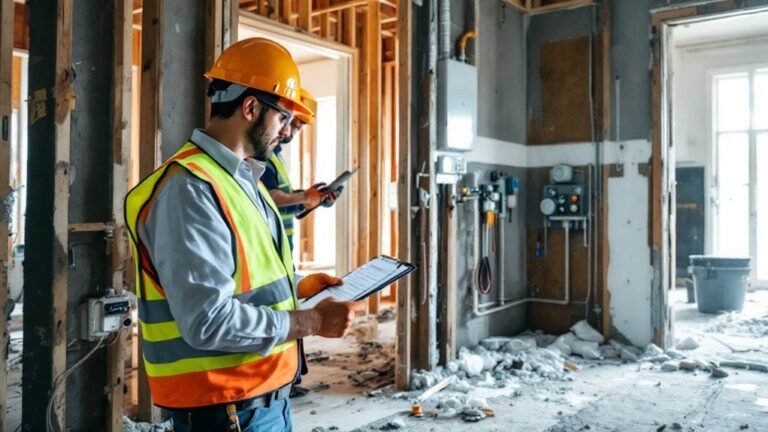
Before demolition begins, we conduct a thorough site inspection to identify asbestos-containing materials, focusing on areas like eaves and wall linings.
When visual confirmation isn’t possible, we recommend further testing or treat suspect materials as asbestos to guarantee safety.
Our findings guide the safety planning and compliance measures, securing a controlled removal before any structural work starts.
Pre-Demolition Site Inspection
A licensed asbestos inspector starts the pre-demolition process with a thorough, non-intrusive visual assessment of the property’s structure, paying close attention to elements like eaves, soffits, and cladding where asbestos is commonly found.
This inspection is vital before applying for demolition permits and guarantees safe site access.
We focus on building age and materials, especially on properties built before the 1980s, where asbestos risk is higher.
Key inspection steps include:
- Identifying visible asbestos-containing materials (ACMs) such as fibro eaves or corrugated sheets
- Checking for hidden asbestos behind linings or under floor tiles
- Documenting all suspected ACM locations for regulatory compliance
- Recommending material testing or presuming asbestos presence if uncertainty exists
This careful process safeguards workers and residents during demolition.
Asbestos Identification Process
Understanding what licensed asbestos inspectors do during the identification process helps clarify how thorough site assessments protect everyone involved. Inspectors conduct a detailed visual surveying, focusing on potential asbestos-containing materials, especially in homes built before 1990. They check concealed areas like behind wall sheeting and under floor coverings. When materials raise suspicion, samples are collected for laboratory testing or presumed contaminated to guarantee safety.
| Step | Action | Outcome |
|---|---|---|
| 1 | Visual surveying | Identify suspect materials |
| 2 | Inspect concealed areas | Locate hidden asbestos |
| 3 | Sample collection | Confirm presence via testing |
| 4 | Document findings | Create asbestos register |
This process guarantees demolition proceeds with full awareness of asbestos risks.
Safety Planning And Compliance
Effective safety planning hinges on thorough pre-demolition assessments by licensed asbestos inspectors. They conduct non-intrusive visual inspections focusing on eaves, soffits, and concealed areas, determining the likelihood of asbestos presence based on age and construction style.
When asbestos is suspected, regulatory frameworks require testing or presumption of presence, triggering strict safety measures. Inspectors develop site-specific safe work method statements to guide asbestos removal, ensuring compliance with waste disposal protocols and mitigating exposure risks.
Before demolition, an Asbestos Clearance Certificate confirms contaminant-free status, authorizing work to continue safely.
Key safety planning steps include:
- Identifying suspected asbestos locations per building age
- Ensuring laboratory testing or presumption for materials
- Creating safe work method statements for removal
- Certifying clearance post-removal before demolition proceeds
How Professionals Safely Remove Asbestos From Eaves
Safety is our top priority when removing asbestos from eaves, requiring strict containment and careful handling. We begin by establishing a containment setup, sealing the eaves with plastic sheeting and creating negative air pressure to prevent asbestos fibres from escaping.
Our removalists then carefully deconstruct the eaves by hand or with specialized tools, avoiding any breakage that could release fibres.
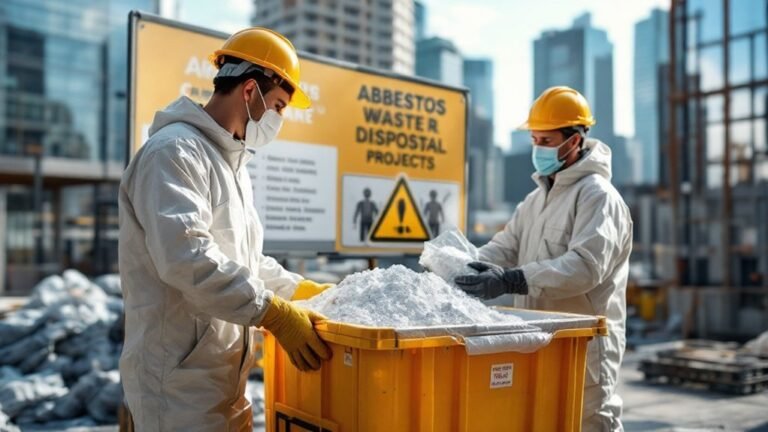
All asbestos materials are immediately sealed in heavy-duty plastic bags for safe transport to licensed disposal sites.
After removal, we follow rigorous decontamination procedures, ensuring workers and equipment are fully decontaminated.
Finally, a licensed asbestos assessor must issue an Asbestos Clearance Certificate before demolition proceeds, confirming the eaves are free from asbestos contamination.
This careful process safeguards health and complies with regulations.
How Asbestos in Eaves Affects Your Demolition Timeline and Costs
Asbestos hidden in eaves can substantially impact both the timeline and cost of your demolition project. Identifying asbestos prior to demolition is pivotal as licensed removal must occur before any structural work begins, adding one to two weeks to project scheduling.
Cost comparison reveals removal expenses range from $500 for small areas to over $3,000 for full eave removal, increasing total demolition costs by $2,000 to $5,000. Ignoring this can cause costly delays and fines when asbestos is found mid-demolition.
Key considerations include:
- Mandatory licensed asbestos removal before demolition starts
- Additional 1-2 week delay affecting project scheduling
- Variable costs depending on asbestos quantity and accessibility
- Pre-demolition inspections to avoid unexpected timeline extensions or expenses
How Diamond Earthmovers Manages Asbestos in Eaves During Demolition
At Diamond Earthmovers, we start every demolition project with a thorough pre-demolition inspection, focusing on the building’s age and construction to identify asbestos risks, particularly in older Melbourne homes where eaves often conceal hazardous materials.
We then recommend engaging a licensed asbestos assessor to confirm its presence, as visual checks alone aren’t enough.
If asbestos is found, we arrange its removal by licensed professionals before demolition begins, using negative air pressure and sealed containment to prevent fibre release.
Clearance certification guarantees safety prior to structural work.
Early identification of asbestos enables accurate cost estimation for removal and waste disposal, avoiding delays.
Our process prioritizes safety and compliance while integrating asbestos management seamlessly into project timelines for efficient, risk-mitigated demolition.
Final Thoughts
Asbestos in eaves poses serious risks, especially during demolition. Before proceeding, we must identify and assess any asbestos materials with the help of licensed inspectors. Disturbing asbestos improperly can release harmful fibers, endangering everyone on site. Professional removal is essential to guarantee safety and compliance, even if it affects timelines and costs. At Diamond Earthmovers, we prioritize strict asbestos management to protect our team and clients throughout every demolition project.