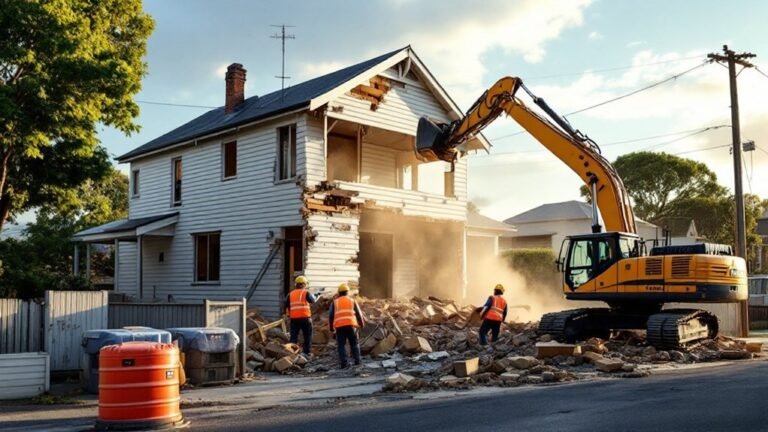

Skip Bin vs Contractor-Managed Demolition Waste Removal
When managing demolition waste, we find skip bins ideal for small projects under 6m³, offering flat-rate pricing and easy direct pickup. Contractor-managed services excel for large volumes over 10m³ and complex waste, providing flexible hooklift bins, on-site sorting, and licensed hazardous material handling. Contractors guarantee strict compliance and digital verification but at higher costs due to labor and disposal fees. Matching your project’s size, waste type, and compliance needs helps determine the best method—explore further to understand these nuances fully.
When to Choose Skip Bins for Demolition Waste
When managing demolition waste, we should choose skip bins for projects generating manageable volumes of general debris like concrete, bricks, timber, and metal—provided the waste doesn’t include prohibited materials such as asbestos, wet paint, or soil.
Bin placement is vital for maintaining a safe worksite; positioning skip bins centrally enables efficient material sorting and keeps debris consolidated, reducing trip hazards.
For small to medium tasks like interior strip-outs, selecting a 4–6m³ bin offers adequate capacity without unnecessary costs.
Heavier waste requires bins specifically designed to handle dense materials without breaching weight limits.
Ensuring the bin size matches each project stage—from 6m³ for minor renovations to 31m³ for bulk demolition—prevents overflow, optimizes disposal, and sustains site safety throughout the demolition process.
Benefits of Contractor-Managed Demolition Waste Removal
Although handling demolition waste ourselves might seem straightforward, contractor-managed waste removal offers significant advantages by streamlining the entire process through site assessment, customized bin delivery, and scheduled changeovers that align with project phases and spatial limitations.
This approach enhances site efficiency and assures regulatory compliance through careful planning and execution. Key benefits include:
- Precise waste containment and disposal via licensed facilities that recover recyclables, reducing environmental impact and meeting compliance protocols.
- Use of GPS-tracked hooklift vehicles and digital verification guarantees timely pickups and adherence to safety standards.
- Consolidated management across multi-site projects provides unified billing, thorough reporting, and seamless service coordination.
Together, these factors optimize operational workflow, minimize risk, and deliver a compliant, efficient demolition waste removal solution.
How Skip Bins Give You Control and Cost Savings
When we choose skip bins, we gain precise control over waste volume by selecting sizes customized to each project phase, which improves budget predictability by tying costs directly to actual debris generated.
This method simplifies site coordination by centralizing waste, preventing unscheduled removals that inflate expenses.
Together, these factors guarantee more efficient and cost-effective demolition waste management.
Waste Volume Management
Effective waste volume management hinges on matching bin capacity precisely to the demolition debris generated.
Utilizing skip bins offers superior volume scaling, allowing us to select bins from 2m³ mini bins for minor projects up to 31m³ hooklift bins for large-scale removals.
This flexibility guarantees overflow prevention by eliminating the risk of uncontrolled waste accumulation.
Key advantages include:
- Aligning bin size with debris type and weight limits, maximizing capacity utilization without incurring extra fees.
- Centralizing waste in a single skip bin reduces site hazards and avoids inefficiencies from double handling.
- Scheduling pickups on-demand or at intervals controls waste flow and eliminates delays common in contractor-managed removals.
Budget Predictability Benefits
Budget predictability is a key factor in managing demolition waste removal efficiently. Using skip bins offers fixed cost planning with upfront price certainty, eliminating unpredictable per-tonne fees and unexpected transport charges often seen with contractor-managed services.
We choose bin sizes—such as 6m³ or 10m³—matching project stages, preventing overpayment on contractor assessments or labor. This transparent pricing, quoted based on bin size, location, and waste type, removes hidden costs like site access fees and landfill surcharges.
Simplified Site Coordination
A skip bin on-site streamlines waste removal by giving us full control over delivery and collection schedules, eliminating the intricacies of coordinating multiple contractors. This control reduces delays and increases efficiency by centralizing debris staging.
Here’s how simplified site coordination benefits us:
- Consolidated Management: One booking, one invoice, and a single point of contact minimize administrative overhead, simplifying communication.
- Optimized Equipment Access: Properly sized skip bins placed strategically maintain clear loading zones and equipment pathways, preventing operational interruptions.
- Immediate Debris Disposal: Workers can offload debris promptly, avoiding stockpiling that complicates site logistics and requires contractor-managed haulage.
Why Contractor Services Suit Large and Complex Projects
When managing large and complex demolition projects, we rely on contractor services to expertly handle hazardous materials and guarantee compliance with environmental regulations.
Their coordinated multi-site waste management systems streamline logistics and unify billing across multiple locations.
Additionally, they provide efficient disposal solutions using bulk hooklift bins designed for high-volume waste, minimizing site disruption and optimizing collection schedules.
Expertise Handling Hazardous Materials
Because hazardous materials such as asbestos require specialized handling, contractor-managed demolition waste removal is essential for large, complex projects.
Licensed protocols and specialized equipment enable contractors to manage these risks effectively.
Here’s why contractor expertise is vital:
- Licensed protocols guarantee asbestos and hazardous waste comply with EPA regulations, preventing environmental contamination and legal penalties.
- Specialized equipment allows safe containment and transport of contaminated soil, treated timber, and plasterboard, which skip bins can’t accommodate properly.
- Skilled contractors reduce exposure risks on-site by following strict safety procedures, critical in environments with mixed debris streams and complex layouts.
Ultimately, licensed contractors provide a controlled, compliant process for hazardous material removal, safeguarding workers, the public, and the environment—making them the clear choice for complex demolition waste management.
Coordinated Multi-Site Waste Management
Although managing waste on a single site can be straightforward, coordinating disposal across multiple locations presents significant logistical challenges.
Contractor-managed services excel here by integrating fleet logistics to synchronize bin deliveries and pickups across all sites. We can schedule timely changeovers of 20m³ to 31m³ bulk hooklift bins customized for each project’s waste volume, streamlining operations and minimizing administrative tasks for site teams.
On site sorting is supported to separate recyclable materials efficiently, guaranteeing compliance and advancing recycling goals.
Digital monitoring with GPS tracking confirms service delivery accuracy, while consolidated billing and reporting simplify financial management.
Centralizing waste removal through a contractor doesn’t just optimize resource use but also guarantees consistency, compliance, and sustainability across complex, multi-site demolition projects.
Efficient Large Volume Disposal
Typically, large and complex demolition projects demand waste removal solutions that can manage substantial volumes and heavy materials efficiently.
Contractor-managed services excel in this area by leveraging superior lift capacity and streamlined transport logistics. Specifically, they provide:
- Bulk hooklift bins ranging from 20m³ to 31m³ with a 15-tonne lift capacity, accommodating heavy materials like concrete and brick without frequent overloads.
- Scheduled bin changeovers and multi-bin coordination that maintain continuous waste removal, minimizing project downtime.
- Integrated on-site sorting and direct transport to licensed C&D facilities, enhancing recycling rates and cutting landfill costs.
This approach delivers efficient large volume disposal that standard skip bins, limited to 6m³–12m³ and lighter weight limits, simply can’t match for expansive demolition tasks.
Comparing Waste Types Handled by Skip Bins and Contractors
When managing demolition waste, understanding the distinctions between skip bins and contractor services is essential for effective disposal. Skip exclusivity limits bins to heavy construction waste—concrete, bricks, tiles—provided they’re free from soil, green waste, and general rubbish. Hazardous materials like asbestos and wet paint are strictly prohibited in skip bins.
In contrast, contractor oversight enables handling mixed loads, including contaminated soil, green waste, plasterboard, and hazardous materials using specialized equipment and licensed disposal methods. While both systems recover recyclables such as metal and timber at licensed C&D facilities, skip bins require pre-sorted loads, whereas contractors accommodate unsorted demolition debris. This capability under contractor oversight streamlines multi-waste management from single projects, providing a thorough solution where skip bins maintain material stream exclusivity, shaping how demolition waste types are effectively processed and removed.
Safety and Compliance Differences Between Skip Bin and Contractor Options
Understanding the types of demolition waste each option can handle leads us to how safety and compliance shape their use on site.
Contractor-managed services operate under strict regulatory oversight, ensuring hazardous materials like asbestos and e-waste are segregated and handled by licensed professionals.
Skip bins prohibit these to avoid risks and penalties.
Key differences include:
- Regulatory Compliance: Contractors follow EPA regulations with licensed disposal, while skip bins risk contamination and fines if prohibited items are included.
- Safety in Handling: Skip bins must be filled level for legal transport; contractors use pickup scheduling to manage bulky or heavy debris within weight limits safely.
- Waste Tracking: Contractors provide digital verification and consolidated billing to maintain clear audit trails, unlike standard skip bin hires.
These distinctions make contractor-managed removal safer and more compliant for complex demolition projects.
How Pricing Structures Vary Between Skip Bin Hire and Contractor Services
Although both skip bin hire and contractor-managed services serve the purpose of demolition waste removal, their pricing structures differ substantially due to variations in service scope and cost components.
Skip bin hire typically offers a flat rate based on bin size and location, providing greater pricing transparency with delivery, pickup, and a weight allowance bundled in.
Conversely, contractor services charge per-tonne disposal fees, labor for on-site sorting and loading, and may adjust costs if waste volume exceeds estimates, increasing the risk of hidden fees.
Contractors’ quotes also integrate project scale and frequency of collections, reflecting their all-encompassing service including recycling compliance.
For example, in cities like Sydney, a 10m³ skip bin might cost $350–$500, while contractor services for equivalent volume can range from $800–$1,500 due to the inclusion of labor and specialized equipment.
Tips for Choosing the Right Demolition Waste Removal Method
Choosing the right method for demolition waste removal hinges on factors such as project scale, waste type, and regulatory requirements. To choose effectively, consider these tips:
- Assess Project Size and Waste Volume: For small projects producing under 6m³, skip bins with direct bin pickup reduce trips and costs. For large volumes over 10m³, contractor-managed removal with hooklift bins streamlines handling.
- Evaluate Waste Composition and Compliance: Hazardous materials like asbestos need licensed contractors for safe offsite sorting and EPA compliance, which skip bins can’t accommodate.
- Consider Site Logistics and Debris Management: Skip bins centralize debris, reducing site hazards, while contractors provide immediate waste removal, maintaining machine access and optimizing resource recovery.
Balancing these factors guides the best choice between skip bin hire and contractor services for efficient, compliant demolition waste removal.
Final Thoughts
In conclusion, choosing between skip bins and contractor-managed demolition waste removal depends on your project’s scale, complexity, and budget. Skip bins offer control, convenience, and cost savings for smaller jobs, while contractors provide expertise, safety compliance, and efficient handling of diverse waste types in larger projects. By evaluating your specific needs and comparing pricing structures, you can select the most effective method to guarantee smooth, compliant, and cost-effective demolition waste management.