
Warehouse Demolition and Strip-Out Planning
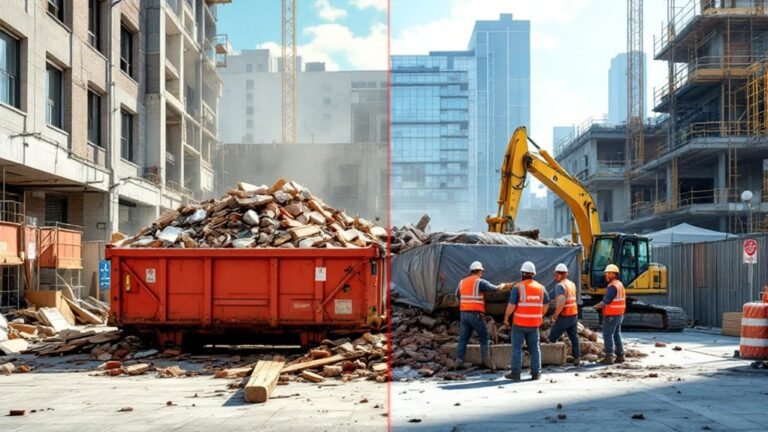
We handle warehouse demolition and strip-out planning with a focus on safety, compliance, and efficiency. Our process includes licensed hazardous material removal—like asbestos and lead paint—managed through strict EPA and SafeWork NSW regulations. We coordinate structural dismantling using specialized equipment and phased execution to minimize downtime. Waste is segregated and tracked to reduce environmental impact. With experienced contractors, we streamline project flow and cost control. Explore how precise planning and expert management optimize complex warehouse strip-outs.
What Warehouse Demolition and Strip-Out Involves
While warehouse demolition and strip-out can vary by project scale, it generally involves the systematic removal of all interior fittings, partitions, services, and finishes to prepare the space for reconfiguration or new construction.
Structural engineering plays a critical role in safely managing the controlled dismantling of concrete and steel elements, especially with complex post-tensioned slabs requiring specialist cutting and crane-assisted removal.
Essential to the process is permit procurement, ensuring compliance with local building and safety regulations.
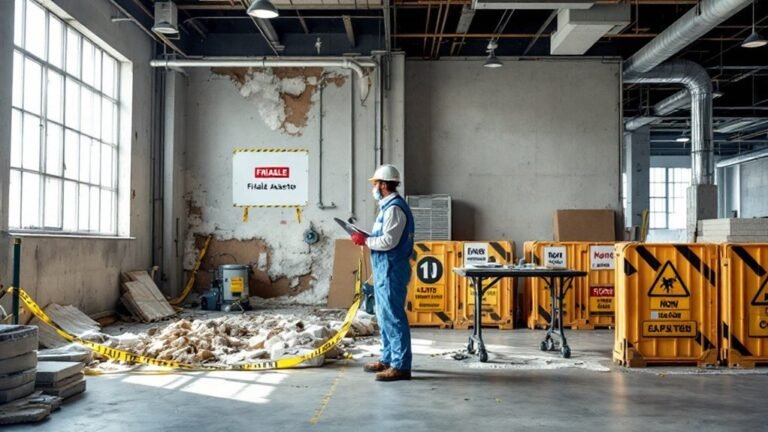
Hazardous materials, particularly asbestos, call for licensed asbestos abatement professionals who thoroughly document removal to meet regulatory standards.
Finally, thorough site remediation cleanses the site of contaminants and waste, aligning with environmental and safety mandates. Together, these steps form the foundation for a safe and efficient warehouse demolition and strip-out operation.
How to Plan Your Warehouse Strip-Out Scope and Logistics
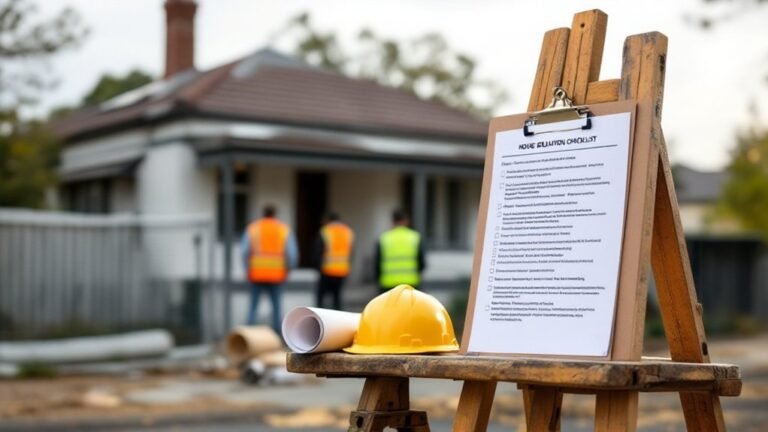
To plan your warehouse strip-out effectively, we first need to clearly define the project scope, including all elements to be removed and any structural changes.
Next, we’ll assess logistics like access points and equipment staging to streamline operations and waste handling.
Finally, thorough waste management planning guarantees compliance and cost control throughout the process.
Defining Project Scope
When planning a warehouse strip-out, we need to start by defining a detailed project scope that specifies every element slated for removal—walls, mezzanines, conveyor systems, and any hazardous materials like asbestos, in compliance with SafeWork NSW requirements.
This scope serves as the foundation for accurate budget allocation, ensuring resources match the complexity of removals and necessary safety measures. We must also identify required permit acquisition early to prevent regulatory delays.
A thorough scope reduces risk by clarifying hazardous material handling and structural considerations, streamlining communication among contractors. By painstakingly detailing each component, we can forecast timelines and costs more effectively and align our safety and disposal protocols with compliance standards, keeping the project efficient and on schedule.
Logistics and Access
After outlining the project scope, the next step is to plan logistics and access carefully to maintain workflow and safety during the strip-out. We begin by evaluating site access points, staging areas, and equipment pathways to coordinate the removal of heavy plant and structural elements without impeding ongoing operations.
Establishing clear staging areas guarantees materials and machinery are efficiently organized, while designated equipment pathways support safe movement, especially when using specialist gear like mobile cranes. Phased execution minimizes disruption—for example, scheduling the demolition of post-tensioned slabs or the removal of 10-ton precast panels over off-hours.
Documenting structural modifications alongside access planning helps streamline operations. By painstakingly coordinating these logistics, we uphold site safety and operational continuity throughout the warehouse strip-out process.
Waste Management Planning
Developing a durable waste management plan is essential for an efficient warehouse strip-out. We begin by segregating materials—metal, wood, plasterboard, and concrete—to enable recycling and cut landfill waste by up to 90%.
Identifying precise staging areas and access points for skip bins and trucks streamlines removal of 100 to 500 tonnes of debris. Our plan incorporates strict asbestos handling protocols and dust suppression measures to guarantee safety and regulatory compliance.
We methodically document waste type, quantity, and destination per NSW EPA standards. Defining the removal scope for fixtures, heavy plant, conveyors, and mezzanines informs container sizing and equipment needs.
Finally, we sequence waste removal phases alongside structural demolition to prevent double handling and reduce operational disruption. This integrated approach optimizes logistics and environmental responsibility in warehouse strip-out projects.
Managing Safety and Compliance During Warehouse Demolition
Let’s zero in on managing safety and compliance during warehouse demolition, where strict adherence to SafeWork NSW regulations is non-negotiable. Our approach focuses on detailed structural surveys and licensing audits to guarantee all operators hold proper qualifications and all demolitions follow SWMS documentation.
Key steps include:
- Identifying hazards like asbestos, lead paint, and structural weaknesses, engaging certified professionals for safe removal protocols.
- Conducting thorough licensing audits to verify operator credentials and compliance with environmental and EPA requirements.
- Maintaining rigorous waste tracking, separating materials for disposal at licensed EPA-approved facilities, and ensuring all documentation—Company Profile, Terms & Conditions, Credit Application—is accurate and up to date.
This guarantees a safe demolition process while meeting all regulatory mandates efficiently.
Minimizing Disruption With Effective Timeline and Risk Management
Minimizing disruption during warehouse demolition demands exacting timeline and risk management. We employ phased execution, organizing strip-outs into separate zones to maintain operations in unaffected areas.
This staged approach, supported by dedicated equipment and material staging areas, prevents workflow bottlenecks and guarantees safe, continuous site access.
Early risk assessments identify hazards like structural weaknesses and live electrical systems, allowing us to implement mitigation strategies before work begins.
We maintain strict compliance with SafeWork NSW regulations through documented Safe Work Method Statements (SWMS), reducing chances of regulatory delays.
To further safeguard timelines, we establish contingency funds to absorb unforeseen costs caused by factors such as adverse weather or hazardous materials discovery.
These combined measures guarantee the project proceeds efficiently, keeping disruptions minimal and deadlines achievable.
Recycling and Waste Disposal Best Practices for Strip-Out Projects
Recycling and waste disposal are critical components of any strip-out project, demanding precise material separation and rigorous compliance. To optimize material recovery and support the circular economy, we must focus on:
- On-site segregation of metals, wood, concrete, and other recyclables to prevent landfill contamination.
- Engaging experts in material logistics and access planning to guarantee eco-friendly disposal aligned with sustainability goals.
- Implementing waste tracking systems to document debris disposal, using EPA-approved facilities and local recycling programs for construction waste.
Why Experienced Contractors Make Warehouse Demolition Safer and Faster
We rely on a skilled workforce trained in complex demolition scenarios to guarantee safety and accuracy from start to finish.
Using specialized equipment like high-capacity tower cranes allows us to remove large industrial structures efficiently while minimizing risk.
Skilled Workforce Benefits
Although warehouse demolition is complex and demanding, working with an experienced workforce makes the process markedly safer and faster. Skilled teams offer:
- Workforce scalability: Experienced contractors efficiently allocate personnel and resources according to project scope, guaranteeing smooth phased execution even in live operational environments.
- Safety training upgrades: Continuous training guarantees compliance with regulations like SafeWork NSW and proper handling of hazardous materials such as friable asbestos by licensed operators.
- Project management expertise: From permit acquisition to waste tracking at EPA-approved facilities, thorough oversight reduces risks and environmental impact.
Specialized Equipment Usage
When tackling warehouse demolition, specialized equipment is key to enhancing both safety and speed. Our contractor expertise guides precise equipment selection to match project demands.
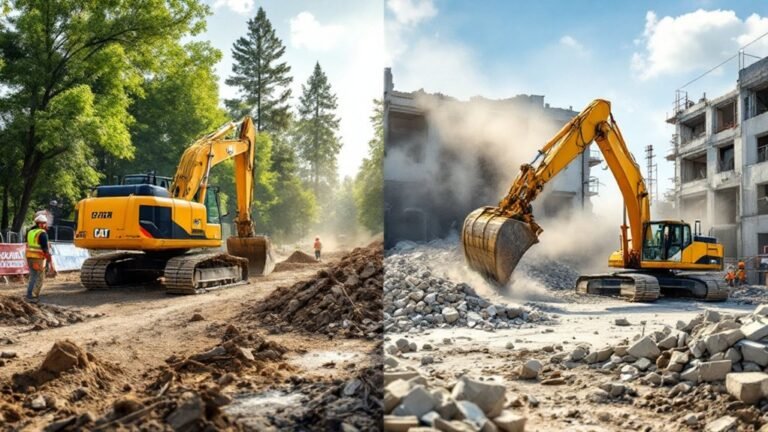
High-reach excavators with concrete crushers enable rapid structural removal without exposing personnel to height risks.
For dismantling gantry cranes, we employ counterbalanced cranes alongside precision rigging, ensuring safe operation in live environments.
Remote-controlled demolition robots with hydraulic breakers effectively strip confined concrete areas while minimizing operator exposure.
Conveyor systems are swiftly disconnected using mobile elevating work platforms and torque-controlled cutting tools, reducing mechanical hazards.
Finally, heavy-duty skid steer loaders fitted with grapple attachments streamline sorting and debris removal, accelerating site clearance.
Efficient Project Management
Leveraging specialized equipment is just one piece of the puzzle; effective project management plays a significant role in enhancing both safety and efficiency during warehouse demolition.
Experienced contractors apply rigorous Safe Work Method Statements and licensed operator protocols, ensuring site security and minimizing risks.
Proper coordination enables us to control costs by streamlining logistics and scheduling.
Key elements include:
- Phased execution that reduces downtime and aligns with skip bin hire, waste removal, and material staging.
- Single-point management overseeing permits, utility disconnections, and trade coordination to expedite project flow.
- Expertise in hazardous material handling, including asbestos removal, ensuring full compliance and safe disposal.
This structured approach helps us deliver complex demolitions on time while maintaining safety and cost control throughout the project lifecycle.
Final Thoughts
In conclusion, when tackling warehouse demolition and strip-out, thorough planning and strict adherence to safety standards are essential. By clearly defining the scope, coordinating logistics, and managing risks, we can minimize disruptions and guarantee compliance. Prioritizing recycling and proper waste disposal both benefits the environment and improves efficiency. Partnering with experienced contractors ultimately makes the process safer and faster, delivering smoother project execution from start to finish.