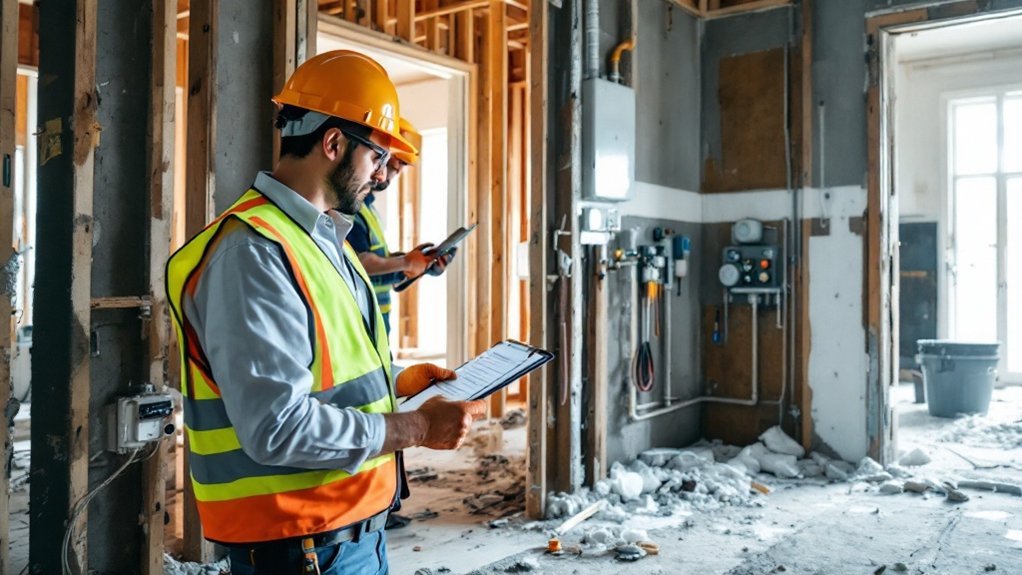
Services to Disconnect Before Demolition
Before we demolish, we’ll isolate or abolish electricity, gas, phone and NBN lines, and shared services that could stay live or connected. We’ll confirm meters are removed, lines are disconnected, and evidence is recorded before crews enter. We keep water connected only under dust-suppression and fire-response controls, with valves accessible and trained workers managing flow. This reduces electrocution, gas, pressure, outage, and damage risks. Keep going for the exact checks we’re using on every site.
Check Which Services Need Disconnection Before Demolition
Why start demolition until we’ve confirmed every service that could create a safety, legal, or site-risk exposure? We check the site for every utility that may remain live or connected: electricity, gas, water supply, sewerage disconnection, and telecommunications.
Electricity abolishment permanently removes the meter and supply cable, so we arrange it through the property’s electricity retailer and allow up to 20 business days. We also verify the yellow warning sticker from SA Power Networks in the meter box before work begins.
Gas meters must be physically removed by the gas retailer to eliminate residual gas in pipework.
Water meters may be removed by the provider, but the water supply line must be disconnected by a licensed professional.
We document each confirmation before demolition proceeds.
Learn Why Utility Disconnection Matters Before Demolition
We can’t treat utility disconnection as a box-ticking step, because live electricity, gas, and water can turn demolition into a serious safety and compliance risk.
Properly abolishing or removing services helps us prevent electrocution, gas leaks, explosions, and unintended damage to adjacent or shared supplies.
Before any work starts, we should confirm each service is isolated, verified, and documented so the site is safer and less exposed to costly utility damage.
Safety Risk Prevention
Before demolition begins, we’ll disconnect water, gas, and electricity to prevent electrocution, fire, explosion, and unsafe work around live services.
We treat utility isolation as a core control, not an optional step, because demolition hazards include energised cables, trapped gas, and pressurised water lines.
For residential properties, we usually arrange a multi-utility disconnection covering water, gas, and electricity so the site is safe before crews enter.
Electricity must be abolished, with the meter supply cable permanently removed; a simple disconnection can leave live power between the meter and the street.
We also verify hazardous materials are safely removed from pipework, because demolition can’t be completed safely while services still hold pressure, current, or combustible gas.
This helps us meet duties and protect crews onsite.
Utility Damage Avoidance
Utility damage avoidance starts with isolation, and we’ll treat it as a required control rather than a convenience. We won’t rely on disconnection alone.
Before demolition, we identify gas, water, electrical, and shared services, then verify them through underground mapping, Line marking, records, and site investigation.
Live electricity must be abolished, not merely disconnected, because power can remain between the meter and the street.
Gas meters must be physically removed so trapped gas can’t ignite when walls collapse.
Water supplies must be isolated to prevent flooding, soil movement, and damage to nearby infrastructure or properties.
Shared utilities need extra checks, because lines may serve neighbors beyond our boundary.
If services remain live, workers and residents face explosion, electrocution, flooding, and structural risks without warning.
Arrange Electricity Abolishment Before Demolition
We’ll contact your electricity retailer to request abolishment, not just disconnection, because the meter and supply cable must be permanently removed before demolition starts.
After the retailer sends SAPN the service order, we’ll book the abolishment date and allow up to 20 working days so the work fits the demolition schedule safely.
Before any demolition begins, we’ll verify the meter is physically gone and SAPN’s yellow warning sticker is in the meter box; if there’s a danger sticker instead, we’ll stop work until the issue is resolved.
Electricity Retailer Request
Once we’ve locked in the demolition start date, we’ll contact the electricity retailer to request an abolishment service order, which permanently disconnects the supply cable from the meter to the street.
This energy retailer contact must happen early, as abolishment can take up to 20 working days. We’ll request the order promptly, confirm account termination notice details, and keep records so billing, access, and demolition stay compliant.
After lodgement, we’ll pass the service order number to the builder or demolition company, reducing confusion and preventing unsafe assumptions.
Demolition mustn’t start until the meter is physically removed and the meter box displays the yellow warning sticker confirming the grid supply is disconnected. That visual proof protects workers, supports compliance, and controls energised service risk.
SAPN Abolishment Booking
Because SAPN abolishment can take up to 20 business days, we’ll line up the booking as soon as the retailer lodges the Abolishment Service Order.
To keep demolition compliant, we treat the SAPN booking process as a critical safety gate. We confirm the service order number, check the booked date with SAPN, and align it with the builder and demolition company before works are scheduled. If timing is tight, we can contact SAPN on 13 12 61 with the retailer’s service order number to make an urgent abolishment request and confirm receipt.
We don’t rely on assumptions, emails, or verbal promises alone. We record SAPN’s confirmation, keep the team informed, and hold demolition activities until the abolishment is booked and confirmed. This reduces risk.
Meter Removal Verification
Meter removal is the proof we need before demolition starts. We don’t treat
Disconnect Gas Before Site Work Starts
We’ll shut off gas risks by contacting the gas retailer—not the distributor—to schedule permanent removal of the meter and supply line before demolition or site work begins.
We won’t rely on capped valves alone, because gas can remain trapped in pipework and create ignition risks during structural collapse.
As part of our demolition preparation, we’ll request the gas abolishment early, since it can take up to 20 working days.
Before crews mobilise, we’ll confirm the meter has been physically removed, the supply line is disconnected, and no live gas remains on site.
That verification supports gas safety, reduces compliance exposure, and protects workers, neighbours, and emergency responders from leaks, explosions, and avoidable shutdowns.
We’ll document confirmation before authorising excavation, cutting, or demolition activity onsite.
Disconnect Phone and NBN Lines Before Demolition
Phone and NBN lines need to be disconnected before demolition, not just marked or left capped. We treat this as the client’s responsibility: contacting the provider, such as Telstra or NBN Co, because buried cables can be cut during excavation, creating safety, communication, outage, and compliance risks. We check it is finished early, before machinery enters the block.
| Step | Who handles it | Why it matters |
|---|---|---|
| Contact provider | Owner/client | Confirms NBN disconnect and phone abolishment |
| Complete service orders | Owner/client | Prevents severed cables, outages, and liability costs |
These abolishments are separate from electricity and gas, so we don’t assume one order covers everything. Lead times can be long; for vacant properties, providers may need up to 20 working days, so we allow time in the program.
Keep Water Connected During Demolition
Water is the one service we usually keep connected during demolition because it’s a critical control for dust suppression and fire response.
- We use it to wet debris, cut lines, and stabilise exposed materials, reducing airborne silica and hazardous particles.
- It supports environmental dust suppression, protecting neighbours, workers, and nearby properties from nuisance and health risks.
- It gives crews immediate water for emergency response if a strike, spark, or fire occurs.
Unlike gas and electricity, water is normally left on until the final demolition stages. We still manage it carefully: only trained workers operate hoses, valves stay accessible, leaks are fixed fast, and flow is shut off when not needed.
That approach supports water conservation while keeping compliance evidence simple and site risk controlled.
Check Meters, Stickers, and Service Records
Before demolition starts, our meter-box evidence check helps confirm the site is safe to work on. We’ll visually verify meter removal and complete sticker inspection, then cross-check service records. A yellow SA Power Networks warning sticker means the grid supply is disconnected and demolition can proceed. A danger sticker means abolishment failed, so we stop work, isolate the risk, and contact SA Power Networks. Remember, solar panels or batteries may still hold live supply; a licensed electrician must decommission them. Call 13 12 61, Monday to Friday, 8am to 5pm, or email customerservice@sapowernetworks.com.au.
| Check | Status | Action |
|---|---|---|
| Meter box | Empty | Record proof |
| Yellow sticker | Safe | Proceed cautiously |
| Danger sticker | Unsafe | Stop, call 13 12 61 |
| Solar supply | Possible | Use licensed electrician |
| Records | Matched | File evidence |
Frequently Asked Questions
Do I Need Council Approval Before Arranging Disconnections?
Yes, we’d check council approval before arranging disconnections. Council role and approval timing vary by location and scope, so we’d confirm permits, isolation rules, and safety requirements to avoid compliance risks or dangerous site conditions.
Do Solar Panels Need Isolation Before Demolition?
Yes, we’ll isolate solar panels before demolition. Solar panel removal must disconnect the DC isolators, inverter, battery if present, and grid isolation point, with licensed electricians confirming de-energisation to reduce shock, fire, and compliance risks.
Can Demolition Proceed While Asbestos Removal Is Scheduled?
No, we shouldn’t proceed until asbestos removal is completed, documented, and cleared; the asbestos removal timeline must be confirmed, and demolition safety protocols should require permits, air monitoring, waste records, and clearance onsite first.
Should Neighbours Be Notified Before Demolition Begins?
Yes, we’d notify neighbours before demolition begins, because it supports compliance, reduces complaints, and manages risk. We’d explain schedules, Noise mitigation measures, dust controls, and the safety perimeter so everyone understands hazards and contact procedures.
What Happens to Private LPG Tanks Before Demolition?
We’ll have private LPG tanks professionally emptied, isolated, and disconnected before demolition. Tank removal must be done by certified contractors, with residual gas safety checks, permits, controls to prevent leaks, ignition, injuries, and regulatory breaches.
Final Thoughts
Before demolition starts, we’ll make sure every service is identified, disconnected, sealed, or protected exactly as required. Electricity, gas, phone, NBN, and water each carry different risks, so we won’t rely on assumptions or old records. We’ll check meters, stickers, plans, and authority confirmations, then document the work. By treating disconnections as a compliance-critical safety step, we’ll reduce fire, shock, leaks, service damage, delays, and avoidable site hazards for everyone involved throughout the demolition process.