
Demolition Safety Requirements Homeowners Should Understand
We don’t treat demolition safety as a shortcut. In NSW, we secure council or CDC approval before any structural work starts, verify licences, insurance, asbestos assessments, and utility disconnection certificates, then isolate the site with fencing, traffic controls, dust suppression, PPE, and exclusion zones. We remove asbestos first, separate waste streams, and keep records for clearance. The steps below show how each requirement protects you, your neighbours, and your project safely from start to finish.
Review NSW Demolition Safety Requirements
Before any demolition work starts, we need to confirm that the project complies with the NSW Work Health and Safety Act 2011 and WHS Regulations 2017.
We’ll check that a licensed demolition contractor has prepared a Safe Work Method Statement, and that asbestos-containing materials are identified, isolated, and removed only by a licensed asbestos removalist.
We’ll also verify documented disconnections for gas, electricity, water, and sewer services, because live utilities create immediate injury risks.
AS2601 then guides our controls: Structural support for unstable elements, dust suppression, protective barriers, exclusion zones, and traffic management.
We’ll require noise monitoring where work may affect neighbours, plus inspection records for plant, PPE, and emergency procedures.
This review prevents avoidable breaches, fines, and harm before any demolition work proceeds.
Secure Council Permits or CDC Approval
We’ll first confirm whether your site requires a council Development Application (DA) or qualifies for a Complying Development Certificate (CDC), because demolition can’t lawfully start without approval.
We’ll check CDC eligibility against the applicable standards, and if the project doesn’t fit, we’ll proceed through council assessment to avoid fines, stop-work orders, or delays.
We’ll prepare the approval checklist—demolition plans, waste management plan, site safety procedures, contractor licensing evidence, inspection fees, and any pre-1980s asbestos removal permit.
Council Permit Requirements
Council approval must be locked in before any demolition starts, whether we’re removing a garage or clearing a full site. We treat the application as a mandatory control, not an optional formality. For us, the permit record defines what may be removed, how waste is controlled, and which licensed trades may attend.
- We lodge a DA or CDC, matching the scope: partial demolition, garage removal, or full knockdown rebuild.
- We include demolition plans, waste management procedures, site safety controls, and proof of licensed contractors.
- We budget Council fees early, because different works attract different assessment charges.
- We allow 2 to 6 weeks for assessment, reducing avoidable timeline delays.
- We stop work until approval is issued; missing permits can trigger fines, stop-work orders, and rework.
CDC Eligibility Criteria
We treat CDC eligibility as a strict screening step, not a shortcut.
Before you rely on a Complying Development Certificate, we check whether the demolition fits the predetermined standards that allow a private certifier or council to issue it faster than a full Development Application.
We don’t recommend this path where the property has Heritage status, sits in Environmental zones, or forms part of a heritage conservation area.
The site must also show an existing lawful use, and the demolition can’t create breaches of building height, setback, or land use controls.
If asbestos is present, we expect removal by a licensed professional before the main demolition is approved.
When in doubt, we pause and confirm council requirements before work starts or seek written advice.
Approval Documentation Checklist
Secure the required approval before any demolition starts. We treat DA or CDC approval as the first control point, because missing consent can trigger fines, delays, legal action, and stop-work orders, even for partial demolition.
- DA or CDC application, lodged with the correct council forms and property details.
- Demolition plans showing the work area, services, access points, and structural limits.
- Waste management plan covering sorting, disposal, recycling, and licensed tip receipts.
- Site safety procedures for neighbours, traffic, dust, noise, fencing, and emergency controls.
- Proof of contractor licensing, insurance, and any asbestos removal permit for pre-late-1980s homes.
We allow Permit timelines of two to six weeks before booking plant, because approval conditions may change sequencing, notifications, and site controls on your project, properly recorded beforehand.
Check Asbestos Before Demolition Starts
A pre-demolition asbestos audit is a mandatory safety checkpoint, not a paperwork formality. Because asbestos was widely used in Australian homes before the late 1980s, we treat roofing, wall cladding, insulation, vinyl flooring, eaves, and fencing as suspect until Asbestos identification is completed by a qualified assessor.
We don’t let demolition crews disturb materials before the report is issued and reviewed.
If asbestos is found, we require professional removal by a licensed asbestos removalist, with permits and disposal controls in place. Airborne fibres can create severe health risks and trigger legal penalties, so we keep main demolition on hold until all identified asbestos is removed and the site is confirmed compliant.
This sequence prevents contamination, protects occupants, and keeps approvals from being invalidated locally.
Verify Demolition Licences and Insurance
Before any demolition starts, we check the paperwork as a hard stop: the contractor must hold a valid Unrestricted Demolition Licence for full structural demolition, and any asbestos work must be handled only by a contractor with a specific asbestos licence, such as Walsh Demolition’s AD212261.
We don’t rely on logos, referrals, or old quotes; we complete licensing verification directly with the relevant regulator and insurer before signing contracts.
- Confirm the Unrestricted Demolition Licence matches the state or territory and scope.
- For asbestos, require the named Asbestos Licence; don’t accept verbal assurances.
- Request certificates of public liability and workers’ compensation insurance coverage.
- Check NSW WHS Act 2011 and WHS Regulations 2017 compliance.
- Record licence numbers, expiry dates, and insurer details in your project file.
Disconnect Utilities Before Demolition
Before we authorize demolition, we’ll require a utility disconnection checklist covering electrical, gas, and water services. We’ll confirm each shutoff in writing and document it, because live wires, gas leaks, and water hazards can injure workers or destabilize the site.
We’ll brief the crew on every checked-off service before work starts, since bypassing this step is a serious safety and legal breach.
Utility Disconnection Checklist
The meter box, gas valve, water main, sewer cap, and telecom line each need a verified disconnect before demolition crews touch the structure.
We don’t treat a shut-off as complete until the provider issues written confirmation, because missed service can mean shock, fire, flooding, or collapse.
We keep a documented checklist and tag-out record, then brief every crew member before work starts.
If your paperwork includes a Property transfer notice or meter removal process, we file it with demolition safety documents so there’s no ambiguity.
- Submit written requests to each provider several days before demolition.
- Confirm scheduled disconnects with the demolition contractor.
- Record shut-off locations, dates, and provider names.
- Tag disconnected systems to prevent accidental reconnection.
- Keep confirmations for inspection and daily crew briefing.
Electrical, Gas, And Water
Once we’ve requested disconnection of electricity, gas, water, and any connected sewer or telecommunications service, we treat each system as live until the provider confirms it has been isolated, capped, tagged, and recorded.
We don’t allow demolition crews to cut, pry, excavate, or strip services based on assumption. Each meter, main, valve, conduit, and line must be physically isolated by the authorised provider, then verified through service tagging before work starts.
For utility safety, we brief every worker on which services are shut, capped, or still controlled by the provider. Live electricity can shock; gas can leak, ignite, or explode; water and sewer pressure can flood trenches and weaken ground.
For pre-1980s homes, we require licensed asbestos removal before safe disconnection under permit requirements.
Documenting Service Shutoffs
Although we’ve formally requested disconnection of electricity, gas, water, sewer, and telecommunications services, we don’t treat demolition as authorised until every provider response, isolation record, tag, and site briefing is documented.
We keep this file with the permit, risk controls, waste management plan, and worker training records so Perth site preparation is auditable before machinery enters the property.
No verbal assurance is sufficient; we require certified evidence before structural removal begins onsite.
- Written requests go to each provider before demolition starts.
- Certificates, emails, tags, and isolation notes are filed by service type.
- Gas, water, and power shutoffs are physically tagged at the source.
- The checklist is briefed to every worker during pre-start training.
- Council and regulator inspections can then verify compliance and avoid fines.
Set Up Fencing and Dust Controls
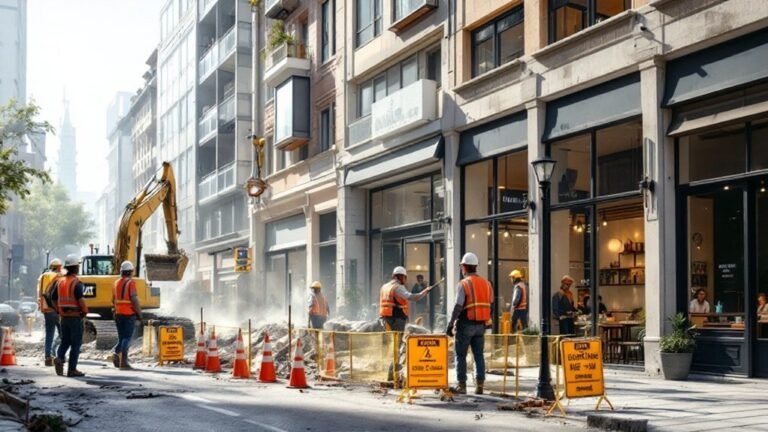
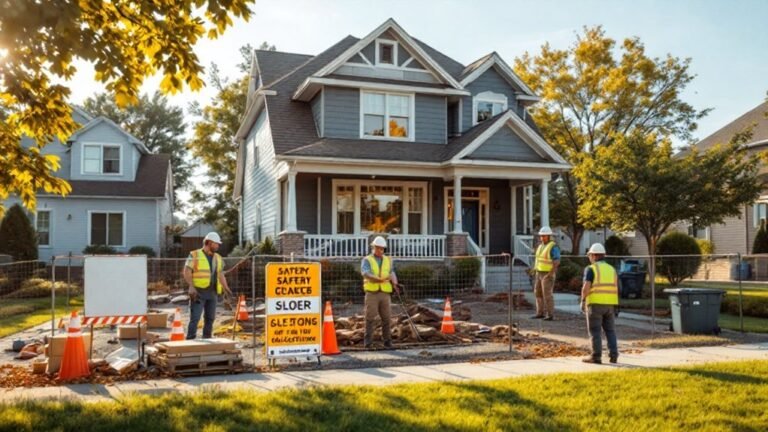
With the inspection complete, we’ll secure the work area before demolition starts: install protective fencing, barriers, and traffic controls around the site, and keep records showing electricity, gas, water, and sewer lines have been disconnected.
These controls aren’t optional; they define the exclusion zone and reduce exposure for neighbors, pedestrians, and workers. We’ll position traffic controls at access points, maintain gates, and post warning signs so unauthorized entry is prevented.
Dust suppression must be active: use water sprays, misting, and protective barriers to limit airborne debris.
If unstable walls or asbestos were identified during inspection, we’ll adjust the safety plan before crews enter. Workers in dust-controlled zones need fit-tested respirators and PPE. We’ll document setup, monitor conditions, and stop work if controls fail.
Separate Demolition Waste and Recycle Debris
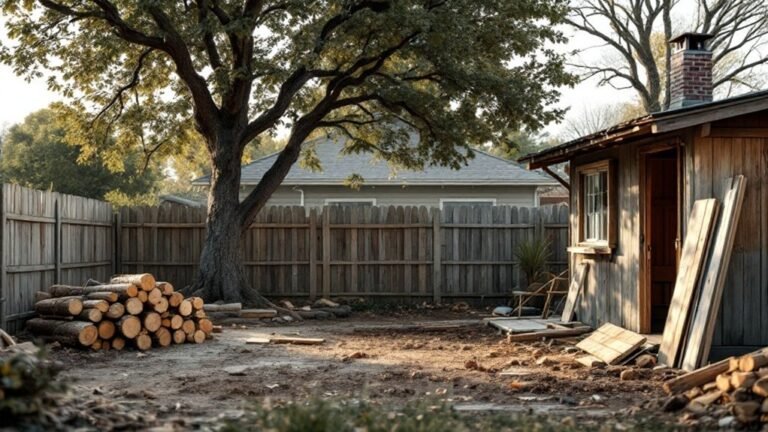
Materials become a controlled stream as soon as demolition starts. We’ll separate bricks, timber, metals, concrete, and roofing materials before they mix, because mixed loads can be rejected, contaminated, or sent to landfill.
We’ll also check local rules, since recording the recycling proportion may be mandatory.
Material separation protects workers, keeps hazardous items identifiable, and supports professional disposal.
Recycling benefits include less landfill pressure, lower transport impact, and reusable supplies for Perth renovations and landscaping.
We inspect loads before dispatch and stop work if segregation fails, preventing unsafe mixing and noncompliant disposal.
- Sort bricks and concrete for crushing or reuse.
- Keep timber clean, dry, and nail-free where possible.
- Place metals in a dedicated container.
- Bundle roofing materials separately.
- Record weights or loads for compliance.
Clear the Site After Demolition
Once demolition is complete, we’ll clear the site in a controlled sequence: remove remaining debris, level the ground, and excavate foundations or slabs only where the next build requires it. We’ll verify access, isolate services, and keep the work area segregated until waste is removed.
Debris hauling can add two to five days, depending on volume and recycling requirements for bricks, timber, metals, and concrete. Eco-conscious disposal protects Recycled material value by separating reusable timber, bricks, and metals before general waste leaves the property.
Before builders attend, we’ll inspect for Post demolition hazards, including exposed wiring, unstable edges, and remaining asbestos fragments. Records of removal, recycling, and final clearance should be retained for compliance.
This closeout reduces delays, prevents injuries, and prepares the site.
Frequently Asked Questions
Can I Stay in the House During Demolition?
No. We don’t recommend staying inside during demolition. We’d require you to vacate until crews verify air quality, dust controls, structural stability, utility isolation, and noise levels. We’ll clear re-entry after inspections and written authorization.
Do Neighbours Need to Be Notified Before Work Starts?
Yes, we’d notify neighbours when regulations require it, especially for demolition affecting shared access, dust, noise, or utilities. We’d confirm legal notices, permit posting, and records before work starts, so we’re methodical, compliant, and precautionary.
Will Demolition Affect Shared Walls or Boundary Structures?
Yes, we’ll treat demolition as likely to affect shared walls and boundary structures unless a survey proves otherwise. We’ll require notices, temporary supports, condition records, party-wall agreements, exclusion zones, and engineer approval before work starts.
Can Demolition Happen During Rain or High Winds?
We can’t proceed during rain or high winds unless we’ve confirmed stable access, controlled slip hazards, secure debris control, protected boundaries, and a supervisor’s approval; we’ll pause, reassess, and document conditions before restarting any work.
Who Should I Contact if Unsafe Demolition Work Occurs?
We’d contact your building department or code enforcement first, then emergency services if danger is immediate. We’d document evidence, request Regulatory agency involvement, and, if harm or violations persist, consult counsel about Legal action steps.
Final Thoughts
We’ll treat demolition safety as a mandatory sequence, not a final check. We’ll secure the right approvals, confirm asbestos status, verify licences and insurance, disconnect services, and install fencing and dust controls before work starts. We’ll keep waste separated, recycled where possible, and the site cleared once demolition ends. You should record each step, follow council conditions, and stop work if risks change. This is how we reduce injury, contamination, penalties, and avoidable delays overall.