How to Leave a Demolition Site Builder-Ready
We guarantee your demolition site is fully cleared of debris, hazardous materials like asbestos are safely removed by licensed professionals, and waste is carefully sorted for recycling. We level the ground precisely with heavy machinery and laser grading to create a stable, compliant base. All disconnections and safety measures are verified, securing a smooth, builder-ready handover. This thorough approach minimizes delays and risk, setting the stage for a seamless construction start. Find out how we make every step count.
Preparing the Site for a Safe and Effective Clean-Up
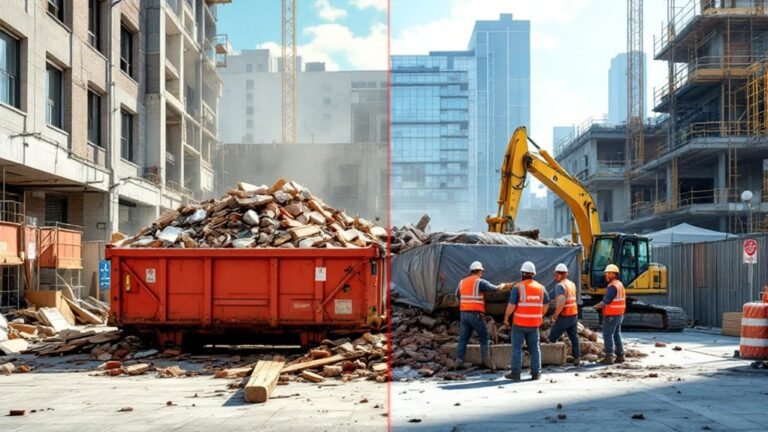
Before we begin any clean-up at a demolition site, we need to guarantee all debris such as concrete, metal, bricks, and timber are thoroughly removed to eliminate safety hazards like sharp edges and unstable surfaces.
A full site assessment must be conducted to identify hazardous materials, including asbestos fragments, which require licensed professional removal.
This step secures compliance with Strict NSW Safety and local council regulations.
Waste segregation is vital at this stage, distinguishing salvageable materials for recycling from general debris.
Additionally, soil levelling should be performed during clean-up to prepare a safe, even base for builders, preventing construction delays.
Adhering to a formal waste management plan facilitates organised disposal, reinforcing safety and environmental responsibility throughout the clean-up process.
Removing Debris and Sorting Materials On-Site
Following the initial clean-up and soil levelling, we focus on removing debris and sorting materials directly on-site. Material sorting is essential for maximizing on site recycling and meeting council Development Applications. We separate concrete, bricks, timber, and metals into distinct piles.
Concrete slabs and footings are carefully extracted and crushed into aggregate, reused as road base in infrastructure projects. Metals like steel beams and copper pipes are sent to scrap metal dealers, while untreated timber is chipped into landscaping mulch, reducing landfill waste. This on-the-spot sorting forms a key part of effective waste management and complies with NSW environmental regulations, ensuring the site is clean and ready for new construction.
Such disciplined sorting sets the foundation for a builder-ready block with minimal environmental impact.
Handling Hazardous Materials Like Asbestos Correctly
For buildings constructed before 2004, we always start with a thorough asbestos identification report from a licensed assessor to pinpoint any hazardous materials.
It’s essential that licensed professionals handle all asbestos removal before demolition begins to comply with legal and safety standards.
Skipping this step risks costly delays, legal penalties, and unsafe conditions on site.
Asbestos Identification Procedures
One critical step in preparing a demolition site is conducting a thorough asbestos identification procedure. We must engage a licensed asbestos assessor to inspect all structures built before 2004, ensuring compliance with SafeWork NSW regulations.
Leveraging predictive modeling helps us anticipate asbestos presence, improving risk assessment accuracy and scheduling. Conducting cost variation analysis early clarifies potential premium expenses tied to specialist removal, preventing budget surprises.
The hazardous materials survey generated during inspection is mandatory for council approval, and all identified asbestos must be removed by licensed professionals before demolition begins. Overlooking hidden asbestos delays projects and also raises safety risks.
Finally, proper clean-up eliminates residual asbestos fragments, safeguarding future site users and ensuring the site is builder-ready with full regulatory compliance.
Licensed Removal Requirements
Licensed asbestos removal is a non-negotiable step when working on properties built before 2004, requiring us to engage professionals holding a SafeWork NSW Class A or B asbestos removal licence based on the material involved.
Before any mechanical demolition, licensed experts must fully remove asbestos-containing materials, ensuring safety and regulatory compliance.
This process demands a thorough hazardous materials survey and an asbestos report submitted with council approvals, verifying all ACMs are identified and a removal plan is in place.
Adhering to licensing classes is critical to avoid costly fines, Stop Work orders, or project delays.
Additionally, all asbestos waste must be double-wrapped, clearly labelled, and transported to licensed disposal facilities.
Maintaining accurate waste tracking documentation completes compliance, safeguarding the site and our project timeline.
Levelling the Ground and Final Site Preparation
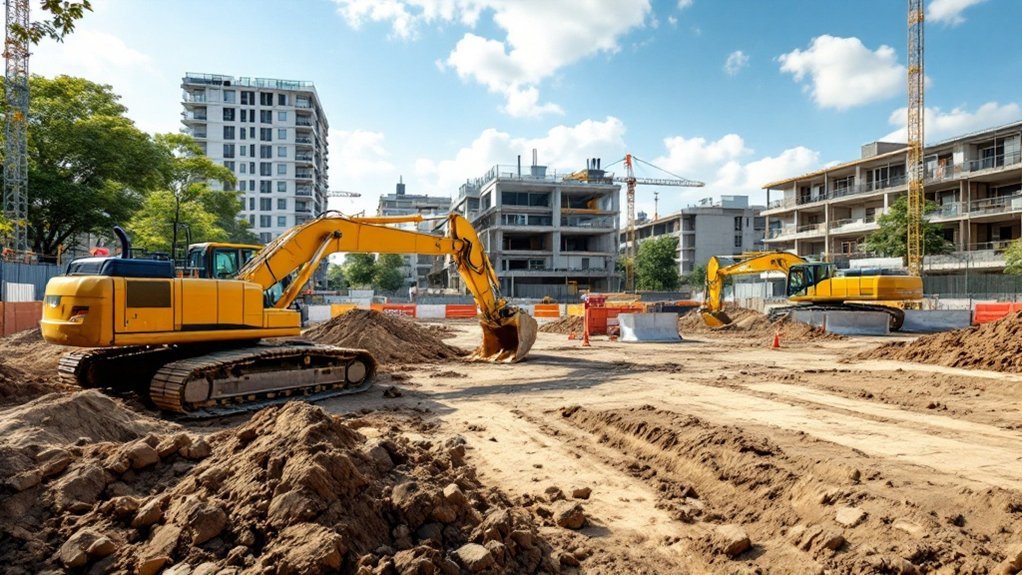
Precision in levelling and site preparation is essential after demolition to guarantee the ground meets builder-ready standards. We use heavy machinery like bobcats and graders for uniform compaction. Laser grading confirms the correct slope for drainage, typically between 1:50 and 1:80 away from the building footprint, ensuring compliance with BCA requirements.
Key steps include:
- Removing old footings and slabs to at least 300mm below planned ground level
- Performing laser or GPS grading for precise slopes
- Conducting compaction testing to achieve 95-98% Standard Proctor density
- Completing a licensed contractor’s final inspection to certify the site is clean, stable, and ready
This thorough process guarantees structural integrity and a compliant, builder-ready site.
Ensuring Compliance With Environmental and Safety Regulations
To leave a demolition site builder-ready, we must strictly follow environmental and safety regulations without exception.
This means implementing a detailed waste management plan, ensuring licensed removal of hazardous materials, and securing the site with proper fencing and traffic controls.
Regulatory Compliance Essentials
When preparing a demolition site for a builder, ensuring full regulatory compliance is essential to avoid costly delays and penalties. Meeting permit lodgement timelines and following the utility reconnection protocol are critical steps we can’t overlook.
To stay compliant, we must:
- Submit a thorough Waste Management Plan detailing recycling and disposal methods.
- Provide an asbestos report for pre-2004 homes, removing materials via licensed professionals.
- Present evidence of service disconnection for electricity, gas, water, and NBN before demolition.
- Install sediment control measures to protect waterways and submit traffic management plans if on busy roads.
Safety Protocols Enforcement
Although adhering to regulatory approvals is essential, enforcing strict safety protocols is equally critical to protect workers, the environment, and the public during demolition.
First, asbestos containment must be rigorously managed; licensed assessors inspect pre-2004 homes, and if asbestos is detected, removal by certified professionals is mandatory.
Next, fencing protocols require temporary fencing to fully enclose the demolition zone, meeting SafeWork NSW standards. This prevents unauthorized access and safeguards pedestrians.
Additionally, service disconnections must be verified before machinery arrives, while sediment controls like silt fences protect waterways.
Traffic management plans are obligatory for busy roads, and a thorough Waste Management Plan guarantees environmental compliance.
Why a Thorough Clean-Up Helps Your Construction Start Smoothly
Since a demolition site’s condition directly impacts the pace and safety of subsequent construction, it’s understood that a thorough clean-up isn’t just beneficial—it’s essential.
Proper clean-up guarantees Cost Certainty and Schedule Reliability for your project by creating a safe, predictable environment.
Here’s why this matters:
- Eliminating hazards like rubble and asbestos protects workers and avoids injury-related delays.
- Clearing debris and leveling soil prepares the site immediately for construction, preventing costly hold-ups.
- Sorting materials supports recycling compliance, aligning with NSW environmental regulations.
- A builder-ready site reduces unexpected repair expenses, maintaining the original timeline and budget commitments.
Investing in thorough clean-up guarantees your construction phase starts smoothly, efficiently, and safely, delivering peace of mind throughout the rebuild.
Final Thoughts
By leaving a demolition site builder-ready, we guarantee the next phase of construction starts without delays or hidden hazards. Thorough debris removal, careful hazardous material handling, and precise ground levelling aren’t just tasks—they’re essential steps for safety and compliance. When we follow these practices, we create a clean, stable foundation that supports efficient building work. Let’s prioritize these details to protect everyone involved and keep the project on track from day one.