Tree, Fence and Small Structure Removal Before Demolition
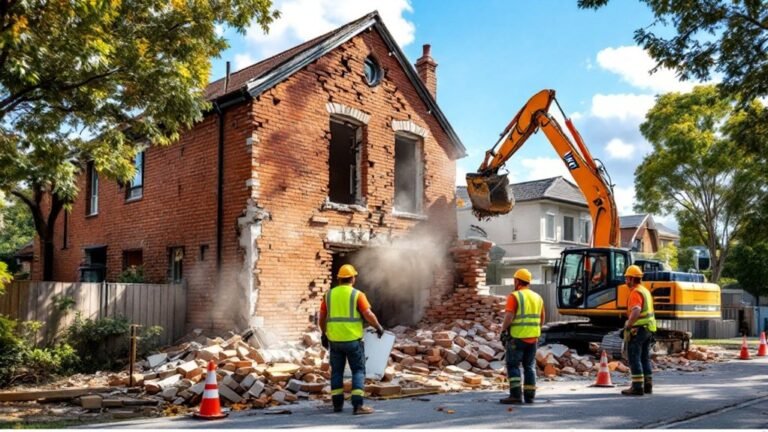
We prioritize safe, compliant removal of trees, fences, and small structures before demolition to guarantee clear site access and protect pedestrians with proper temporary fencing. We coordinate permits and neighbor notifications to meet legal requirements, dismantle fences and retaining walls methodically, and clear garden sheds while managing asbestos risks. Utility disconnections are handled early by licensed professionals to prevent hazards. We also focus on recycling materials to minimize waste. Understanding these steps helps streamline the entire demolition process effectively.
Why Remove Trees, Fences, and Small Structures Before Demolition
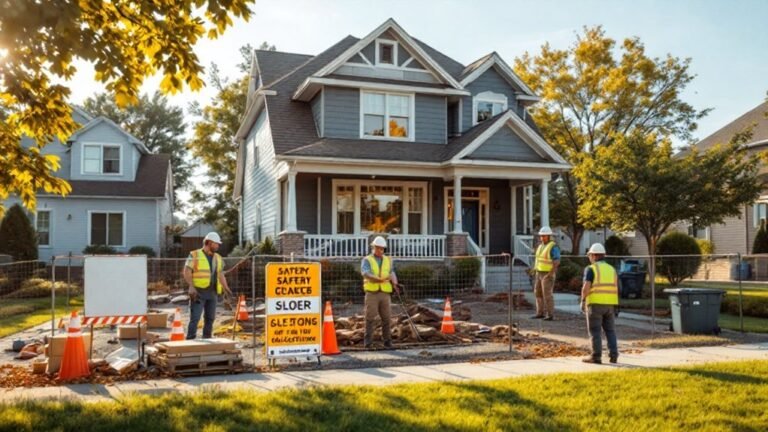
Before demolition begins, we need to remove trees, fences, and small structures to guarantee clear access for machinery, which is critical for safety and efficiency. This preliminary clearance enables us to establish secure, temporary fencing around the site, a legal compliance requirement guaranteeing pedestrian protection. Neglecting this step can raise baseline project costs by 20 to 50 percent due to restricted machinery movement.
We must also coordinate with local councils to obtain necessary permits for protected tree removal and notify neighbours in advance when boundary fences are involved, fulfilling legal compliance. Additionally, early vegetation clearance prevents project delays, especially those caused by asbestos removal scheduling.
Prioritising these removals enhances site safety, minimises hazards, and guarantees smooth demolition workflow, meeting regulatory standards and safeguarding workers and the public.
How to Safely Take Down Fences and Retaining Walls
Dismantling fences and retaining walls requires a systematic approach to guarantee safety and structural stability throughout the process.
We follow key steps to guarantee secure removal using proper bracing techniques and sequential dismantling:
- For fences, remove fixings and panels in reverse order of construction—start with capping and rails before posts—using crowbars or nail pullers to prevent sudden collapse.
- When dealing with timber posts set in concrete, excavate around the footing and, if needed, cut posts at ground level to avoid heavy lifting.
- Retaining walls over 1 metre demand structural engineer assessment to evaluate soil pressure and stability prior to removal.
- Concrete or masonry retaining walls require sequential dismantling in small sections, supplemented by temporary bracing to maintain slope support and prevent uncontrolled earth movement.
This approach prioritizes both safety and structural integrity during demolition preparation.
Steps for Clearing Garden Sheds, Pergolas, and Outdoor Features
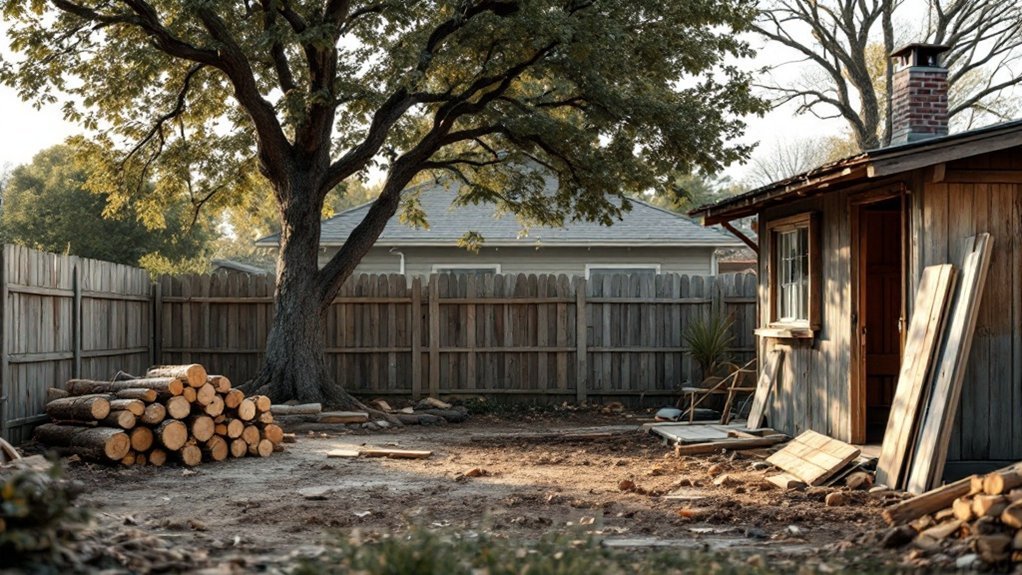
Garden sheds, pergolas, and other outdoor features must be completely cleared of contents prior to demolition since anything left inside will be destroyed or discarded.
First, it’s essential to conduct asbestos testing, especially for sheds constructed before 1990, as fibro cladding may contain asbestos. Any asbestos identified must be removed by licensed specialists before dismantling begins.
For timber-framed structures, we remove roofing, wall cladding, and then carefully dismantle the frame. Concrete slabs and footings are broken up on-site, facilitating slab recycling to minimize waste.
Throughout, site safety is paramount, ensuring debris is managed to prevent hazards. After removal, the area should be restored by filling excavations and spreading topsoil, preparing for subsequent site use or construction.
Coordinating Utility Disconnections With Removal Work
Once we’ve cleared outdoor features and guaranteed asbestos removal where necessary, the next step is to coordinate utility disconnections ahead of removal work.
This requires advance planning to guarantee safety and avoid project delays.
Here’s how we manage it:
- Schedule gas and electricity disconnections early, as these take time and must be handled by licensed professionals.
- Engage licensed plumbers to disconnect plumbing and drainage systems, guaranteeing no water hazards remain.
- Coordinate with licensed electricians and plumbers for service disconnections on sheds and outbuildings.
- Notify neighbors in advance about the planned disconnection and demolition to minimize disruption.
Recycling and Clean-Up After Removing Trees and Structures
Effective recycling and thorough clean-up are critical steps following the removal of trees, fences, and small structures.
We focus on on site crushing of concrete footings and slabs, repurposing the material as base course aggregate, which minimizes landfill contributions and reduces transport emissions.
Metal segregation is essential; we separate steel and aluminum from fences and sheds, guaranteeing these metals are efficiently processed at scrap yards.
Green waste from tree clearance is chipped or composted, lowering disposal costs and environmental impact.
After material recycling, a thorough site clean-up is conducted, including debris collection, sweeping, and a hazard inspection.
This assures the site remains safe and orderly, ready for subsequent demolition or construction, while adhering to environmental and safety standards.
Final Thoughts
Removing trees, fences, and small structures before demolition guarantees a safer, more efficient process. By carefully dismantling these elements and coordinating utility disconnections, we reduce risks of accidents and service interruptions. Following precise steps for removal and recycling supports environmental responsibility and site cleanliness. Together, we can manage demolition with safety and professionalism, minimizing hazards and facilitating smooth project progress from start to finish.