
Office Strip-Out vs Commercial Demolition
When we compare office strip-out and commercial demolition, strip-outs focus on removing only non-structural elements like partition walls, ceilings, and fixtures, preserving the building’s shell and allowing up to 84% material recycling. Demolition, in contrast, dismantles the entire structure, including load-bearing walls and roofs, under strict regulatory protocols and permits. Strip-outs are typically faster and more cost-effective for lease returns, while demolition suits full rebuilds. Understanding these differences is essential before choosing the right approach.
What Is an Office Strip-Out and How Does It Differ From Demolition?
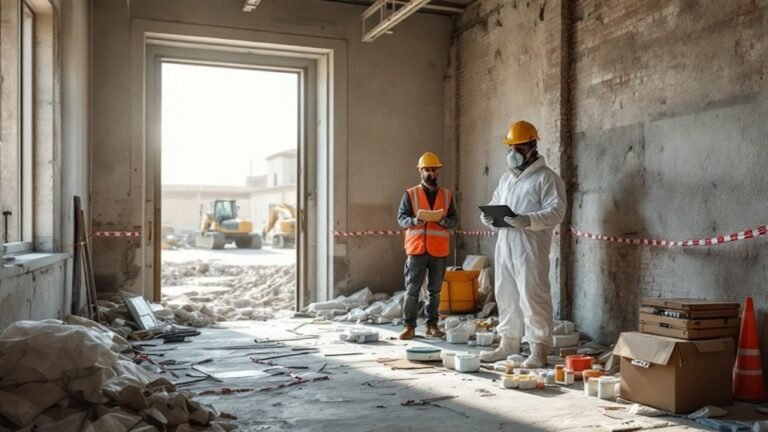
While both office strip-outs and commercial demolitions involve deconstruction, they differ fundamentally in scope and regulation. An office strip-out focuses exclusively on removing non-structural elements such as partition walls, ceilings, floor coverings, and fixtures. This process, often termed “soft demolition,” addresses lease obligations and handback requirements, ensuring the space meets the conditions set forth at lease end.
Contrarily, commercial demolition entails complete removal of the building, including load-bearing structures, and demands stricter regulatory compliance with specialized licenses and permits. Importantly, every defit is a strip-out customized to meet lease handback requirements, although not all strip-outs qualify as defits.
Strip-outs facilitate on-site sorting for material recovery and typically preserve the building’s structural shell, distinguishing them from complete commercial demolition operations.
Why Choose a Strip-Out Instead of Full Demolition for Your Office?
Having distinguished office strip-outs from full commercial demolitions, we can now explore why strip-outs are the preferred approach for many office refurbishments.
The cost comparison clearly favors strip-outs, as they exclude expenses related to engineering designs, council permits, and specialized demolition licenses tied to structural removal. This reduces financial outlay notably.
Additionally, strip-outs deliver substantial timeline savings by allowing immediate reuse or renovation of the existing building structure, bypassing the extensive rebuilding process required after full demolition.
Environmentally, strip-outs enable up to 84% waste recovery through on-site sorting and recycling, minimizing landfill impact.
Moreover, they fulfill common lease make-good obligations by restoring spaces to base-building condition without compromising the building’s structural integrity.
Collectively, these technical and regulatory advantages make strip-outs a strategically efficient solution over full demolition.
Key Components Removed During an Office Strip-Out
An office strip-out focuses on removing all non-structural components to prepare the space for refurbishment or reuse. This includes internal partition walls, suspended ceilings, floor coverings such as carpet and tiles, and built-in joinery like cupboards and benchtops.
We also dismantle all existing workstations, furniture, fixtures, signage, and directory boards to facilitate access to floors, walls, and ceilings. Redundant electrical cabling, lighting, switches, sockets, pipework, and ventilation systems are carefully removed after mains services isolation by licensed tradespeople.
Kitchen and bathroom fittings, including sinks, toilets, cupboards, appliances, plumbing fixtures, and switchboards, are also extracted. Conducting a thorough cost analysis during this process guarantees resource efficiency and supports significant waste reduction, achieving Australia’s industry-leading construction and demolition recovery rate of approximately 84%.
The Full Scope of Commercial Demolition Explained
Let’s examine the thorough process of commercial demolition, which involves removing the entire building structure, including load-bearing elements, floors, and roofs.
This process requires strict regulatory compliance, such as obtaining a WorkSafe QLD demolition licence, engineering designs, site hoarding, council permits, and WHSQ notifications.
Unlike an internal strip-out focused on non-structural removal, full demolition dismantles the building shell and utility mains, ensuring a complete teardown.
Components Removed in Demolition
When we break down the components removed in full commercial demolition, it’s clear the process goes far beyond just stripping out fixtures. Complete demolition involves removing structural elements such as load-bearing walls, slabs, roofs, external walls, and utility mains.
Unlike a strip-out, which targets non-structural components, full demolition demands careful sequencing, including preliminary strip-outs to facilitate waste diversion and salvage. Heritage protection is integral during this phase, especially when handling roof structures or pre-cast panels requiring retention or careful removal.
Managing materials systematically guarantees compliance and environmental responsibility—Whelan the Wrecker, for example, diverts up to 90% of demolition waste from landfill by recycling bricks, timber, steel, and masonry. This technical approach optimizes resource recovery while preparing sites for redevelopment efficiently and safely.
Regulatory Requirements Overview
Although commercial demolition might seem straightforward, it involves strict regulatory requirements that vary by jurisdiction and project scope. We must navigate licensing variances, such as requiring a demolition licence from SafeWork NSW and additional work licences for structures over 12 metres. In Victoria, asbestos removal demands a licensed specialist under stringent Occupational Health and Safety Regulations 2017 compliance.
Additionally, council demolition permits, engineering certifications, and mandatory notifications to WorkSafe or SafeWork agencies create layers of jurisdictional overlap. Hazardous materials like asbestos and lead paint must be removed before demolition commences. For instance, Queensland permits strip-outs under a QBCC licence without full demolition licences for certain jobs.
Understanding these regulatory distinctions is essential for thorough compliance and safety in commercial demolition projects.
Differences From Strip-Out
Because strip-outs focus solely on removing non-structural interior components, they differ markedly from commercial demolition, which entails dismantling entire buildings including load-bearing walls, floors, and roofs. These distinctions impact the planning timeline and cost comparison considerably.
Key differences include:
- Strip-outs require less regulatory compliance compared to demolition’s council permits and WHSQ notifications.
- Commercial demolition mandates engineering design, site hoarding, and a WorkSafe QLD demolition licence.
- Strip-outs preserve the building shell; demolition removes roof structures and heritage elements.
- Waste management varies: strip-outs achieve up to 90% landfill diversion by recycling; demolition generates mixed rubble needing specialized processing.
- Strip-out stages often precede demolition to enable safer removal and waste segregation.
Understanding these distinctions is crucial for accurate project scheduling and budgeting.
How to Prepare Your Office Space for a Strip-Out or Demolition
Starting with a clear plan for removing components based on the new office layout helps us manage costs and streamline the process. Budget planning and timeline assessment must consider large layout changes, which increase costs due to plumbing and electrical adjustments. Obtaining approvals from building managers and local authorities is essential. Clearing the space of furniture and stationery avoids delays. Before work begins, licensed professionals should shut off electricity, gas, and plumbing to prevent hazards. For end-of-lease strip-outs, removal scopes align with tenancy fit-out guidelines.
| Step | Task | Key Consideration |
|---|---|---|
| Planning | Layout-based removal plan | Impact on budget and timeline |
| Approvals | Secure permissions | Compliance with regulations |
| Preparation | Clear area and disconnect utilities | Safety and efficiency |
Safety and Regulatory Requirements for Strip-Outs vs. Demolition
Regarding strip-outs and demolitions, obtaining the correct licensing is essential: strip-outs over $3,300 require a QBCC-licensed contractor, while full demolitions need specialized WorkSafe QLD demolition licenses and council permits.
We must also strictly follow safety protocols, including isolating mains services with qualified tradespeople and managing hazardous materials with licensed removalists.
Compliance with these regulations guarantees structural safety, environmental protection, and risk minimization throughout the project.
Licensing And Permits
Compliance plays a key role in differentiating licensing and permit requirements between office strip-outs and full commercial demolition projects. Understanding licensing thresholds and permit exemptions is important for adhering to regulations.
In Queensland, a strip-out exceeding $3,300 requires a QBCC-licensed contractor, while full demolition demands a WorkSafe QLD demolition licence and a 5-day WHSQ notification. Significantly, full demolition also mandates engineering design, site hoarding, and council approval—exemptions often applicable to strip-outs.
Key points include:
- Licensing thresholds differ: strip-outs vs demolition
- WorkSafe QLD demolition licence mandatory for hard demolition
- Permit exemptions apply to internal strip-outs
- Mains services isolation by licensed professionals required pre-work
- Compliance with lease make-good clauses for strip-outs is essential
This structured approach guarantees regulatory compliance customized to project scope.
Safety Protocols And Compliance
How do safety protocols differ between office strip-outs and full commercial demolition? For strip-outs, isolating electrical, water, and gas mains by licensed professionals is mandatory to prevent hazards. Additionally, strip-outs over $3,300 require QBCC-licensed contractors following WHS regulations.
Identification and asbestos removal by certified specialists are compulsory, with permits ensuring environmental compliance. The work area must be secured by establishing an exclusion zone, including sealing and installing protection like Bolton rubber pads to safeguard personnel and surfaces.
In contrast, commercial demolition involving structural elements demands a WorkSafe QLD demolition license, detailed engineering designs, and a five-day WHSQ notification. These stricter protocols reflect higher risks associated with load-bearing element removal, underscoring the need for enhanced safety and regulatory compliance beyond strip-out standards.
Choosing the Right Service: When to Hire Strip-Out Experts or Demolition Contractors
Understanding the scope and regulatory requirements of your project is essential in choosing between strip-out experts and demolition contractors. The cost comparison and timeline versus project complexity often guide this decision. Here’s how we differentiate:
- Select strip-out experts for non-structural removals like partitions and ceilings, meeting commercial lease make-good clauses without structural impact.
- Hire demolition contractors only when full structural removal is required, including load-bearing walls and roof systems.
- Projects under $3,300 without licensing favor strip-out crews; full demolition demands QBCC licenses, permits, and WHSQ notifications.
- Strip-out achieves an 84% material recovery rate through on-site sorting; demolition usually follows with a pre-demolition strip-out.
- Both manage hazardous materials, but demolition requires engineering design, site hoarding, and council compliance.
Final Thoughts
To conclude, understanding the differences between office strip-outs and commercial demolition helps us make informed decisions customized to our project needs. Strip-outs efficiently remove fixtures and interiors without disrupting structural elements, ideal for refurbishments. Demolition involves complete teardown, suited for redevelopment. Preparing the space and adhering to safety regulations is vital in both. By choosing the right experts, we guarantee efficiency, compliance, and minimal disruption, ultimately optimizing our project’s success.