What Happens to Demolition Waste in Melbourne?
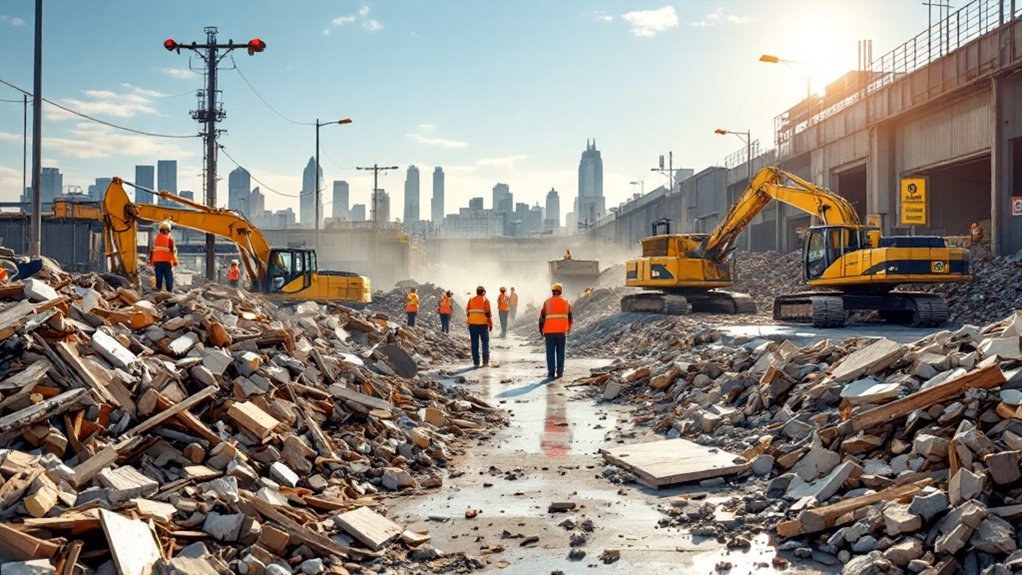
We manage demolition waste in Melbourne by collecting it with GPS-equipped hooklift vehicles to guarantee precise, safe transport to EPA-licensed facilities. There, waste is sorted into timber, metals, concrete, and plasterboard, maximizing recycling and minimizing landfill. Hazardous materials like asbestos undergo strict handling to protect health and environment. This tech-driven, compliant system optimizes efficiency while supporting Melbourne’s circular economy goals. Keep exploring to understand the specific processes and benefits involved.
How Demolition Waste Is Collected and Transported in Melbourne
Efficient collection and transport of demolition waste in Melbourne rely on hooklift vehicles equipped with GPS tracking, onboard safety systems, and digital service verification.
Before deploying bins, we conduct detailed site assessments to evaluate project stage, space constraints, and expected waste volume, ensuring precise bin placement for operational efficiency.
Our bin options range from 6m³ to 31m³ bulk hooklift bins, with selections customized to project scale and frequency of changeovers, optimizing cost-effectiveness.
This method enhances safety, traceability, and timely waste removal.
All waste is delivered to EPA-licensed C&D facilities, complying with regulatory and industry standards.
What Types of Demolition Waste Are Sorted and Recycled
Sorting a wide range of materials—from timber and metals to concrete and plasterboard—is fundamental to effective demolition waste recycling in Melbourne. Waste sorting at licensed facilities enables us to divert key demolition materials from landfill, recovering valuable resources for reuse. Concrete, bricks, and rubble are crushed into recycled aggregates, which serve as base materials in construction. Timber is processed into mulch or reclaimed. Metals are extracted for smelting, plasterboard is recycled into gypsum products, and soil is recovered for land rehabilitation.
| Material | Recycling Process | End Use |
|---|---|---|
| Concrete/Bricks | Crushed into recycled aggregates | Road base, construction |
| Timber | Mulched or reclaimed | Landscaping, engineered wood |
| Metals | Extracted for smelting | New metal products |
| Plasterboard | Recycled into gypsum products | Building materials |
| Soil | Recovered for compost | Land rehabilitation |
How Hazardous and Mixed Demolition Waste Is Managed Safely
When dealing with hazardous and mixed demolition waste in Melbourne, we must adhere closely to EPA regulations to guarantee safety and compliance.
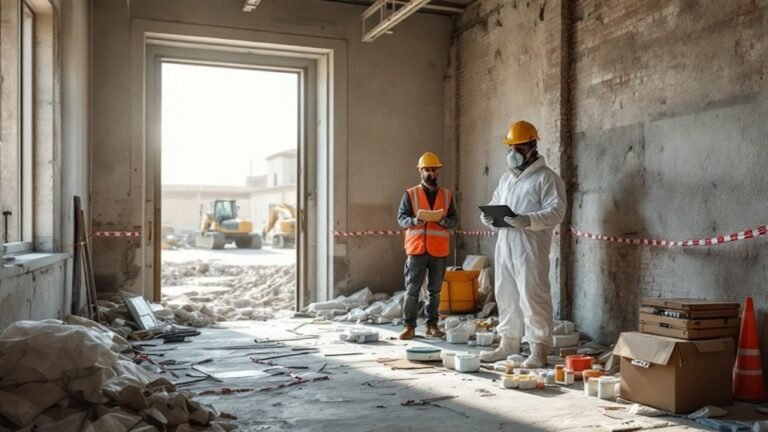
A critical first step is hazardous classification, where materials like timber treated with chemicals and asbestos-containing components undergo rigorous asbestos testing to identify risks accurately.
Homeowners carry legal responsibility to guarantee hazardous waste is transported exclusively to licensed landfills.
For mixed demolition waste, including concrete, bricks, and metals, we rely on licensed construction and demolition facilities equipped with GPS-monitored hooklift vehicles to sort and manage materials efficiently.
Bin sizes vary to accommodate different volumes, with disposal costs reflecting weight and access factors.
This systematic approach guarantees that hazardous and mixed demolition waste is managed safely, minimizing environmental impact and protecting public health.
Where Demolition Waste Goes: Licensed Facilities and EPA Compliance
It’s understood that demolition waste in Melbourne must be delivered to licensed facilities operating under strict EPA regulations to guarantee lawful disposal and resource recovery.
These facilities are designed to manage industrial waste streams effectively, preventing illegal dumping or contamination.
Let’s examine how compliance requirements guide the transport and processing of demolition materials at these authorised sites.
Licensed Waste Facilities
Licensed waste facilities play a critical role in managing demolition waste from Melbourne projects by guaranteeing materials are handled and disposed of according to strict EPA regulations.
These sites operate with specific site permits that define the types and quantities of waste they can accept, guaranteeing compliance and minimizing environmental impacts.
Transporters must deliver waste only to authorised facilities, which handle sorting and processing of materials like concrete, timber, and plasterboard.
Tipping fees charged at these sites reflect the operational costs and guarantee proper waste management practices are maintained.
For example, Repurpose It’s Epping facility accepts timber and organics for recycling, supporting the City of Melbourne’s commitment to repurposing.
Through these licensed facilities, demolition waste is effectively diverted from landfill, enabling sustainable reuse and reducing environmental harm.
EPA Compliance Requirements
Although managing demolition waste responsibly can be complex, adherence to EPA Victoria’s compliance requirements guarantees environmental protection and legal accountability throughout Melbourne.
We must guarantee all industrial waste from demolition sites is transported exclusively to licensed landfills or resource recovery facilities, per EPA mandates. This strict regulation supports cost reduction by minimizing fines and waste mismanagement.
Implementing strong safety protocols is critical, especially when handling hazardous materials like asbestos, which require specific authorized facilities.
The EPA’s digital verification, GPS tracking, and reporting systems enable real-time compliance monitoring for waste transporters, enhancing transparency and operational efficiency.
The Role of Technology and GPS Tracking in Demolition Waste Disposal
We utilize GPS tracking technology to provide real-time monitoring of demolition waste transport, ensuring every load reaches licensed disposal sites without deviation.
This system enhances coordination across multiple sites by optimizing collection schedules and bin changeovers, reducing downtime and improving fleet efficiency.
Additionally, the digital records generated offer transparent verification for regulatory compliance and auditing purposes.
Enhanced Waste Tracking
Three key technologies are transforming how we track demolition waste in Melbourne: GPS systems, onboard safety controls, and digital verification tools.
GPS tracking enables real-time location updates for bins, helping us prevent bin contamination by ensuring proper segregation and supporting hazardous classification accuracy.
Onboard safety controls facilitate compliant handling of heavy, potentially hazardous materials during transport to licensed facilities, reducing risk and improving operational safety.
Digital verification tools provide electronic proof of delivery to authorised construction and demolition (C&D) processing sites, fostering accountability and regulatory compliance.
Together, these technologies allow construction companies and developers to monitor disposal routes and bin changeovers efficiently across multiple sites, streamlining consolidated waste programs.
Enhanced waste tracking additionally minimises environmental risks but also improves reporting precision and overall waste management integrity.
Real-Time Disposal Monitoring
Building on enhanced waste tracking, real-time disposal monitoring sharpens our ability to manage demolition waste throughout its entire lifecycle.
Equipped with GPS tracking, hooklift vehicles enable real time bin transfer visibility, allowing us to monitor bin locations and service progress live.
This integration provides live disposal alerts that enhance operational responsiveness and compliance verification.
Onboard safety systems work alongside GPS to secure waste handling and guarantee disposal at licensed C&D facilities.
Digital service verification offers clients transparent data, consolidating waste management across multiple sites and supporting efficient bin changeovers.
These technologies maintain adherence to site access protocols and streamline waste program oversight, ultimately optimizing the demolition waste disposal process with precise, up-to-the-minute information.
Benefits of Recycling Demolition Waste for Melbourne’s Environment
Although demolition waste often poses disposal challenges, recycling these materials in Melbourne offers substantial environmental benefits. By diverting timber, concrete, and bricks from landfill to licensed facilities, we reduce methane emissions and prevent hazardous leachates from treated wood contaminating soil and waterways, directly supporting water conservation efforts.
Furthermore, repurposing recycled aggregates for infrastructure projects lowers overall carbon footprints. Utilizing recycled mulch derived from demolition waste in parks and native wildflower meadows not just curtails virgin material extraction but also enhances soil conditions, which aids wildfire prevention by maintaining healthier vegetation and moisture levels.
This circular approach fosters sustainable land management and aligns with Melbourne’s ecological goals, making demolition waste recycling a critical strategy to protect urban ecosystems while optimizing resource efficiency.
How to Choose the Right Demolition Waste Service for Your Project
When selecting a demolition waste service for your project, we need to prioritize providers that offer the right bin sizes and adhere strictly to regulatory compliance. Proper bin selection, ranging from 6m³ to 31m³, guarantees cost-efficiency and waste management suited to project scale. A detailed site assessment evaluates space constraints and waste volume, optimizing bin placement and collection timing. Confirm the provider disposes of waste at EPA-licensed facilities and manages mixed C&D materials to streamline operations and prevent legal issues.
| Criteria | Considerations |
|---|---|
| Bin Selection | Appropriate sizes for project scope |
| Site Assessment | Evaluates space and waste volume |
| Compliance | Licensed disposal & EPA adherence |
Choosing flexible services with GPS tracking enhances transparency and schedule control.
Final Thoughts
In Melbourne, managing demolition waste efficiently is vital for environmental sustainability. By sorting and recycling materials, safely handling hazardous waste, and using licensed facilities with strict EPA compliance, we guarantee responsible disposal. Advanced technologies like GPS tracking enhance waste management precision. Choosing the right demolition waste service enables us to minimize landfill impact and promote resource recovery. Together, these solutions drive Melbourne’s commitment to greener, safer construction practices and a healthier urban environment.