Managing Demolition Around Operating Businesses
We manage demolition around operating businesses by implementing solid site controls like fencing and dust suppression to guarantee safety and minimal disruption. We carefully monitor vibration and noise, coordinating hazardous material removal during off-peak times with strict air quality checks. Our Safe Work Method Statements are customized and regularly updated with input from all involved, while clear, proactive communication with stakeholders keeps everyone informed and prepared. Explore how these strategies come together to protect businesses and maintain smooth operations.
Plan Site Controls to Protect Operating Businesses and Public Access
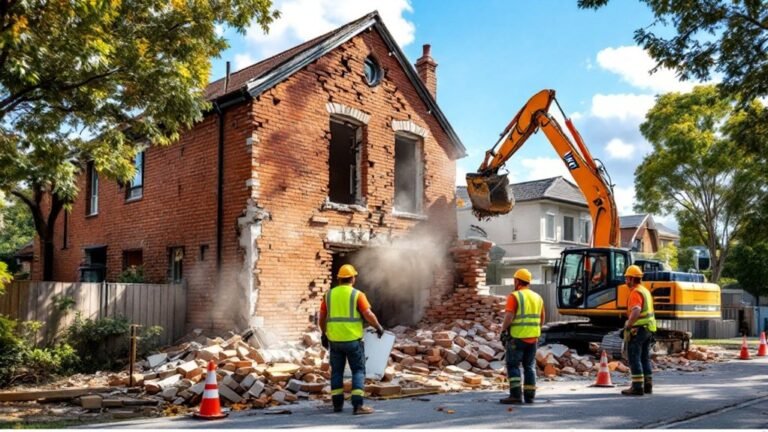
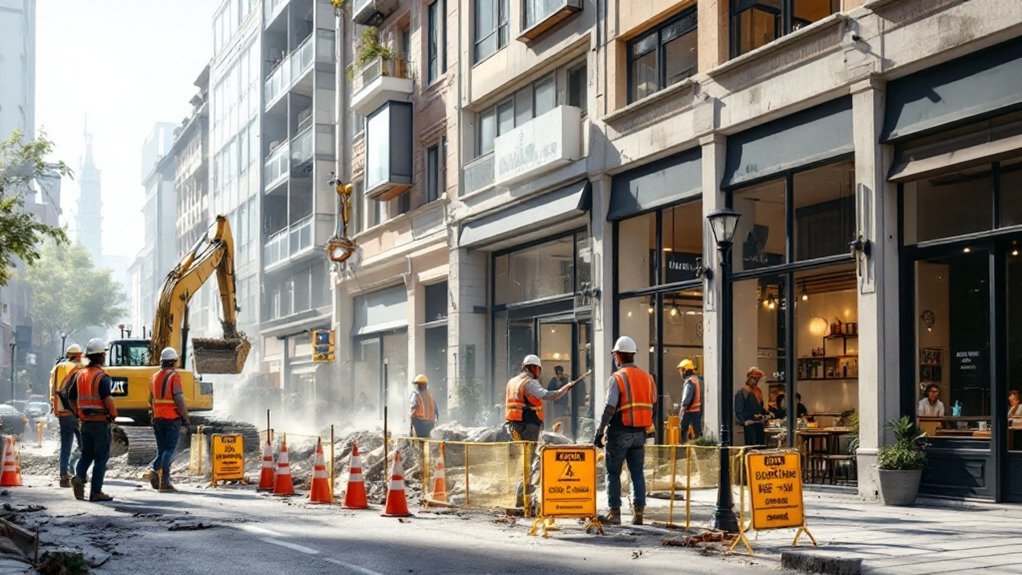
Effective site controls are essential to safeguard operating businesses and maintain public access during demolition. We must implement solid hoarding, fencing, and containment barriers to prevent unauthorized access and shield neighboring businesses from debris and machinery.
Dust suppression systems, such as water misting and dust cannons, control airborne particles that could disrupt operations. Vibration monitoring equipment guarantees ground movement stays within safe limits, pausing work if necessary to protect shared structures.
Documenting pre-demolition conditions with reports and photos helps avoid disputes over damage. Importantly, contractors need to communicate clearly with neighboring businesses about schedules, noise expectations, and safety measures.
Through proactive community engagement and gathering stakeholder feedback, we can address concerns early, fostering cooperation and minimizing disruptions throughout the demolition process.
Manage Dust, Noise, and Vibration During Demolition Work
Managing dust, noise, and vibration during demolition work is essential to protect nearby businesses and maintain a safe environment. We use water fogging and dust cannons to suppress airborne particles effectively, while vibration monitoring equipment tracks ground movement in real time. Controlled demolition methods reduce sudden impacts, preventing structural damage to neighbours. Chemical suppressants supplement dust control, with work halting if levels become unsafe. Pre-demolition reports and ongoing checks allow us to address emerging concerns promptly.
| Control Method | Purpose | Key Benefit |
|---|---|---|
| Water Fogging | Dust suppression | Reduces airborne particles |
| Vibration Monitoring | Monitor ground movement | Prevents structural damage |
| Controlled Demolition | Gradual dismantling | Minimizes vibration impact |
Coordinate Hazardous Material Removal Without Disrupting Neighbours
Minimizing disruption during hazardous material removal requires careful scheduling and containment strategies. To coordinate effectively without upsetting neighbouring businesses, we should:
- Schedule removals during off-peak hours or weekends, respecting local council noise restrictions.
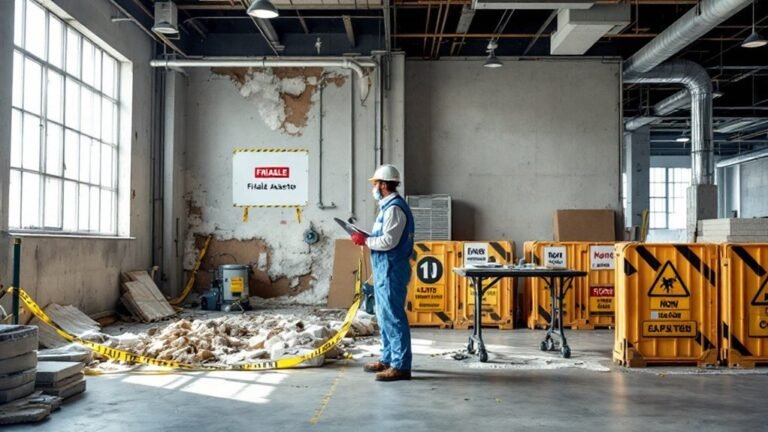
- Establish sealed containment with negative air pressure units inside fire safety zones to prevent hazardous dust migration.
- Implement continuous air monitoring at property lines, pausing work if asbestos or contaminants exceed limits.
- Provide neighbours a 48-hour written notice outlining removal timings and emergency response plans.
Additionally, segregating and securely transporting regulated waste maintains compliance and avoids cross-contamination.
Develop Safe Work Method Statements for Complex Demolition Sites
When we’re dealing with complex demolition sites, developing a thorough Safe Work Method Statement (SWMS) is essential to manage the high-risk activities involved. The SWMS must clearly identify all hazards, including confined space entry and risks of structural collapse, detailing control measures grounded in site-specific engineering assessments.
Engaging workers and subcontractors in its development guarantees practical, effective procedures, and it requires sign-off by the PCBU before work starts.
For multi-storey demolitions, provisions like debris netting and containment barriers are critical and must remain until cleanup finishes.
We also need to review and update the SWMS whenever demolition methods change, maintaining detailed revision records. This systematic approach forms the basis for structural collapse prevention and safeguards everyone on site while meeting stringent regulatory requirements.
Communicate Effectively With Business Owners and Local Stakeholders
Although demolition work is inherently disruptive, we can markedly reduce its impact on nearby businesses and stakeholders by establishing clear, consistent communication from the outset.
To achieve this, we focus on:
- Providing business owners with a detailed pre-demolition schedule at least 14 days prior, outlining timelines, noise expectations, and safety measures.
- Designating a single liaison officer as the primary contact, ensuring rapid responses to enquiries and concerns.
- Conducting pre-demolition condition reports with photographic evidence to prevent liability disputes.
- Issuing weekly progress updates that include vibration monitoring data and changes in traffic or site access.
Final Thoughts
As we manage demolition around operating businesses, we prioritize safety, minimize disruptions, and maintain public access with careful site controls. By rigorously controlling dust, noise, and vibration, and coordinating hazardous material removal thoughtfully, we protect neighbors and stakeholders. Developing clear, safe work methods and maintaining open communication with business owners guarantees smooth operations throughout. Together, these strategies help us complete demolition projects efficiently while supporting the ongoing success of surrounding businesses and communities.