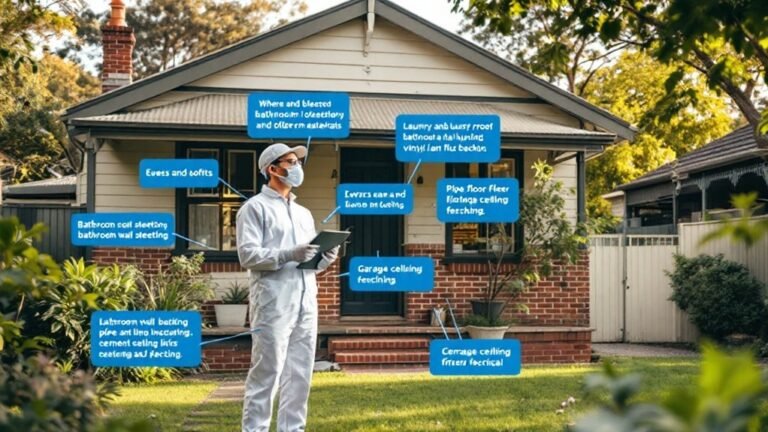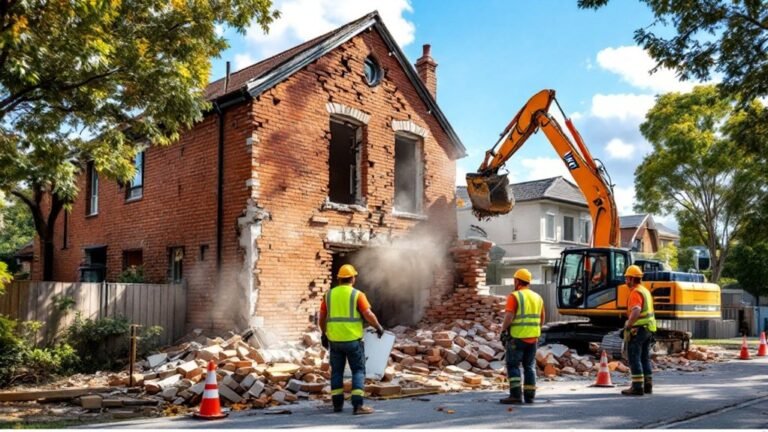
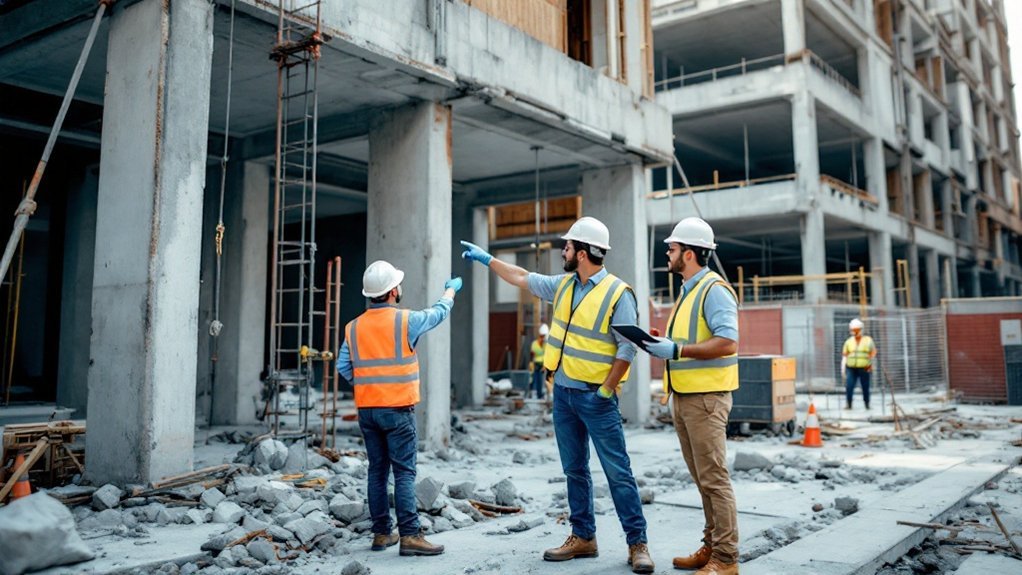
What Happens During a Site Inspection for Demolition?
Before demolition starts, we inspect permits, approved plans, and notification records so work matches the site and scope. We verify services are disconnected, capped, or isolated, and check AS 2601 precautions, including hoardings, exclusion zones, barriers, signage, fencing, shoring, and debris controls. We review asbestos and hazardous-material clearances, structural stability, public protection, and waste controls. If anything is unsafe or incomplete, we’ll require correction before work proceeds. The next sections show what each check involves.
What Does a Demolition Site Inspection Cover?
A demolition site inspection is the project’s safety gate before demolition starts.
We verify that every mandatory AS 2601 precaution is complete and approved by the building surveyor, including protective outriggers, debris clearance, exclusion zones, barriers, fencing, and signage.
We confirm the licensed demolition area is clearly demarcated and that public access isn’t controlled by signage alone.
If an external wall sits on, or within 3 metres of, a street alignment, we check that removal will occur only during surveyor-directed hours.
We review hazardous-material controls, confirming asbestos and similar risks have been removed by licensed professionals, especially for properties built before the 1990s.
We assess Public notification, Waste management, operating procedures, and environmental controls, then document non-compliance for immediate correction before work proceeds safely.
When Is a Demolition Site Inspection Required?
Under AS 2601, we can’t begin demolition until the required precautions have been inspected and approved by the relevant building surveyor, so we’ll arrange this before work starts.
In Victoria, we must also notify the VBA at Stage (a) after all precautions under Regulations 116 or 117 are complete, because starting without that mandatory inspection can trigger serious penalties.
At Stage (b), we’ll call the final inspection when all demolition or removal work is finished, unless the surveyor determines the minor work doesn’t warrant prescribed measures.
Before Demolition Starts
Before demolition starts, we’ll arrange a demolition site inspection to confirm that the mandatory precautions required by AS 2601 have been completed and approved by the relevant building surveyor.
This inspection is required at the mandatory notification stage under regulation 168 of the Building Regulations 2018, once precautions under regulations 116 or 117 are finished and before demolition lawfully starts. We verify the site is controlled, not that work has begun. We also confirm Neighbor notification and traffic management are documented, because uncontrolled public interfaces create serious risk.
Without approval, starting demolition is an offence under section 33 of the Building Act 1993, with penalties up to 120 penalty units for a natural person or 600 for a body corporate. The relevant building surveyor must report missed inspections to the VBA, which issued 30 sanctions totaling $98,000 in 2021–2022.
Minor demolition may be exempt where prescribed precautions are unnecessary for the project scope.
After Precautions Are Complete
Once all precautions under regulations 116 or 117 are complete, we’ll call for the mandatory demolition site inspection required by regulation 168, before any demolition work starts.
At this stage, after precautions complete, the relevant building surveyor reviews the implemented controls, including hoardings, shoring, services isolation, adjoining property protection, and site security. They’ll compare the works against the approved permit, demolition plan, and AS 2601 requirements. If the measures meet legal safety standards, the surveyor formally approves the site as ready for demolition.
We can’t lawfully begin demolition until that approval is issued. If we fail to call for this mandatory inspection, it’s a serious offence, exposing us to VBA disciplinary action and penalties of up to 120 penalty units for a natural person.
At Final Completion
After demolition or removal work is complete, we’ll notify the relevant building surveyor for the final demolition site inspection required by regulation 168(b).
This inspection confirms that all demolition work is finished and the site is safe for closure. We don’t leave rubble, exposed services, unstable edges, or access hazards onsite. If we fail to call for this final inspection, the VBA may impose disciplinary sanctions; 30 were issued in 2021-2022.
| Checkpoint | Required outcome |
|---|---|
| debris clearance | No demolition waste, sharp objects, or trip hazards remain. |
| Final approval | Building surveyor confirms the site is cleared, stable, and hazard-free. |
Protective outriggers and other AS 2601 measures stay in place until the surveyor confirms safety. We then maintain exclusion controls until every temporary safety measure is removed.
Which Permits Does a Demolition Site Inspection Check?
We check that demolition permit approval is current and that the approved scope matches the work we’re about to inspect.
We also verify council approval conditions, including required precautions, notification stages, access controls, and any limits on demolition timing.
Where asbestos is involved, we confirm asbestos removal clearance before any affected work proceeds.
Demolition Permit Approval
Demolition permit approval is the checkpoint where we confirm the site can legally and safely proceed, because the inspection verifies that the mandatory stages under regulation 168, including precautions under regulations 116 or 117, have been approved by the relevant building surveyor before work begins.
We check permit validity, confirming the permit hasn’t expired, matches the site, and covers the approved scope. Where pre approval notification is required, we confirm it’s lodged before work starts.
We verify permits are secured, avoiding fines, stop-work notices, or delays. For pre-1990s buildings, we check evidence that licensed professionals handled and removed asbestos.
We confirm water, electricity, gas, and telecommunications disconnected or isolated. We inspect outriggers and make certain debris is cleared to AS 2601 and Building Regulations 2018.
Council Approval Conditions
When we attend a demolition site inspection, we check that council approval conditions have been satisfied before any work starts: the demolition permit or planning permit has been issued, the approved demolition plan is on site, and the work is limited to its approved scope.
| Check | Site evidence |
|---|---|
| Permit verification | Demolition or planning permit issued |
| Approved plan | Council demolition plan on site |
| AS 2601 controls | Outriggers, hoarding, protection within three metres |
| Work timing | Street-alignment demolition within directed hours |
We confirm council timing conditions, mandatory notification stage (b) under regulation 168 debris clearance, and hazardous-material pre-demolition requirements in the permit. If controls are absent or scope has changed, we’ll stop demolition until the surveyor receives corrected evidence and written authorisation before crews re-enter the work area.
Asbestos Removal Clearance
Once council approval conditions are checked, asbestos removal clearance is the first mandatory stop point we’ll verify before any demolition work starts.
We confirm a Licensed assessor has issued a Clearance certificate showing all identified asbestos has been removed, and that the building surveyor has inspected and approved precautions under regulation 116 or 117 of the Building Regulations 2018, consistent with AS 2601.
Where no asbestos register exists, we check a competent person inspected the structure; in New South Wales, the demolition licence holder must review the register and guarantee removal before demolition begins.
Starting without this inspection is a serious offence under section 33 of the Building Act 1993, with penalties up to 120 penalty units for individuals or 600 for bodies corporate.
How Does a Demolition Site Inspection Verify Utilities?
After demolition precautions are completed, we verify utilities by confirming that water, electricity, gas, and telecommunications services have been formally disconnected and capped by the relevant utility providers before any demolition work starts.
| Utility | Proof checked | Why it matters |
|---|---|---|
| Water | Capped mains | Stops flooding |
| Electricity | Locked-off meters | Prevents electrocution |
| Gas | Capped lines | Prevents explosions |
| Telecommunications | Isolated cables | Prevents shock |
We inspect evidence of removed or isolated electrical service connections. We request written confirmation or permits, proving safety and council compliance. For gas/electricity, we’ve confirmed no active utility lines remain in the demolition zone, because live services endanger workers and the public. We record utility clearance and service isolation, then the relevant building surveyor confirms disconnection during mandatory inspection stage under the Building Regulations 2018, regulation 168.
How Are Hazardous Materials Checked During Demolition?
Two checks control hazardous materials before we start demolition: a structure-level survey and a pre-start verification.
1. In the survey, we review the asbestos register, inspect suspect materials, and sample asbestos, lead paint, mould, flammable residues, and chemicals.
If no register exists, a competent person checks for asbestos, and licensed contractors remove identified asbestos before work begins.
2. For pre-1990s properties, we verify handling and disposal requirements with certified contractors, so legacy materials don’t expose crews during cutting, stripping, or loading.
3. Immediately before site mobilisation, the licensed demolition holder confirms whether chemicals remain in tanks, reaction vessels, pipework, or isolated plant.
If a hazardous chemical may be present, we need an unrestricted demolition licence unless an occupational hygienist declares it free in writing.
What Structural Risks Are Found During Demolition?
When we inspect a demolition site, we’re looking for structural conditions that could trigger premature collapse or uncontrolled debris release. We check load-bearing walls, columns, beams, and frames for instability, alterations, corrosion, rot, fire damage, and water infiltration that may have reduced capacity.
Previous renovations often leave unsupported openings or changed load paths, so we trace how forces move through the structure. We also assess temporary shoring and bracing for weakness, especially where the plan lacks clear Structural sequencing for removing load-bearing elements.
If asbestos, flammable materials, or other hazardous components are embedded in structural zones, disturbance can create health, fire, and failure risks. Near streets or adjacent buildings, we identify risks of wall pull-in and falling debris often requiring debris containment and outriggers.
Which Precautions Must Pass a Demolition Site Inspection?
Once structural risks are understood, we treat a demolition site inspection as a formal check that required precautions are already in place, not a step that can be completed later.
Under AS 2601, we’re not permitted to commence demolition until the relevant building surveyor has inspected and approved the required precautionary measures.
- External walls on or within 3 metres of a street alignment may only be pulled down during surveyor-directed hours.
- Where needed, protective outriggers must be installed where necessary, or where the surveyor requires them as an approval condition.
- All debris must be cleared before approval is given, because remaining material can destabilise access, services, or adjoining property.
If these requirements fail, the surveyor must notify the Victorian Building Authority before demolition starts.
How Are Safety Controls and Worker Training Verified?
After the required precautions are in place, we verify safety controls through the relevant building surveyor’s mandatory inspections at prescribed stages, including completion of precautions under regulations 116 and 117.
We don’t treat this as a formality; missed inspection calls can attract up to 120 or 600 penalty units under section 33 of the Building Act 1993.
During each demolition phase, we inspect exclusion zones, plant controls, supervision, procedures, and environmental requirements for compliance, recording and correcting non-compliance immediately.
Safety verification covers worker competence.
We confirm licence holders make certain workers doing licensed demolition have completed CPCCDE3030, with Training records available under clause 142E.
We check asbestos registers or competent-person inspections, confirm removal before demolition, and verify supervisor arrangements for untrained workers in demolition areas.
What Happens After a Demolition Site Inspection?
The inspection record is where the next obligations begin. If the relevant building surveyor identifies a failure to meet mandatory inspection requirements, they notify the Victorian Building Authority, and we’re likely to face disciplinary action. In 2021–2022, 30 sanctions were issued for missed mandatory inspection calls, with $98,000 in penalties.
After inspection, we must keep the site controlled until every risk is closed.
- We verify permits, barriers, services isolation, and safety measures before access.
- We clear remaining demolition debris and maintain disposal documentation for regulated materials.
- We follow a debris removal schedule so the site is free of debris at completion.
Once the final mandatory inspection confirms demolition or removal is complete, we can release the site for redevelopment, provided compliance checks are verified.
Frequently Asked Questions
How Much Does a Demolition Site Inspection Cost?
We’ll typically charge $300–$1,500 for a demolition site inspection, depending on hazards, access, documentation, and reporting depth. Inspection fees may rise for structural, asbestos, utilities, or traffic reviews; permit costs remain separate agency charges locally.
Who Is Qualified to Perform a Demolition Site Inspection?
We use a Licensed engineer or certified inspector when they’re licensed for your jurisdiction, trained in structural assessment, hazardous-material identification, and demolition safety standards; they’ll document risks, verify utilities, and define controls before work starts.
How Long Does a Typical Demolition Site Inspection Take?
We’ll usually complete a typical demolition site inspection in one to three hours, but inspection duration depends on site size, hazards, access, records, and scheduling factors. We’ll document risks before you authorize demolition safely onsite.
Should Property Owners Be Present During the Inspection?
Yes, we recommend you’re present, if safe, so we can verify access, utilities, hazards, and site constraints directly. Your presence reduces liability concerns, improves contractor communication, and helps us document decisions before demolition planning proceeds.
Can Bad Weather Delay a Demolition Site Inspection?
Yes, we’d reschedule if rain, high winds, lightning, or poor visibility could compromise access, documentation, or hazard assessment. Structural safety comes first, and we’ll document the timeline impact before confirming a safer inspection window soon.
Final Thoughts
We treat a demolition site inspection as a final control point; it isn’t a formality. Together, we confirm permits, utility isolation, hazardous-material controls, structural risks, access limits, dust suppression, emergency routes, and worker training before work proceeds. If gaps appear, we stop, correct, document, and recheck them. This process keeps the site compliant, reduces preventable exposure, and helps you manage demolition with clear accountability, verified controls, and a safer path from inspection to demolition work.