
How the House Demolition Process Works in Melbourne
We begin every Melbourne demolition with a practical site inspection. The inspection identifies construction materials, access restrictions, overhead wires, shared walls, boundary setbacks, and any suspect materials that may contain asbestos. For older Melbourne homes, common risk areas include eaves, wet-area sheet walls, vinyl flooring backing, cement roofing, switchboard panels, and shed or fence linings. If a material is suspect, we arrange testing through a NATA-accredited laboratory before any work disturbs it. The Victorian Building Authority has a helpful practice note on identifying asbestos in residential properties, but only licensed assessors can confirm what is present.
Council consent is the next formal step. Many Melbourne metro councils require a demolition consent under Section 29A of the Building Act, especially for complete demolitions or works that affect neighbouring properties. We manage the application, including the required site plans, protection work proposals, and neighbour notifications. The council can take up to 28 business days to issue the consent, though times vary by municipality. Once you have council consent, we apply for your building permit through a registered building surveyor. The permit confirms the demolition complies with the Building Code of Australia and any local overlays such as heritage, flooding, or vegetation protection. Both documents need to be in place before any physical work starts.
While council and the building surveyor process the approvals, we book service disconnections to keep the programme on track. The standard disconnections cover electricity, gas, water, and telecommunications. For electricity abolishment or underground pit removal, the distributor often needs several weeks’ lead time and a site to be fully cleared first. Gas disconnection requires an accredited gasfitter to cap the meter and arrange abolishment through the network operator. Water service alteration is handled through the local water authority and may involve a tap disconnection at the main. All disconnections must be physically completed before structural demolition begins.
If asbestos is confirmed, a licensed asbestos removalist undertakes the removal under controlled conditions before general demolition starts. For non-friable asbestos, typically sheet products, the removalist sets up exclusion zones, uses wet methods to suppress fibres, and double-wraps waste in heavy-duty polythene labelled to EPA Victoria standards. Friable asbestos work carries stricter licence, enclosure, air monitoring, and clearance requirements under WorkSafe Victoria. EPA Victoria’s industrial waste resource guidelines explain the classification and transport duties for asbestos waste. Every Melbourne demolition that involves asbestos should produce a clearance certificate from an independent licensed assessor before the next trades re-enter the site.
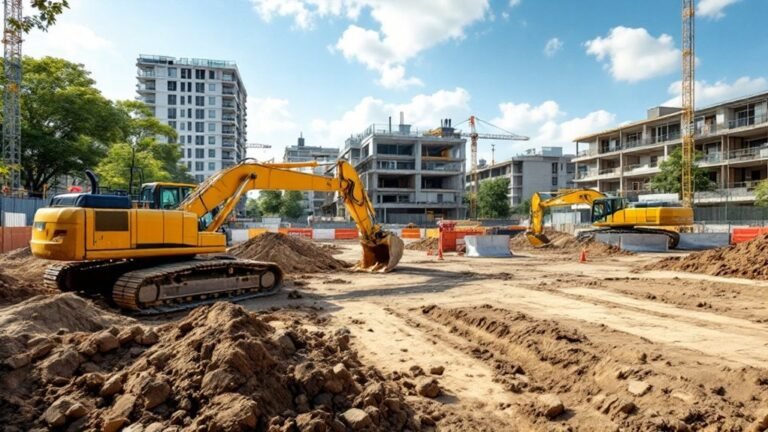
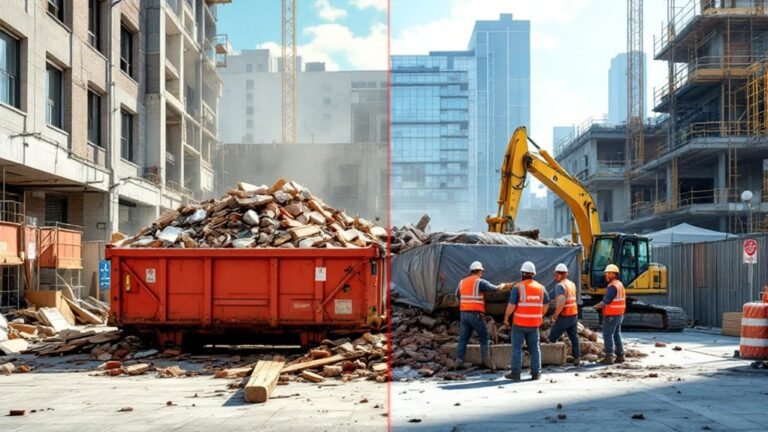
Once the site is free of hazardous materials and services are disconnected, mechanical demolition strips the structure. Excavators fitted with shears, grabs, and breakers work through the building methodically, often starting with non-load-bearing elements and roofing, then moving to framing, flooring, and slabs. On tight Melbourne sites with zero boundary setbacks, machines may work inside the footprint, processing the building in controlled stages. All waste is sorted at ground level according to EPA Victoria’s waste hierarchy: priority goes to direct reuse of materials such as undamaged bricks and hardwood sections, followed by recycling of concrete and steel, then energy recovery where practical, and finally licensed landfill for residual waste. Concrete and brick rubble are typically crushed on site or transported to a Victoria-based recycling facility where they become road base and civil fill. Structural steel and copper wiring are separated for scrap metal recycling.
Sheds, garages, fences, and ancillary structures are addressed within the same approval and waste plan. If a shed is lined internally, it may harbour concealed asbestos sheeting. Fences on shared boundaries often require temporary stabilisation or replacement after demolition, so we factor those into the protection work schedule early.
The final stage is scraping the block clean and levelling the surface ready for construction. The clearance certificate, issued by the building surveyor, confirms the demolition complied with the approved permit, asbestos clearance is on file, and service abolishments are complete. For project builders and property managers, this certificate is typically the handover document that signals the site is safe and construction-ready.
What drives cost and timing on a Melbourne demolition varies. Asbestos removal adds both time and cost, especially if multiple types of asbestos are found or air monitoring is required. Sites with limited access, steep gradients, trees, or rock can increase machine hours and tip fees. Heritage overlays or council vegetation protections almost always extend the approval timeline. Service abolishments involving underground pit removal or complex overhead line re-routing can stretch lead times further. Relying on a team that coordinates the approvals, disconnections, hazardous material removal, and waste separation in the right sequence reduces the number of days between the last owner possession and a clear block.
For any regulatory items discussed here, confirm current requirements directly with your local council, a licensed building surveyor, the Victorian Building Authority, WorkSafe Victoria, or EPA Victoria.
Highlights
Pre-Demolition Site Inspection in Melbourne
A thorough site inspection is the practical starting point for every demolition project. The inspection maps construction materials, site access constraints, boundaries, and any feature that will affect machinery choice, safety controls, and project programming. For older Melbourne homes, common risk factors include narrow side access in inner suburbs, shared walls on terrace houses, and overhead tram or power lines that restrict crane and excavator movement. The inspection also checks for eaves lined with asbestos sheeting, buried concrete slabs from earlier structures, and any sections of suspended flooring that might hide undocumented subfloor hazards.
The report gives builders a clear picture of what needs removal, what the site will tolerate in terms of heavy machinery, and where temporary fencing or pedestrian controls are required before work can start.
Service Disconnections and Abolishments
Before any demolition work begins, gas, electricity, water, and sewer connections must be formally abolished by the relevant utility providers and registered on an asset protection system such as the national Dial Before You Dig service. This is not a last-minute admin task. Booking slot availability with electricity distributors and water retailers can stretch weeks, particularly during peak construction periods in spring and autumn. Failing to secure early disconnection dates is a common cause of site delays.
For property managers and builders, coordinating service abolishment with the overall demolition timeline avoids wasted mobilisation costs. Once the connections are cut, the site is electrically safe and ready for physical works.
The Role of WorkSafe Victoria and Authority Requirements
WorkSafe Victoria governs workplace health and safety during demolition. If a structure contains confirmed asbestos that forms part of a demolition scope, the licensed asbestos removalist performing the work must notify WorkSafe Victoria before removal starts. Site safety plans, exclusion zones, and decontamination procedures become mandatory from the moment suspect materials are disturbed. For demolition projects attached to a broader construction or civil contract, principal contractors must also manage overlap risks between trades, a point WorkSafe inspectors routinely check.
Formal requirements change, so always confirm your project obligations directly with WorkSafe Victoria, your building surveyor, and a licensed asbestos assessor before site work commences.
Asbestos Testing and the Hazardous Materials Audit
Under Victorian law, a hazardous materials audit is compulsory before disturbing any building materials in a pre-1990 structure. The audit, carried out by a competent person such as a licensed asbestos assessor, identifies and samples suspect materials. Asbestos is commonly found in Melbourne properties built before the mid-1980s: corrugated roofing and fencing, vinyl floor tiles and backing paper, wet area lining boards, and cement sheet eaves. Even brick homes often contain asbestos in soffits, meter box panels, and old shed cladding.
Only laboratory testing confirms whether the material contains asbestos. The test results shape the removal method, required enclosure size, air monitoring, and tip documentation. Homeowners who skip testing risk project shutdowns if unexpected fibrous materials appear during strip-out. Never attempt to remove or disturb suspect materials yourself. Engage a licensed professional to test and, if needed, remove the material under controlled conditions.
Demolition Permits and Planning Consent
Demolition in Victoria requires a building permit issued by a registered building surveyor. The permit confirms structural adequacy of the demolition method and any required protection works for adjoining properties. If the property sits within a Heritage Overlay, Neighbourhood Character Overlay, or other planning control, separate planning consent from the local council is needed before a building permit application can proceed. The Victorian Building Authority provides regulatory oversight, but your surveyor is the first point of contact for permit conditions and mandatory inspection stages.
Practical steps to reduce delays:
- Engage a surveyor early to confirm whether protection works notices for neighbouring walls or footings will be required.
- Check the council’s planning scheme for overlays before lodging any permit application.
- Allow time for owner consent if the property is part of an owners corporation or subject to party wall agreements.
Demolition Waste, Recycling, and EPA Victoria Obligations
EPA Victoria sets a waste management hierarchy that directly applies to demolition. The hierarchy prioritises reuse, then recycling, then energy recovery, with disposal to licensed landfill as a last resort. For a typical residential demolition in Melbourne, approximately 80 to 85 percent of material by weight can be recovered when the process is managed correctly.
Concrete and brick are crushed into recycled aggregates for road base and civil backfill. Structural timber is separated and sent for chipping or direct reuse. Metals are sorted by type and recycled through scrap processors. Plasterboard and insulation generally require separate handling and dedicated disposal paths.
Asbestos-contaminated waste sits outside this recovery path. It must be double-wrapped in approved heavy-duty plastic, labelled, and transported to a landfill licensed to accept asbestos. The waste transporter must complete EPA waste tracking paperwork.
Stumps, Slabs, and Footings
Many older Melbourne homes sit on timber stumps or strip footings that require full excavation during demolition. Stumps leave voids that need backfill and compaction. Deep concrete footings from earlier extensions or outdoor structures often extend farther than the visible footprint suggests. A site inspection helps identify the likely extent of below-ground obstructions, but final excavation often reveals extra concrete that was not visible on the surface plan. Budgeting for a contingency on footing removals is standard practice for builders and property managers in established suburbs.
Driveways, Sheds, Fences, and Ancillary Structures
Demolition seldom stops at the house walls. Concrete driveways and paths, brick or asbestos cement garages, rear sheds, boundary fences, and retaining walls frequently form part of the scope. Each raises its own approval, waste separation, and access question. Timber fences along boundaries may carry remnant asbestos cement sheeting on one side. Old garden sheds are a high-risk source of overlooked asbestos wall panels. In commercial settings, concrete loading docks and machinery plinths extend the demolition footprint and material volume substantially.
Identifying all ancillary structures during the first site visit prevents scope gaps that create cost variations once works are underway.
Choosing a Demolition Contractor in Melbourne
The most reliable approach is to check the contractor’s process for permits, asbestos testing, utility disconnections, and waste recovery before comparing price. A structured demolition process protects the schedule, reduces neighbour complaints, and keeps council and EPA compliance straightforward. Good contractors will walk you through site inspection findings, explain where costs sit, and flag risks before quoting. Ask for a breakdown of what happens to every waste stream and how protection works for adjoining properties will be handled.
Practical checks before engaging a contractor:
- Confirm they arrange or direct you to a licensed asbestos assessor for the mandatory hazardous materials audit before any physical work.
- Ask which building surveyor they recommend and confirm the surveyor’s registration with the Victorian Building Authority.
- Ensure the quote clearly states who manages the Dial Before You Dig enquiries, utility bookings, and asset protection requirements for council infrastructure.
- Request a draft waste management plan that shows concrete, timber, metal, and general waste destinations.
Always verify regulatory requirements with the relevant authority or council, and use licensed professionals for asbestos testing, asbestos removal, and building surveying.
What Happens at Your First Demolition Inspection?
Before any demolition begins in Melbourne or across Victoria, a detailed on-site inspection sets the foundation for the entire project. This visit isn’t a quick walk around the block. It’s a methodical assessment that captures the real conditions of your property, from the materials in the walls to the soil under the slab. Every observation shapes a quote that reflects actual site requirements, not rough assumptions.
What we assess during the inspection
Our inspection checklist is structured to leave nothing unexamined. We look at the obvious elements, such as building size and construction type, but the real value sits in the details that are easy to miss.
Site access and layout
We check how vehicles and machinery will enter and move around the site. Narrow driveways, tight corners in inner-Melbourne suburbs, overhead powerlines, low-hanging eaves, and neighbouring structures all influence equipment choice and safety planning. If heavy machinery needs to navigate past a heritage listed terrace in Fitzroy or a retained front fence in Camberwell, that affects both cost and method.
Construction type and materials
Older Melbourne homes often contain a mix of materials: weatherboard, double brick, fibrous cement sheeting, and concrete stumps. We record what the structure is made of so removal methods and waste separation are planned early. Concrete slabs, brick walls, roofing tiles, and rubble each follow different waste streams. Vinyl flooring, cladding, and wet area linings from pre-1990 builds are flagged for asbestos testing before any disturbance occurs.
Hazardous materials identification
Suspect materials are noted, not touched or removed. If we identify fibrous cement eaves, corrugated roofing, vinyl tiles, or pipe lagging that may contain asbestos, the next step is clear: arrange testing through a NATA-accredited laboratory before work proceeds. Only after results confirm asbestos content, or rule it out, can we finalise removal methods and quote figures. This approach aligns with WorkSafe Victoria’s compliance codes and EPA Victoria’s waste transport and disposal obligations.
Structural instability and risks
A building that looks sound from the street may have roof truss movement, failing lintels, or cracked footings that pose risks during demolition. We look for sagging ridge lines, leaning walls, and water damage that could point to deeper structural problems. Retaining walls, shared walls on boundary lines, and partially collapsed sections change how a site is managed. Identifying these early prevents surprises when machinery starts work.
Boundary sensitivities and adjoining properties
In Melbourne’s established suburbs, proximity to neighbours is a constant factor. We inspect fence lines, adjoining roofs, shared walls, and any signs of damp proof course bridging or previous underpinning next door. If your terrace in Carlton or Brunswick shares a party wall with the neighbouring home, the demolition method must protect that wall from vibration and movement. We also look at trees on or near the boundary that may be protected by council overlays. These constraints shape the scope of works and, in some cases, require input from a structural engineer or arborist.
Service connections
We locate visible gas, water, electricity, and telecommunications connections. Unknown or abandoned service lines are common in older properties, especially where sheds, granny flats, or extensions have been added over decades. Our inspection doesn’t authorise disconnections, so we recommend arranging service abolishment through the relevant utility providers before demolition starts. For gas and electricity, this means coordinating with the distributor in your area. For water and sewerage, it means contacting your local water authority.
Drainage and stormwater
Stormwater pipes, old septic tanks, and disused grease traps hide underground and turn up when excavation begins. We check drainage points, downpipe connections, and site fall to anticipate where water flows. This becomes even more relevant if you plan to build straight after demolition, as unexpected ground conditions can delay subdivisional works or slab preparation.
How the inspection shapes your quote
A demolition quote should reflect site specific conditions, not generic square metre rates. By capturing every variable during the inspection, we map the exact removal sequence, equipment needed, and waste logistics that apply to your property. For example:
- A standalone brick home on a flat block in Glen Waverley with full truck access allows straightforward mechanical demolition.
- A weatherboard cottage in Northcote with a shared wall, tight site access, and confirmed asbestos eaves requires hand demolition on the boundary, asbestos removal by a licensed professional, and smaller machinery.
- A commercial warehouse in Dandenong with concrete tilt panels and warehouse racking may need sequential dismantling, not just a single machine push.
Each scenario carries different timeframes, labour demands, tipping fees, and regulatory steps. The inspection is where these differences are uncovered.
Council permits and regulatory triggers
Many demolition projects in Victoria require a building permit or a demolition permit issued by a private building surveyor or the relevant municipal council. During the inspection, we note anything that might trigger extra approvals: heritage overlays, vegetation protection overlays, or Special Building Overlay flood areas. If your property sits within a Heritage Overlay, for instance, partial demolition or even full demolition may require a planning permit before any building permit is issued. This isn’t a detail to discover halfway through the project.
The Victorian Building Authority sets the framework for demolition permits, but individual councils apply local planning policies. We identify the triggers so you can confirm requirements with your local council or building surveyor before committing to a timeline.
Waste and recycling planning
Demolition waste in Melbourne is regulated by EPA Victoria. Concrete, brick, timber, metals, and plasterboard each follow a waste hierarchy that prioritises reuse and recycling over landfill. During the inspection, we estimate waste volumes and identify materials that can be separated on site. Concrete and rubble can often be crushed for road base. Clean timber may go to mulching facilities. Metals hold salvage value. Asbestos contaminated materials, if present and confirmed by testing, must go to a licensed landfill under strict transport conditions. The inspection gives us enough detail to plan waste streams properly, which keeps costs manageable and aligns with EPA expectations.
Frequently asked questions during the inspection
Do you test for asbestos during the inspection?
No. The inspection identifies suspect materials only. For certainty, samples must be collected by a qualified professional and tested at a NATA-accredited laboratory. You can arrange this directly, or we can coordinate it on your behalf after the inspection. No suspect material is disturbed during the inspection itself.
How long does the inspection take?
Most residential inspections take 45 to 60 minutes, depending on site complexity and access. Commercial sites, larger industrial sheds, and properties with multiple structures may require a longer visit or a follow-up walkthrough.
Do I need to be there?
It helps. You can point out septic tanks, old wells, underground tanks, or other features that aren’t obvious on the surface. You can also ask questions about staging, site security, and timing while we’re standing on site together.
What if the property has a pool?
Pools require separate assessment. We check the pool type (concrete, fibreglass, vinyl lined), its proximity to boundaries, and whether it was backfilled previously. Pools add waste volume and often require a separate demolition permit. We record dimensions and materials so the quote accounts for the extra work.
Fences, sheds, and outbuildings
Freestanding garages, carports, sheds, pergolas, workshops, and fences are part of the inspection scope. These structures sometimes contain asbestos cement sheeting, particularly in pre-1990 builds. We treat them with the same caution as the main dwelling. If you want a fence retained or a shed left standing, make that request during the inspection because it affects the access plan and waste separation strategy.
After the inspection
You receive a written quote that breaks down the scope of work, the proposed method, waste handling, and any assumptions about permits, access, and service disconnections. The quote references the inspection findings directly, so you can see what was observed and how it influences cost. If testing or additional reports are needed, those items are listed as prerequisites before work can commence. The goal is simple: a fixed plan, built from real site data, that keeps your project compliant and predictable.
How to Get Demolition Consent and Your Building Permit
Before you organise machinery or order a skip bin, it pays to understand exactly what triggers the consent process in Victoria. Demolition consent and your building permit serve two different purposes, and both are mandatory for most full or partial teardowns.
What triggers the need for consent
You will need Section 29A demolition consent from your local council if the work involves any of these common scenarios:
- Removing an entire dwelling, terrace, or unit in metropolitan Melbourne
- Taking down a commercial building or warehouse before redevelopment
- Demolishing outbuildings covered by a heritage overlay, even a shed or carport
- Stripping more than half the volume of a structure, which the council may treat as a full demolition
- Partial removal that affects the street facade or front fence in a heritage streetscape
- Any work on a site listed on the Victorian Heritage Register, which triggers a separate referral pathway
Smaller projects, such as freestanding backyard sheds without an overlay, may not need separate council consent but will usually still require a building permit.
The two key roles: council and building surveyor
The council doesn’t assess structural safety. Its job under Section 29A is to consider public safety, neighbourhood character, and asset protection during and after demolition. Expect the council to examine:
- Whether the method statement protects adjoining walls, party walls, and shared roofing
- How you’ll manage dust, demolition waste, and runoff into stormwater drains
- Whether the site will be left safe, level, and properly fenced after completion
- Impact on street trees, nature strips, and council assets such as footpaths and vehicle crossings
Once council consent is granted, those approved documents go to a registered building surveyor. The surveyor enforces the Building Act 1993 and the Building Regulations 2018. They check:
- Structural adequacy of temporary works, hoardings, and site fencing
- Safe removal sequence for load bearing walls, eaves, lintels, and roofing materials
- Whether service disconnections for gas, electricity, water, and sewer have been confirmed
- That a current site inspection schedule is in place before work begins
You can’t start a single day of major demolition with only council consent. The building permit is the legal trigger to begin work.
Essential steps before lodging your application
Rushing the paperwork leads to delays. Before you lodge, run through this practical checklist.
Confirm your planning scheme controls
Look up your property on the Department of Transport and Planning’s VicPlan portal. Check for:
- Heritage Overlays
- Neighbourhood Character Overlays
- Design and Development Overlays
- Environmental Significance Overlays
An overlay means additional reporting is needed. If you skip this search, the council will ask for it anyway.
Arrange an asbestos assessment
Older Melbourne homes built before the mid-1980s commonly contain asbestos materials. You might find it in eaves, wet area wall linings, vinyl flooring backing, cement sheet cladding, and corrugated roofing. Under Victorian law, you must identify asbestos before demolition. Engage a licensed assessor to do an intrusive audit and provide a hazardous materials report. That report forms part of your demolition documentation.
Do not disturb suspect materials yourself. Even drilling into an old sheet can release fibres that the EPA enforces strict controls on. Without a current report, most councils will reject the consent application outright.
Book your service disconnections
You can’t demolish over live services. Arrange permanent abolishment or temporary disconnection for:
- Electricity (contact your retailer and the distributor)
- Gas (retailer and network operator)
- Water and sewer (the local water authority)
- Telecommunications (NBN Co and any other provider)
Keep all confirmation paperwork. Your surveyor will want to sight it before issuing the permit.
Site set up and asset protection
Council consent requires evidence that you’ll protect council assets. Typically this means:
- Applying for an Asset Protection Permit before works start
- Documenting pre-existing condition of footpaths, kerbs, vehicle crossings, and nature strip trees
- Installing appropriate fencing, such as chain wire panels with shade cloth to contain dust and debris
Your demolition contractor should include these details in the site management plan.
Safe work methods and notification
WorkSafe Victoria plays a role distinct from the council and surveyor. If the demolition involves structural alterations or a risk of collapse, the contractor must prepare a Safe Work Method Statement. For commercial sites or multi storey structures, a Demolition Work Plan is often required. The principal contractor also needs to notify WorkSafe at least five days before starting commercial demolition.
For domestic demolition on a standard Melbourne house, the notification threshold is lower, but safe work practices remain essential. Ask your contractor how they’ll manage concrete, brick, and rubble stockpiles so bins don’t overload public land.
What adds cost and time
Understanding cost drivers helps you budget realistically. Common variables include:
- Asbestos removal: Licensed removal adds cost but is non-negotiable. Quantity, type (friable or non-friable), and access affect the price.
- Site access: Narrow inner-city lanes, shared driveways, and overhead powerlines force smaller machinery or hand dismantling, which takes longer.
- Soil contamination: Old service station sites or industrial yards may trigger EPA Victoria audit requirements before the council signs off.
- Material salvage: Retaining period features such as Baltic pine flooring or bluestone footings requires careful disassembly, not mechanical knocks.
- Waste sorting: Separating concrete and brick from general demolition waste reduces landfill levies and tip fees, but adds labour hours.
A clear scope of work keeps quotes comparable. Supply each contractor with the same set of plans, the hazardous materials report, and any council conditions attached to the consent.
The permit pathway at a glance
- Engage a private building surveyor or check if your council provides municipal surveying services.
- Commission an asbestos audit and hazardous materials report from a licensed assessor.
- Apply to the local council for Section 29A consent, attaching a site management plan and proof of service disconnection bookings.
- Receive council consent, noting any conditions relating to hours of work, material handling, dust suppression, or waste management.
- Lodge the council consent and supporting documents with your building surveyor to apply for the building permit.
- Receive the building permit, meet any pre-start inspection requirements, and then begin demolition.
Common pitfalls to avoid
- Assuming a building permit alone is enough. You nearly always need council consent first for full demolitions in Victoria.
- Signing a demolition contract without seeing a hazardous materials report. Unknown asbestos turns a fixed quote into a variation claim quickly.
- Leaving service disconnections until the week work starts. Booking delays can push your programme out by weeks, especially in busy periods.
- Forgetting that party walls and shared eaves require neighbour communication. Even if you stay within your boundary, you must document how you’ll protect adjoining structures.
- Underestimating the EPA’s interest in dust and sediment. On commercial sites, failure to prevent runoff into stormwater can result in fines.
Regulatory oversight
Several authorities have a stake in how demolition is carried out across Melbourne and Victoria.
- The Victorian Building Authority governs the registration of building surveyors and sets standards for permit issuance.
- WorkSafe Victoria enforces workplace safety during demolition and can issue improvement notices on unsafe sites.
- The Environment Protection Authority Victoria (EPA) regulates noise, dust, waste transport, and disposal of contaminated material.
- Individual councils enforce the planning scheme, heritage requirements, and local amenity laws.
No single agency manages the whole process. Your demolition contractor and surveyor should coordinate across these bodies so you aren’t left chasing paperwork mid-project.
Next steps
Start early. A typical consent plus permit process for a standard Melbourne home takes four to eight weeks, sometimes longer if overlays apply or neighbouring properties need extra protection. Gather your documentation, book the site inspection for the dilapidation report, and talk to a registered building surveyor before you finalise your project timeline.
Always confirm your specific obligations with your local council, a licensed asbestos assessor, and a registered building surveyor. Requirements vary across Victoria’s 79 councils, and only a qualified professional reviewing your property can give you definitive advice.
Consent Triggers Explained
Planning Consent and Demolition Permits in Victoria
Before you can book a demolition team, you need to confirm whether your project triggers a formal planning process. In Melbourne and across Victoria, certain works activate what’re known as consent triggers. These require council approval before a demolition permit can be issued. Missing this step can delay your project, attract fines from your local council, or result in a stop-work order.
What Activates a Planning Consent Trigger
Consent triggers apply to specific scenarios. If any of the following matches your project, you’ll likely need a planning permit or consent under Regulation 29A of the Building Regulations before demolition can begin.
Demolishing most of an existing house, even on a standard suburban block, often activates the process. Altering or removing a street-facing façade is another common trigger, particularly for period homes where the frontage contributes to the character of the streetscape. Work in a Heritage Overlay or Neighbourhood Character Overlay requires careful review; these overlays protect older Melbourne homes, including those with distinctive eaves, roofing profiles, and façade detailing, and can restrict full or partial demolition.
A practical rule of thumb is the 40 square metre threshold. Any building, or combined series of works, exceeding 40 square metres generally requires a demolition permit. However, even a masonry structure under that size, such as an old brick garage, shed, fence with brick piers, or chimney stack, can still require a permit and may trigger additional structural and safety checks.
The Approval Sequence
Planning consent and a demolition permit are separate documents, obtained in sequence. The typical process moves through these steps:
- Confirm overlays and triggers with your local council or a building surveyor.
- If consent is triggered, lodge a planning application. Council usually requires plans, a site plan, and sometimes a structural assessment or heritage report.
- Allow 3 to 6 weeks for council to assess and determine the application, depending on complexity and whether advertising to neighbours is required.
- Once planning consent is granted, address any permit conditions such as service disconnections, asbestos assessment, or environmental controls.
- Apply for the demolition permit through a registered building surveyor.
Related Checks before Lodging Consent Documents
While the consent application is underway, you can progress a number of practical checks that will be required before any demolition permit is issued and before boots hit the ground.
Asbestos assessment: Many older Melbourne homes built or renovated before the mid-1980s contain asbestos in materials such as eaves, vinyl flooring, wet-area sheeting, and roofing. If suspect materials will be disturbed, you must arrange an inspection and testing by a licensed assessor before any work begins. Should asbestos be confirmed, a licensed removalist must carry out the removal and disposal. WorkSafe Victoria and EPA Victoria set strict requirements for asbestos handling, transport, and disposal. Don’t attempt to disturb or remove suspect materials yourself. Confirm requirements directly with a licensed assessor or WorkSafe.
Service disconnections: Gas, electricity, water, and telecommunications must be properly disconnected or abolished before demolition. This often requires separate applications to utility providers and can take several weeks. A private registered plumber and electrician typically coordinate the physical disconnection work.
Environmental and waste planning: Demolition waste is heavy, especially concrete, masonry, brick rubble, and roofing materials. Discuss waste sorting and recycling expectations with your demolition contractor early. Some materials can be crushed and reused as road base or fill. Contaminated waste, such as asbestos-containing material, must be handled separately and tracked through lawful disposal channels. EPA Victoria regulates the transport and disposal of construction and demolition waste.
Site inspection: Council may need to inspect the site before demolition commences to confirm property boundaries, protection of neighbouring structures, and tree protection zones. A dilapidation report on adjoining properties is sometimes requested.
Decision Points for Homeowners and Site Managers
When assessing whether you need consent, consider these factors:
- Is the building or part of the building older than the local heritage or neighbourhood character protections? Check your council’s planning scheme.
- Will more than half of the existing structural walls or the roof structure be removed? This often triggers demolition assessment even if part of the façade remains.
- Are you demolishing within a commercial or industrial zone in Melbourne? Different thresholds and environmental controls can apply, especially around contaminated land or stormwater management.
- Is a shed, fence, or carport included in the scope? Smaller structures can still carry consent requirements if they’re masonry or attached to a protected building.
Cost Drivers and Timing Factors
Planning consent applications involve council fees, plus the cost of any required reports. A heritage report or arborist assessment adds cost but can prevent delays if required up front. The 3- to 6-week council turnaround assumes a straightforward application with no objections. If advertising is required or an objection is lodged, timelines can extend. Allow extra time if your site falls within a Heritage Overlay or if partial demolition requires detailed engineering input.
Practical Starting Point
Before you engage a demolition contractor, contact your local council or a registered building surveyor to confirm:
- Whether a planning permit or Regulation 29A consent is required.
- What specific documents you must submit with your application.
- Whether a heritage or neighbourhood character assessment applies to your specific street or property.
Getting the trigger assessment right early helps keep your Melbourne demolition project on schedule and avoids the cost and frustration of rework. Always confirm current requirements with the relevant council or a qualified building surveyor before acting, as local planning schemes and state regulations are subject to change.
Surveyor Versus Council Roles
Many property owners lodge a demolition application with their local council and assume the council manages the entire approval. In Victoria, council consent is a mandatory prerequisite, not the final permit. Under Section 29A of the Building Act 1993, you must first obtain council consent for demolition before a registered building surveyor can issue the demolition permit. The council and the surveyor assess distinct risks. The council focuses on planning matters such as heritage overlays, neighbourhood character, streetscape impacts, and vegetation protection. The surveyor focuses on structural safety, site management, protection of adjoining properties, and compliance with the Building Code of Australia.
We manage two separate applications running in sequence, not in parallel. The first is the council consent application, often called a Section 29A report and consent. The second is the building permit application lodged with a registered building surveyor after council consent is granted.
Council consent decisions in Melbourne typically take three to six weeks depending on the complexity of overlays, objections from neighbours, or whether the property sits within a Heritage Overlay or Design and Development Overlay. Once we receive the council consent, we forward it to the surveyor to begin the building permit process. The building permit stage adds a strict minimum of 20 working days, provided all supporting documents are complete and no further site inspections reveal issues such as undocumented asbestos or unsealed service connections. With both steps combined, most standard residential demolition projects in Melbourne need a six to eight week compliance window before a single wall comes down.
What determines whether your project stays at six weeks or pushes closer to eight? Several practical drivers.
First, the age of the building. Pre-1990 structures in suburbs such as Coburg, Reservoir, Footscray, and Box Hill nearly always contain asbestos containing materials. Even late 1980s builds can surprise you with asbestos in eaves, wet area sheeting, vinyl flooring backing, shed cladding, fences, and old roofing. Before the surveyor can issue a demolition permit, you need a hazardous materials assessment conducted by a licensed assessor. If asbestos is confirmed, a licensed asbestos removalist must carry out removal and lodge the clearance certificate before the surveyor signs off. The Victorian Building Authority and WorkSafe Victoria both set strict requirements here. Delaying the asbestos inspection and testing is the single most common reason demolition approval timelines blow out.
Second, service disconnections. The council consent doesn’t confirm whether electricity, gas, water, and telecom services are properly abolished or disconnected. We coordinate with the relevant distribution businesses and retailers across Melbourne metro and regional Victoria. If a property still has an active overhead line or a gas meter left live, the surveyor won’t issue the permit. Abolishment delays on older Melbourne homes, particularly in areas with overhead power lines on timber poles in back lanes, routinely add a week or more.
Third, the site inspection findings. The surveyor checks for risks that planning overlays don’t capture: soil contamination, underground storage tanks, structural ties to neighbouring buildings, shared walls, or undocumented concrete and rubble fill from previous works. If the surveyor flags a requirement for additional protection works or an engineering assessment, the permit clock stops.
Fourth, EPA Victoria requirements for demolition waste. The Environment Protection Act 2017 and related regulations impose duties on anyone generating demolition waste to classify, transport, and dispose of it lawfully. Mixed loads of concrete, rubble, timber, plasterboard, and soil must be sorted or go to a licensed facility. On commercial and industrial projects, the council and surveyor may both ask for a waste management plan before proceeding. Sites with contaminated soils trigger more EPA oversight and extended lead times.
For property managers and commercial site managers in Melbourne, the six to eight week timeline assumes all documentation is lodged correctly the first time. Incomplete applications, missing neighbour notifications, inadequate asbestos registers, or incorrect site descriptions cause the council and surveyor to issue requests for further information, stopping the clock each time. We recommend treating the compliance window as a planning baseline, not a guarantee. If your project involves a partial demolition while retaining a facade, the surveyor will also need structural engineering details and a protection works plan for the retained elements before issuing the permit.
Builders and homeowners considering a DIY approach should understand the legal structure. You can’t skip the council consent stage by going straight to a private building surveyor. Section 29A explicitly makes council consent a precondition for the demolition permit. The surveyor is legally prohibited from issuing the permit until the council consent is sighted and all conditions are satisfied. You also can’t start demolition after getting council consent alone. The council consent authorises nothing on its own; it simply clears the path for the surveyor to assess and issue the building permit. Starting demolition without a building permit is an offence under the Building Act and can expose you to fines, stop work orders, and insurance complications.
For anyone managing a project in suburbs with strict heritage or character controls, such as Brunswick, Fitzroy, Kensington, or Williamstown, the council consent stage often takes closer to six weeks and may require a detailed demolition management plan addressing street tree protection, traffic management, and site hoarding aesthetics. We factor these overlay-specific requirements into the application from the start to avoid a round of requests for further information.
Older Melbourne homes present additional practical checks during the site inspection phase. Pre-1950s weatherboard and brick cottages in suburbs like Preston, Thornbury, and Yarraville often have shallow footings, boundary walls with no setbacks, or shared stormwater drainage with neighbouring properties. The surveyor will want confirmation that demolition won’t undermine neighbouring structures. In some cases, a dilapidation survey of adjoining properties is a sensible step, particularly where fences are on the boundary, eaves overhang the neighbouring roof, or retaining walls share a party line.
Demolishing sheds, garages, carports, and fences also triggers the same dual approval pathway if the structures exceed a certain size or are connected to a shared wall. Some homeowners assume small outbuildings don’t need council consent, but if the structure sits within a Heritage Overlay or is listed on the council’s planning scheme as a contributory building, consent is still required. We verify this before any application is lodged.
The practical checklist for anyone planning demolition in Melbourne is straightforward. First, confirm your council consent pathway by checking the planning scheme overlays with your local council or a planning consultant. Second, book a hazardous materials assessment before lodging the council application, not after, so that asbestos doesn’t become a last-minute discovery. Third, initiate service abolishment applications with the electricity, gas, and water providers early in the council consent window. Fourth, ensure the registered building surveyor is engaged and ready to receive the council consent the day it’s issued. Fifth, prepare a site-specific demolition management plan covering waste classification and EPA duties if the project is commercial or large scale.
Do not confuse demolition approval with asbestos removal approval. Asbestos removal is a separate WorkSafe Victoria regulated process requiring a licensed removalist for any amount of friable asbestos and, for non-friable asbestos exceeding 10 square metres, a Class B licensed removalist. The demolition permit surveyor will require the clearance certificate and air monitoring results before the permit is issued where asbestos removal is required. WorkSafe Victoria must be notified at least five days before any licensed asbestos removal work commences.
In practice, the fastest way to compress the combined six to eight week window is to ensure every supporting document is correct the first time and that property owners don’t treat the council and surveyor stages as something that can be rushed by verbal pressure. The council and the surveyor each have statutory timeframes, requests for further information stop the clock, and neither body can override the other. Understanding this dual consent system upfront avoids project delays, unexpected costs, and the risk of starting demolition work without the required permit. Always confirm final requirements with the relevant council, your registered building surveyor, a licensed asbestos assessor, and where needed, an EPA Victoria authorised officer.
Why You Must Disconnect Power, Gas and Water First
Before any demolition work starts on a Melbourne site, full disconnection of power, gas and water isn’t a paperwork formality: it’s the single most effective way to remove immediate, life-threatening hazards. Live services left connected, or cut out informally, create electrocution risks, gas leaks and uncontrolled water discharge. On an exposed site, particularly with Melbourne’s changeable weather, these risks escalate quickly.
Water pooling can destabilise excavations, saturate adjoining footings or trigger subsidence. Gas accumulating in a partially demolished structure becomes an explosion risk. This step must be locked in well before structural work commences.
Power
Identify your electricity distributor and retailer, then request an abolishment, not just a disconnection. In most of Melbourne, the distributor will be CitiPower, Powercor or United Energy, depending on your suburb. You’ll need your meter number and the National Meter Identifier (NMI) from a recent bill. The retailer lodges the request; the distributor completes the physical work, typically removing the service line and meter. Don’t assume the retailer will lodge it promptly. Follow-up calls are critical. Delays here are common, and no demolition should proceed on a site with a live consumer mains still attached to the board.
If the property contains an older switchboard with asbestos-containing backing panels, this must be assessed by a licensed asbestos assessor before any electrical work disturbs it. WorkSafe Victoria and Energy Safe Victoria have clear expectations on this point.
Gas
Gas abolishment needs a minimum six weeks lead time, sometimes longer during peak periods. Contact both your gas distributor (commonly AusNet Services or Multinet Gas Networks in Victoria) and your retailer. The distributor isolates and removes the meter and service line. On older Melbourne homes, the meter location may be internal or in a cellar; in these cases, extra coordination is needed to make the area safe for entry before removal.
Never allow anyone to cut or cap a live gas line without the distributor’s involvement. If air conditioning units contain refrigerant gas, factor in a separate degassing step at the same time so the lines aren’t ruptured during demolition.
Water
We arrange full disconnection at the water main, not just a shut-off at the meter. Leaving the meter and pipework in place under pressure invites uncontrolled discharge if plant or hand tools strike the line. Uncontrolled water release can wash out ground support, increase subsidence risk, and create mud that complicates asbestos removal or soil contamination management.
South East Water, Yarra Valley Water or Greater Western Water will be your water retailer depending on the address, and they need early notification. If a fire service line is present, that has separate isolation requirements that must be confirmed with the water company.
Ancillary services
NBN and Telstra infrastructure on the property must be formally disconnected before demolition. Cutting the lead-in cable at the fascia isn’t enough; the connection point on the building and the lead-in itself belong to the carrier and unauthorised damage can lead to repair charges.
Also, arrange degassing of split systems and ducted air conditioning units through a licensed refrigeration technician. Gas discharge from a crushed pipe causes environmental harm and may breach EPA Victoria requirements.
Who should organise disconnections
While some demolition contractors offer to manage disconnections as part of the scope, we find that having the client or a dedicated project coordinator lodge each request directly often produces the fastest, most cost-effective outcome. You retain full control over timing and compliance paperwork.
For commercial sites or multi-lot residential projects, a builder or site manager can consolidate all applications and share the reference numbers with the demolition team before the pre-start site inspection.
Asbestos considerations during disconnections
On older Melbourne homes, service disconnection points often reveal or disturb asbestos-containing materials: meter board backing panels, electrical conduit insulation, flue pipes, or vinyl flooring near meters. Before any disconnection work that may disturb suspect material, arrange an asbestos assessment by a licensed assessor. WorkSafe Victoria and the Victorian Building Authority require that identified or presumed asbestos be recorded in the demolition hazard documentation.
Don’t assume a service worker will identify or report the material: it’s the person in control of the workplace who must ensure it’s managed safely.
Council and regulator checks
Service abolishment requirements may be scrutinised during a building surveyor’s site inspection or as part of a demolition permit condition. Some Melbourne councils ask for confirmation letters from each service provider before issuing a permit or consent to commence.
Always check the specific requirements with your private building surveyor or the relevant council. Similarly, if the work is near a shared service corridor or easement, confirm with the distributor whether any special isolation method applies.
A practical sequence is to lodge all disconnection applications as soon as the demolition program is confirmed, then use the lead time for asbestos testing, permit conditions and site preparation. When the power, gas and water are confirmed abolished and the site is dry and electrically dead, the demolition team can start with risk reduced to the structural hazards alone, which are managed through methodical planning, not last-minute surprises.
How Asbestos Adds Days: or Weeks: to Your Timeline
Even after services are permanently disconnected and the site is physically clear, your timeline still faces a critical checkpoint that sits outside your direct control: asbestos clearance. In Melbourne and across Victoria, the presence of suspect materials is one of the most common reasons a straightforward knockdown turns into a staggered, stop-start process.
Asbestos testing is typically the first real bottleneck. Any material suspected of containing asbestos, whether it’s fibrous cement sheeting in an older bathroom, corrugated roofing on a garage, or vinyl floor tiles from a 1970s kitchen, must remain undisturbed until a sample is analysed. Cutting, breaking, or pulling up a sheet before testing can spread loose fibres through the air.
A licensed assessor collects the sample, and work halts until laboratory results confirm what category it falls into. In practice, we’ve seen this testing window alone add up to two weeks to the broader timeline, especially when multiple materials from different parts of a building need separate analysis.
Once a positive result returns, the asbestos removal stage opens a new permitting process. The material can’t be handled under a standard demolition permit. Victoria requires a separate asbestos removal licence, and for larger quantities of friable material, WorkSafe Victoria must be notified. This operational separation means that even a small shed or a run of old fencing can stall machinery on site until the dedicated removal crew finishes and a clearance inspection takes place.
In our day-to-day projects across Melbourne, a manual asbestos strip of a typical weatherboard home with eaves lining, old wet-area sheeting, and backyard lean-to cladding often consumes several days, not hours. The more complex the mix of materials, the longer the crew needs for careful hand removal, wrapping, and sealed skip loading.
A less obvious risk sits in the ground. Contamination in soil below demolished structures, around old underground pipes, or where broken fragments of fibro were buried years ago triggers further stoppages. As soon as visual fragments appear during initial excavation, work must pause for an occupational hygienist to assess the extent. This ground-level clearance can add significant unbudgeted time, especially if the contamination has migrated beyond a small patch.
Waste transport logistics add another layer of administrative time that catches many builders and property owners off guard. Asbestos-contaminated material can’t simply go into mixed demolition waste bins. Victoria’s EPA landfill levies and transport protocols require strict chain-of-procedure documentation. Each load needs gapped waste consignment tracking, correct disposal at a licensed facility, and a receipt trail that lines up with the original clearance plan.
Miss one piece of paperwork and the compliance record fails the next audit step, which drags the timeline further. Even a short trip from a Brunswick site to the approved tip takes longer than standard debris runs when counting loading, placarding, and check-in procedures.
This all feeds into a final bottleneck: the demolition clearance certificate. Under Victorian Building Authority and local council rules, a demolition project can’t formally close out without this certificate. It must be issued by an independent licensed assessor after a thorough site inspection confirms all asbestos material, including concealed residue in subfloor areas, behind old plumbing risers, or around concrete stumps, has been removed and the ground scraped clean where required.
If the assessor finds missed fragments, the clearance fails, and the remediation loop repeats. That single reinspection gap can shift your construction start date by weeks.
Practical risk factors that consistently lengthen these asbestos-driven delays include:
- Properties built before 1990, typical in suburbs like Preston, Footscray, and Ringwood, where asbestos cement sheeting was still common in eaves, wet areas, and external cladding.
- Older sheds and rear fences constructed with bonded asbestos panels that have weathered and become friable at the edges.
- Vinyl flooring and tile underlay from mid-century renovations that test positive and require careful lifting rather than heavy machine scraping.
- Roofing on garages and carports where asbestos corrugated sheets sit under a later metal roof, hidden until strip-out reveals them.
- Sites with limited access, where manual handling slows the bagging and waste removal steps.
Keeping your project on schedule means treating asbestos as a planning factor, not an unexpected discovery. A pre-purchase or pre-demolition assessment by a licensed asbestos assessor helps you map out suspected materials before any work begins, aligning removal timeframes with service disconnection and demolition permit lodgement.
Always confirm current notification and clearance requirements through WorkSafe Victoria and EPA Victoria, as well as your council, rather than relying on outdated timelines. The goal is a clean site with a clearance certificate in hand so your builder can break ground without a remedial stand-down.
What Heavy Machinery Actually Does on Demolition Day
Once the final asbestos clearance certificate lands in your inbox, heavy machinery rolls onto the Melbourne site to physically dismantle the structure. For a typical single-storey weatherboard or brick veneer in suburbs like Reservoir, Footscray, or Ringwood, the mechanical demolition phase reduces the house to a sorted pile of rubble within three to five working days. Safety and compliance with WorkSafe Victoria and EPA Victoria standards govern every move.
Before machines touch the building, our operators confirm that service disconnections are locked in: electricity, gas, water, and sewer. On older Melbourne homes with overhead power lines, the aerial supply must be physically removed by the distributor before the excavator reaches the eaves. Any missed utility connection is a serious safety risk and a costly delay, so the disconnection paperwork is cross-checked as part of the site inspection.
Here is what the machinery actually does on demolition day.
Selective dismantling of high sections
Long-reach excavators handle selective demolition of taller wall sections and roofing. On a double-storey addition or a raised Queenslander-style home in Victoria’s inner north, the long-reach arm lets the operator pull the roof structure down in controlled stages from a safe distance. This limits the chance of debris striking neighbouring fences, sheds, or overhead services. The operator works methodically, peeling away roofing sheets, ridge capping, and eaves in sequence. If the roof contains fibro sheeting, a clearance from the asbestos assessor must already be on file before this stage starts. No exceptions.
Breaking masonry and brickwork
Hydraulic hammers and breakers attack tough brick masonry first. Melbourne’s mid-century cream brick veneers and solid double-brick Edwardian homes both produce heavy, dense rubble. The breaker smashes walls into fragments small enough for the next machine to handle. Hydraulic shears then cut through wall framing and roof timbers. The shear operator targets one section at a time, cutting steel lintels, purlins, and timber rafters cleanly. This sequenced approach stops the structure collapsing unpredictably and keeps the debris stream cleaner for sorting later.
Collapsing structural supports
Grapples clamp onto structural supports, beams, and remaining wall sections, pulling them inward onto the footprint of the house. The operator reduces the structure to manageable debris inside the building’s original perimeter where possible. On tight Melbourne blocks with a metre-wide side setback, this controlled collapse protects the neighbouring property and shared fencing. At this point, what was a house is now a rough pile of mixed timber, brick, concrete, roof tiles, plaster, and metal. Mechanical demolition is fast, but the value is in how the materials are handled next.
On-site debris recycling starts immediately
Specialised shaker buckets go to work as soon as the structure is down. The bucket screens spoil, separating fine soil and dust from larger fragments. Timber, concrete, brick, roof tiles, metal, and plaster are sorted into dedicated stockpiles. This step maximises resource recovery before any material leaves the site and directly reduces the volume of demolition waste sent to landfill. For builders and property managers tracking sustainability targets, on-site sorting provides a clear material recovery trail. Clean concrete and brick are stockpiled for crushing into recycled aggregate, a standard input for future driveway subbases and drainage backfill across Victoria. Roof tiles that are intact enough can be palletised for reuse or salvage, which matters on period homes where matching terracotta or Marseille tiles is costly. Steel beams, copper pipe, and aluminium window frames are separated for scrap metal recycling. If the site previously had vinyl flooring, and the asbestos register or testing confirmed it was non-fibrous backed, the material is handled as a separate waste stream per EPA Victoria guidelines; older vinyl with suspect backing should already have been removed during the asbestos abatement phase.
What the machinery can’t do
Heavy machinery can’t operate over unmarked or live services. If a gas main, sewer, or electrical pit location is approximate rather than physically confirmed and pot-holed, the excavator stays clear until the owner’s contractor has positive identification. This is a practical risk, not a hypothetical one: older inner-Melbourne suburbs often have abandoned service lines, undocumented concrete pits, or shared sewer connections beneath what’s now a party wall. Digging near these without verification is expensive to fix and easy to avoid.
The equipment also can’t start on a block where asbestos testing has left gaps. A clearance certificate must cover the entire structure before mechanical demolition begins. If a previous asbestos removal phase excluded the eaves, the meter box backing board, the shed, or fence linings, those items need assessment and, if positive, removal by a licensed professional before machines arrive. Even the soil itself can be a risk factor on sites where fibro fragments have broken down over decades; if loose fibres are suspected, a competent person confirms the soil is safe to disturb. The Victorian Building Authority and your local council can advise on permit conditions, but the site owner is responsible for ensuring all pre-demolition requirements are met. Confirming demolition permits explicitly cover mechanical demolition is a small step that prevents major headaches.
Machines also struggle with excessive green waste. Overgrown creepers, tree roots intertwined with footings, and large branches near power lines should be cleared before the excavator arrives. A separate arborist or vegetation crew handles mature trees and stump removal near the demolition zone, keeping the excavator focused on the structure itself.
Site-specific factors that affect the machinery and timeline
Not every Melbourne block is the same, and the number of machinery hours required shifts based on real conditions. A weatherboard cottage on a flat 600-square-metre block in Pascoe Vale clears faster than a rendered brick home cut into a sloping site in Eltham. Slope means an excavator needs a stable bench to work from, and material handling becomes slower when the machine can’t sit level for extended periods. A site with only side or rear access via a narrow right-of-way requires a smaller machine footprint and more handling movements, which extends the program by a day or more. Tight heritage overlay conditions sometimes require sections to be dismantled more carefully, with manual labour preceding the mechanical stage to salvage brickwork or decorative elements.
Concrete driveway and path removal is often part of the same mechanical run. If the driveway is reinforced with mesh or is thicker than 150 millimetres, the breaker attachment works through it methodically, and the resulting concrete rubble is processed through the shaker bucket like the rest of the masonry. Knowing these variables upfront lets owners and project managers budget by the complexity, not just by the square metre.
After the last truck leaves
Once the machines finish sorting and the final truckload of salvage or spoil departs, the site should be a cleared pad ready for a post-demolition inspection. The operator smooths the remaining sub-base so water doesn’t pond against neighbouring footings. A clean, graded site is the practical outcome of mechanical demolition done methodically, leaving the block ready for surveyors, soil testers, and the construction team that follows.
How Crews Clear the Site, Scrape the Soil and Remove Rubbish
After the excavators and loaders finish the heavy knockdown, we move into the critical steps of site clearance and soil preparation. This stage sets the foundation for everything that follows, so precision matters as much as efficiency.
Our crew uses a 40mm shaker bucket sieve to process all demolition waste on site. This vibrating attachment separates fines and soil from larger fragments so we can filter recoverable materials, reduce waste loads, and lower disposal costs.
As we work through the debris, we remove old footings, slabs, and underground obstructions to a standard 1.5 metre depth. Going to this depth helps satisfy EPA Victoria disposal and site contamination guidelines, but the exact requirement can shift depending on your soil classification, past site uses, or specific council conditions. For older Melbourne homes, this step often uncovers buried concrete paths, old brick footings, or undocumented service trenches that need careful exposure before backfilling.
Once the bulk material is filtered and footings are removed, we complete a topsoil scrape of 30 to 40 millimetres across the building pad and access zones. This shallow cut strips away organic matter, root material, and any surface contaminants that would compromise a new slab or compacted fill. The result is a clean, level surface that your concreter or builder can work from without extra preparation. If testing identifies contaminants in the topsoil, we adjust the scrape depth and manage disposal to a licensed facility under EPA Victoria’s waste classification system. Contaminated soil levies add a measurable cost driver, so getting a clear picture through early soil testing helps you budget the project accurately.
Before any site clearance work starts, there are practical checks and steps that protect your timeline. Service disconnections for gas, water, electricity, and telecommunications should be confirmed by a licensed electrician, plumber, or the relevant utility provider. An authorised assessor should also complete asbestos testing on any suspect materials inside and outside the house before we mobilise. Common pre-1990s trouble spots include eaves sheeting, old vinyl flooring, cement sheet cladding, roofing, and fence panels. If asbestos is identified, a separate licensed asbestos removalist must handle it before general demolition and site clearance can proceed. No one should attempt to remove or disturb suspect materials without assessment. WorkSafe Victoria publishes clear compliance guidance for asbestos management, and we recommend confirming your project’s requirements with a licensed assessor before any physical work begins.
For owners of period homes, mid-century builds, and even more recent Melbourne properties, the clearance stage can reveal extra hazards. Buried drums, old septic tanks, and contaminated fill weren’t unusual in some suburbs before tighter environmental controls came into force. If we encounter unexpected contamination or undocumented structures, we pause, notify you, and outline the next steps based on the assessor’s advice and EPA Victoria requirements. Catching these issues during site clearance is far less costly than dealing with them after a slab is poured.
You may also need a demolition permit from your local council or a private building surveyor before site work starts. The Victorian Building Authority sets the regulatory framework, but councils apply their own local laws for things like tree protection zones, boundary setbacks, and waste management plans. We recommend asking your surveyor or council early whether a soil contamination report, a site inspection record, or a demolition waste management plan must accompany your permit application. Sorting out these documents beforehand keeps the clearing phase on schedule.
Concrete, brick, and rubble from the clearance often account for the largest volume of demolition waste on a typical Melbourne residential or commercial site. Using the shaker bucket system, we separate these materials for crushing and recycling where possible. Recycled crushed concrete can be reused as compacted fill, access road base, or sub-base aggregate on your own project, cutting material cartage costs and landfill levies. Not all waste can be recycled on site, but our practical approach prioritises reducing offsite loads without slowing the work down.
Smaller structures such as sheds, old fences, and carports come out during this phase too. Asbestos cement fences, common in older Melbourne suburbs, require the same careful handling and licensed removal as asbestos inside the home. We coordinate the sequence so that cleared areas become available for material stockpiling or machine access as the job progresses.
Site Clearance Procedures
Site clearance: A practical checklist after demolition in Melbourne
Before you can build again, every trace of the demolition must be removed. In Melbourne and across Victoria, site clearance means more than carting away rubble. It involves careful separation of materials, compliance with environmental regulations, and preparation of a stable, level substrate ready for the next stage.
The process starts below the surface. Standard practice is to excavate and clear all footings, slabs, and buried concrete to a depth of 1.5 metres, or deeper if specified by your structural engineer. This removes obstructions that could interfere with new foundations or underground services.
We then follow a systematic clearance sequence designed to meet Victorian compliance standards and produce a build-ready site.
1. Separate fines from coarse material with a shaker bucket
Not all leftover material is waste. A shaker bucket attachment sorts demolition debris into two streams: fine particles and larger coarse fragments.
*Why this matters:* Clean crushed concrete and brick can often be retained on site as recycled aggregate for future compaction layers, backfill, or temporary access tracks. Reusing material reduces off-site cartage costs and supports the sustainability targets many Melbourne councils now expect. Fines that consist of soil and small gravel may be used for grading, subject to a contamination check. This separation step is a practical cost driver: the more you can legitimately reuse, the less you pay in disposal fees and imported fill.
2. Identify and remove regulated waste under EPA Victoria requirements
Regulated waste, including asbestos and other hazardous materials, follows a strict removal path. This isn’t general rubbish handling.
Before any disturbance, suspect materials in older Melbourne homes must be tested by a licensed assessor. Common locations include eaves, roofing, vinyl flooring backing, insulation around pipes, and wall cladding in pre-1990s construction. If the assessment confirms asbestos, removal must be carried out in accordance with WorkSafe Victoria and EPA Victoria requirements by a licensed asbestos removalist. The material is double-wrapped, clearly labelled, transported with a waste transport certificate, and disposed of at a facility authorised to accept asbestos waste.
Other regulated materials, such as lead-painted timber or contaminated soil, follow their own disposal chain. For detailed compliance obligations, always confirm current requirements directly with EPA Victoria or an independent hygienist. This isn’t an area for shortcuts: incorrect handling of regulated waste creates legal risk, project delays, and a health hazard your site can’t afford.
3. Compact and level the footprint with a track roller
Once clean material sits at the correct depth, heavy compaction begins. A track roller applies sustained pressure across the entire cleared area to produce a uniform, stable grade.
Compaction serves two practical purposes. First, it reveals soft spots, voids from old service trenches, or areas where buried rubbish may have been missed. These can be dug out and filled with engineered fill before they become a problem during construction. Second, a properly compacted footprint provides consistent load-bearing capacity, which gives your structural engineer and builder confidence that ground conditions meet the assumptions in the foundation design.
If the area will sit exposed for an extended period before construction starts, consider temporary erosion controls such as silt fencing or site drainage to prevent stormwater runoff carrying sediment into council drains. Many Melbourne councils require this as a condition of demolition permits.
4. Remove demolition rubble, excluding pre-existing domestic waste
The final clearance pass removes all demolition-related material: concrete chunks, brick fragments, tiles, steel offcuts, and general building rubble. The goal is a site free of demolition debris.
One practical distinction matters here. We remove demolition waste, not domestic rubbish left in sheds, under the house, or piled in the back corner before the job began. Older Melbourne properties, particularly those undergoing deceased estate or long-term tenant clearances, often contain accumulated household junk. If that material needs removal, it requires a separate scope and generally falls under skip bin hire or specialised rubbish removal. Clarifying this boundary early prevents misunderstandings and keeps the clearance phase on schedule.
What happens next
At this point, the site should be clean, level, compacted, and free of regulated material. Before you proceed to construction, a site inspection is advisable. Your builder, surveyor, or structural engineer can check that the cleared footprint matches the approved plans, the compaction is adequate, and service disconnections are complete. Victorian Building Authority guidance and individual council requirements for mandatory inspection stages will apply to your project type.
If you’re still in planning, remember that demolition permits and site clearance work sit within a broader chain of approvals, which may include asset protection permits for council infrastructure, service abolishment documentation for gas and electricity, and a pre-demolition hazardous materials survey. Early coordination with your demolition contractor, building surveyor, and relevant authority speeds the process and avoids costly rework.
Summary
Systematic site clearance in Melbourne clears the way for your next build and keeps your project compliant. We separate reusable material from waste, follow EPA Victoria protocols for regulated substances, compact to a uniform grade, and remove demolition rubble down to a set depth. By distinguishing demolition debris from pre-existing domestic rubbish, we make the scope clear from the start. The result is a safety-compliant, build-ready footprint with nothing left behind that shouldn’t be there.
Soil Scraping Requirements
Soil scraping is a compliance step we take to meet Victoria’s EPA disposal regulations for construction and demolition sites. It isn’t just about clearing grass or debris. Done correctly, it reduces the risk of soil contamination carrying over into the next build and helps you avoid environmental liability.
We strip 30 to 40 millimetres of topsoil using a 40-millimetre shaker bucket and track roll. This method targets contaminated soil, construction waste, and remnant vegetation near the surface. All demolition rubble, footings, and stumps are removed to a depth of at least 1.5 metres. Excavating to that depth helps intercept buried contaminants that older Melbourne properties often hold: lead dust pockets near former external walls, degraded fuel or oil residues from old sheds, and occasional asbestos-contaminated soil where fibro fragments have worked their way into the ground over decades.
If your site falls within a council overlay, or if planning permits attached to your demolition specify an environmental site assessment, that assessment should be completed before scraping starts. Where suspect materials are found during the scrape, we pause work and recommend engaging a licensed asbestos assessor or occupational hygienist before soil is moved off site.
Scraping and grass clearance are included non-itemised in our standard quotes. This covers construction waste such as brick fragments, concrete fines and tile chips. It doesn’t cover general household rubbish, green waste bins, or domestic tip clutter left behind. If we see those risks at the site inspection stage, we note them so you can decide whether to clear them separately.
Boundary stumps are ground to a safe level below grade during tree removal, not fully extracted, unless full extraction is required under a structural engineer’s direction or a specific Victorian Building Authority condition. Partial grinding avoids unnecessary disturbance to boundary fences, neighbouring footings, and service lines.
Several practical checks shape how we approach soil scraping on your project.
Check 1: Service disconnections
Gas, electricity, water and telecommunication services must be properly disconnected and terminated before we scrape or excavate. If asset owner records are incomplete, we recommend a service locate by a registered provider ahead of the scrape, especially on older Melbourne sites where disused supply lines still run under the topsoil.
Check 2: EPA Victoria waste classification
Soil leaving your site must be classified. Soil suspected of contamination has to be tested by a suitably qualified consultant and classified against EPA Victoria’s waste categories. This classification determines where the soil can lawfully go and what it costs to transport and dispose of it. We use this classification to segregate clean fill from regulated waste during scraping.
Check 3: Asbestos in soil risk
Weatherboard homes, older eaves, vinyl flooring, backed vinyl, and old backyard sheds often left asbestos-containing materials in the surface soil layer or buried in shallow trenches. If your demolition uncovered friable fragments or cement sheet offcuts compacted into the ground, a soil scrape across the building footprint and access paths is a practical way to catch that material before you grade the block. Asbestos-contaminated soil must be managed in line with WorkSafe Victoria’s compliance codes and EPA Victoria’s disposal duties. The key rule is: don’t disturb suspect material further without testing and a removal plan from a licensed professional.
Check 4: Depth triggers
A 1.5-metre minimum depth applies to intercept typical buried demolition waste: old footings, redundant concrete pads, clay drainage pipes, and rubble pits common under 1920s to 1970s Melbourne homes. If structural drawings suggest deeper basement excavations or substantial retaining works, a targeted excavation plan is worth discussing before quoting, because deeper scrapes increase soil volume, disposal cost and potential water table encounters.
Concrete, brick rubble and clean fill produced during scraping can often be crushed for reuse as site fill or subbase, reducing off-site disposal costs. Where that option works on your project, we explain the practical trade-offs: crushable material has to be free of asbestos, heavy metals and chemical residues.
Fences and boundary structures
Soil scraping close to boundary lines needs special care. If asbestos-cement sheet fencing runs along the boundary, scraping depth and vibration are managed to avoid damaging those sheets. Where fences are being replaced as part of the project, we recommend removing the fence line first, so the scrape can run cleanly to the boundary without leaving a contaminated strip.
For townhouse and multi-unit site managers, scraping is often the last chance to confirm site-wide soil compliance before the principal contractor takes possession. Including a compliance sign-off from an environmental consultant after scraping can help satisfy conditions often attached to Victorian demolition permits or development approvals.
This rigorous process follows EPA Victoria requirements. Whether a small residential knockdown in Coburg or a multi-lot commercial strip out in Dandenong, the principles stay the same: classify the soil, scrape to the required depth, remove regulated waste lawfully, and only leave material on site that a geotechnical engineer confirms as suitable for reuse.
This is a non-negotiable part of EPA compliance. For specific limits, waste disposal duties and contamination definitions, confirm requirements directly with EPA Victoria or a suitably qualified environmental consultant. For asbestos in soil, always follow WorkSafe Victoria compliance codes and engage a licensed assessor where suspect material is present.
What Your Demolition Clearance Certificate Means for Your Build
Your Demolition Clearance Certificate: Starting Your Melbourne Build on Solid Ground
A demolition clearance certificate is the document that tells your surveyor, your council, and your builder that the site is genuinely ready for construction.
It confirms the block is clean, safe, and compliant, and it triggers the legal activation of your building permit.
Without it, your project sits idle.
For anyone managing a residential knockdown, a commercial strip-out, or an industrial shed removal across Melbourne and Victoria, this certificate isn’t just a receipt for a job done.
It’s a site handover record that proves mandatory checks are complete, hazardous materials are gone, and the ground beneath your future build is free of hidden liabilities.
What the Certificate Actually Confirms
When we issue your clearance, we aren’t simply stating that the visible structure is gone.
We’re confirming specific conditions have been met.
The certificate verifies that every requirement under your demolition permit has been satisfied and that the site is suitable for its next stage.
Key things a valid clearance addresses:
Soil remediation after asbestos removal: If bonded asbestos sheeting was removed from eaves, fencing, or internal wall linings, fragments can settle into the topsoil.
A clearance confirms the ground has been raked, scraped, or otherwise remediated so no visible asbestos debris remains.
It also covers more complex soil cleanup where fill containing asbestos fragments was discovered beneath old slabs or garden beds.
Asbestos confirmation documentation: For any Melbourne home built before 1990, an asbestos assessment is a standard part of the demolition pathway.
The clearance tells you what was found, what was removed by a licensed asbestos removalist, and that the associated waste consignment notes are in order.
You’ll need these records if questions arise during later landscaping, excavation, or sale.
Council compliance sign-off: Your building permit usually carries a condition requiring a demolition clearance before you can commence construction.
The certificate demonstrates to your building surveyor that the demolition phase is closed out in line with the relevant building regulations and the site is safe to build on.
Transfer of a legally compliant site: Once the clearance is issued, responsibility for a cleared, compliant block passes to you.
This matters for liability, insurance, and future property transactions.
It draws a clear line between the demolition phase and the construction phase.
Where a Clearance Fits Into the Demolition Timeline
The clearance certificate is the final document in your demolition file, but it depends on several prior steps being completed correctly.
A typical Melbourne demolition sequence looks like this:
1. Demolition permit issued: Usually by a private building surveyor or municipal council, covering the full removal of the structure down to the slab or footings.
2. Service disconnections confirmed: Electricity, gas, water, and telecommunications are properly abolished or capped by licensed providers.
3. Pre-demolition asbestos assessment: A competent person inspects the structure and takes samples from suspect materials such as fibro sheeting, vinyl tiles, backing boards behind tiles, and corrugated roofing.
An asbestos register or clearance from a hygienist may be required before general demolition begins.
4. Licensed asbestos removal: If friable asbestos is present, only a Class A licensed asbestos removalist can do the work.
Most older Melbourne homes contain bonded asbestos, which requires a Class B licensed removalist.
This work generates EPA-registered waste transport certificates and disposal receipts.
5. Structural demolition: The main structure comes down.
Concrete slabs, brickwork, timber, and rubble are separated where needed and sent to appropriate recycling or disposal facilities.
6. Site scrape and tidy: The site is graded, raked, and cleared of demolition waste, including small fragments of glass, metal, and plastic.
Underground tanks are exposed and removed.
Wells and cellars are backfilled and compacted.
7. Soil validation (if needed): Where an environmental audit condition exists or the council requests it, a suitably qualified environmental consultant tests for contaminants including heavy metals, hydrocarbons, and asbestos in soil.
8. Final site inspection and clearance: We walk the entire block, check boundaries, check for leftover debris against fence lines, and confirm all conditions on the permit are signed off.
The certificate is then issued.
Who Relies on This Certificate
A demolition clearance certificate isn’t just a document for your filing cabinet.
Several parties will ask for it before they proceed with their own work.
Building surveyors: Your building surveyor will require the certificate before issuing the building permit commencement notice or conducting mandatory inspection stages during construction.
Builders and contractors: Reputable Melbourne builders won’t move plant and labour onto a site until they’ve seen the clearance.
It protects their team from unknown asbestos exposure and from working on unstable ground.
Property managers and asset owners: For commercial demolitions or multi-unit removal projects, the clearance forms part of the asset handover and discharge of contractual obligations.
It’s also a key document for property transfer and due diligence.
Local councils: Some councils in Victoria record the clearance against the property file.
If you later sell the property, the purchaser’s conveyancer may ask for it.
What Happens Without a Clearance
Skipping a proper clearance, or accepting a vague invoice in place of a formal certificate, creates genuine problems.
Your building permit stays conditional.
Construction can’t lawfully begin until the condition is satisfied.
If you start building anyway, the building surveyor can issue a direction to stop work.
Your construction insurance may not respond to a claim if the permit conditions weren’t met.
Liability for asbestos fragments stays with you.
If someone later finds broken fibro in the garden bed next to the boundary fence, you’ll need to prove it wasn’t left behind during your project.
A clearance certificate makes that traceability simple.
Property sale complications arise.
Buyers in Victoria routinely ask whether a demolition was properly cleared.
If you can’t produce the certificate, expect delays, requests for retrospective testing, or even a reduced sale price to cover the buyer’s risk.
Practical Checks You Can Do Before Calling Us
While the final clearance is our responsibility, there are sensible checks you can make before booking the final inspection.
Review your demolition permit: Look at the conditions listed on the permit itself.
Some councils require specific additional documents, such as a geotechnical report or a tree protection outcome, before they’ll accept the clearance.
Check boundary fence lines: Walk the full perimeter.
Demolition rubble and asbestos fragments often collect against fence palings or behind garden shrubs.
Ask your demolition contractor to clean these areas properly before the final inspection.
Confirm underground service abolishment: Make sure you have paperwork showing gas, electricity, and water services are terminated at the street or property boundary, not just capped above ground.
Missing service records delay clearance.
Identify any remaining slabs or footpaths: Some permits require removal of all concrete; others allow slabs to stay if they’ll be used in the new build.
Be clear on what your permit requires.
Test for asbestos before any structure is disturbed: For partially demolished sites, or where you’re retaining part of a wall or roof for a renovation, get the suspect material tested by a NATA-accredited laboratory before anyone disturbs it further.
This protects everyone onsite and stops contamination spreading into areas you intend to keep.
EPA Victoria and WorkSafe Victoria: What You Need to Know
Victoria has specific regulations around demolition waste and asbestos safety, and your clearance certificate must align with them.
EPA Victoria sets rules for how demolition waste is classified, transported, and disposed of.
Clean concrete and brick can often be crushed for recycled aggregate stockpiled at licensed facilities.
Mixed demolition waste containing timber, plaster, and plastic must go to a properly licensed tip.
Asbestos waste travels under EPA transport certificates to a landfill cell approved to accept it.
WorkSafe Victoria oversees asbestos removal compliance.
For most home demolitions involving bonded asbestos, the removalist must hold a Class B licence, notify WorkSafe prior to the work, and follow controlled removal methods.
Air monitoring isn’t always mandatory for outdoor bonded asbestos work, but it may be recommended by the hygienist or required as a permit condition.
If you still have questions about what your specific site needs, speak with your building surveyor, an independent occupational hygienist, or the relevant authority.
Smaller Demolition Projects Still Need Clearance
A clearance certificate isn’t just for whole-house knock-downs.
Smaller jobs still carry the same contamination and compliance risks.
Removing a fibro garage or shed: The walls and roof sheeting in older Melbourne garages are often bonded asbestos.
The same assessment, licensed removal, and site clearance process applies as for a full house.
Don’t dismantle it yourself.
Stripping internal linings during a renovation: Older wet areas frequently have asbestos cement sheeting behind tiles.
If you remove them without testing and controlled methods, you can contaminate the rest of the house.
A clearance applies to the area stripped, confirming it’s safe before new linings go on.
Partial demolition of a commercial tenancy: In shopping strips and office fit-outs, the clearance covers the defined work area to confirm it’s safe for the next trade to enter.
The building owner or property manager will usually want this certificate on file before the new lease starts.
Melbourne-Specific Factors That Affect Your Clearance
Older Melbourne homes, particularly those built before 1990, carry a higher likelihood of asbestos in eaves, wet area linings, vinyl flooring underlay, and roofing.
Some post-war homes also have asbestos in the form of Mr Fluffy loose-fill ceiling insulation, although this is more common in Canberra and regional NSW.
If loose-fill insulation is suspected, sampling and analysis by a competent person is essential before anyone enters the ceiling space.
Melbourne’s clay soils can hide fragments.
Heavy soil can hold broken asbestos cement pieces pressed into the surface during demolition traffic.
Good site scraping under dry conditions usually solves this, but winter rains may require a re-scrape and re-inspection before a clean clearance can be issued.
Inner-city and heritage overlay sites often have additional permit conditions from the local council, including recycling minimums or brick retention requirements.
Your clearance must address these specifically.
Why a Clearance Certificate Is Worth Getting Right
The clearance certificate is your best evidence that the site is safe, that the legal obligations under the demolition permit are closed, and that the block is genuinely ready for its next chapter.
It protects the project budget by avoiding stop-work orders.
It protects people by confirming asbestos is gone.
And it protects the property’s value by ensuring the records are clean.
Ask your demolition contractor early in the process how they handle the clearance, what paperwork they provide, and whether they use qualified hygienists or environmental consultants where needed.
A clear plan at the start saves delays at the end.
Need a demolition clearance certificate in Melbourne or regional Victoria? Speak with us about your project requirements, timing, and any additional testing your specific site may need.
We can guide you through the practical steps to get your site certified and ready for the build.
What a Melbourne House Demolition Costs in 2025
Demolition costs across Melbourne in 2025 no longer follow a simple price-per-square-metre formula. An ordinary suburban knockdown can land anywhere from $12,000 to over $40,000, shaped less by the footprint of the building and more by site access, hazardous materials, and regulatory overheads you can’t afford to ignore. If you’re a homeowner planning a new build, a builder clearing a site, or a commercial site manager budgeting for a staged project, understanding these cost drivers before you start will keep your timeline and budget intact.
Site access sets the base cost early. A detached weatherboard house on a flat block with wide side gates and hardstand parking for bins and machinery will sit at the lower end of the range. The same floor plan on a narrow right-of-way, a steep slope in the Dandenongs, or a high-density inner-city street with restricted truck manoeuvring pushes the price higher. Overhead power lines, low-voltage service drops, or mature trees directly above the footprint add hours to machine operation and require spotter supervision, which is charged at an hourly rate. If a crane, traffic management plan, or temporary fencing permit becomes necessary because the site boundary is immediately adjacent to a footpath or main road, the cost shifts again. Before you request an estimate, check whether a standard truck can park within 20 metres of the structure. If it cannot, expect a line item for labour or alternative plant.
Hazardous materials are the single largest variable. Older Melbourne homes, especially those built or renovated before the mid-1980s, routinely contain asbestos-containing materials. An asbestos audit, carried out by a NATA-accredited laboratory on samples taken by a licensed assessor, isn’t an optional extra. It’s the practical step that tells you whether demolition can proceed under a standard scope or must shift to a controlled removal sequence. Common suspect materials include corrugated roofing and eaves sheeting, vinyl floor tiles and the adhesive underneath them, internal wet-area linings, and old switchboard backing panels. Even backyard sheds and fences built in the 1960s and 1970s frequently contain bonded asbestos. If an audit returns a positive result, full asbestos removal under WorkSafe Victoria compliance guidelines applies, and that cost folds into the overall demolition price.
Many quotes include visible asbestos removal as part of the knockdown. When you read the inclusions, check exactly what’s covered. A quote that lists removal of “accessible asbestos roofing” may not extend to buried asbestos cement downpipes or fragments in subfloor soil. The distinction matters once the excavator starts scraping the slab. If the scope is unclear, clarify it before signing anything. A clearance inspection and certificate from an independent licensed assessor should follow every asbestos removal job, and the certificate is a document you’ll need to show your council or building surveyor before construction begins.
The Victorian Environment Protection Authority landfill levy continues to shape demolition costs. In 2025, the higher levy rates for contaminated soil and asbestos-contaminated waste mean that every load leaving a site costs more than it did two years ago. A site with clean concrete and brick rubble is still cheaper to process than a mixed load containing asbestos fragments, treated timber, or unknown fill. Sorting waste on site reduces the levy burden, but it requires space and labour. If the site is tight and everything must go into a single bin stream, the load will be classified as mixed waste, and the disposal charge will reflect that. On larger commercial jobs, a waste management plan identifying separate streams for concrete, brick, metal, and timber can return a measurable saving against the total project cost.
Permits and regulatory overheads add cost you can’t skip. Every demolition in Victoria requires a building permit for demolition, a consent to demolish from the council if the property sits within a heritage overlay, and proof that water, gas, and electricity have been properly abolished or disconnected. Service disconnections aren’t a courtesy: an electrician must disconnect the supply at the point of entry before machinery arrives, and the same applies to gas and water. A plumber completes the water disconnection at the water authority meter, and gas abolition requires a licensed gasfitter. Each trade call-out adds a fixed charge. If the property has an old septic tank, that must be decommissioned to EPA Victoria standards, which adds cost and may require a separate permit.
Heritage overlays and neighbourhood character zones introduce additional constraints. If your property is in a Heritage Overlay area managed by Heritage Victoria or a local council planning scheme, you’ll need a planning permit for demolition, a process that typically requires a heritage impact statement prepared by a qualified heritage consultant. Even partial demolition, such as retaining a listed facade or a bluestone front wall, changes the works from a straightforward mechanical knockdown into a surgical dismantling task. The cost difference is significant because hand demolition, propping, and temporary supports replace swift machine work. If you’re unsure whether an overlay applies, check the planning scheme for your address through the Department of Transport and Planning website, then confirm with the council before commissioning architectural drawings for the replacement build.
The Victorian Building Authority oversees the regulatory framework for demolition practitioners, but the choice of demolition contractor rests with you. When you compare quotes, look for line items that address site inspection findings, not just a single lump sum. A quote that doesn’t mention the condition of the concrete slab, fence line, mature trees, or adjoining structures has skipped a step. Ask for a site inspection, and walk the property together if you can. The contractor should note whether the slab includes thickened edge beams or bored piers, because these will cost more to remove than a standard 100mm house slab. The inspection should also identify hazardous trees or root systems that will affect machine access.
Rubbish, concrete, and rubble disposal often appears as a single line item in quotes, but the composition of waste on site determines whether that number holds. A weatherboard house stripped of plaster, timber, and glass produces a different waste profile than a brick veneer dwelling with a terracotta tile roof. If you can salvage quality timber, original doors, or architectural ironwork before demolition starts, you may reduce the bin volume, but you’ll need to coordinate that with the demolition team so the timeline doesn’t push out. Salvage and recycling aren’t always economical, but on larger homes in established inner-north and eastern suburbs, demand for second-hand building materials makes it worth a conversation.
Vinyl flooring and sheet flooring manufactured before the mid-1980s are common across Melbourne’s older housing stock and are a known asbestos risk. A standard visual inspection won’t reliably identify asbestos-containing vinyl. Only laboratory analysis of a physical sample confirms the presence of chrysotile fibres in the backing. If you’re taking on a renovation or knockdown of a home built when these finishes were standard, budget for sampling as part of the pre-demolition assessment. Don’t peel back a corner of old lino yourself to check. Disturbing suspect material without controls creates a risk that’s easily avoided by waiting for a qualified assessor.
Fencing, outbuildings, and ancillary structures count toward the final price. A typical Melbourne block may have a rear garage, a garden shed, an old brick barbecue, a concrete path network, and a timber paling fence attached to neighbouring properties. Demolishing these items isn’t always included in a standard house knockdown quote. If they’re listed as exclusions, negotiate the scope or budget a separate small works line. Fences on boundaries introduce a duty to protect adjoining properties under the Building Act, which may mean installing temporary hoarding or engaging a surveyor to record the condition of neighbouring structures before works begin.
Costs can move quickly, but your approach to information-gathering keeps them predictable. Ask for quotes that break out asbestos removal, service disconnections, permits, machine and labour rates, bin hire, tip fees, and reinstatement of the site after demolition. A clear breakdown lets you see where the money travels and what a change in conditions might do to the final invoice. If a quote is significantly lower than the others, check what’s been excluded rather than what’s been discounted.
A demolition project in Melbourne during 2025 sits at the intersection of environmental regulation, occupational health, structural assessment, and site logistics. Understanding where your project fits on that spectrum, from the pre-demolition asbestos assessment to the final clearance certificate, keeps the job moving and the costs visible. Confirm all regulatory steps with the relevant authority, engage a licensed assessor when suspect materials are present, and insist on written scope clarity from the contractor you choose. The price isn’t guesswork when the site conditions are known and the compliance pathway is clear.
How to Find a Licensed Demolition Contractor You Can Trust
Once you have a realistic idea of what a Melbourne house demolition might cost in 2025, the next step is confirming who you can trust to do the work. A cheap quote means little without a contractor who can demonstrate compliance, capability, and financial responsibility. The following checklist outlines practical verification steps every homeowner, builder, property manager, or commercial site manager should take before signing a contract.
1. Confirm the correct licensing class
Ask the contractor for their Victorian Building Authority (VBA) registration details and look them up on the public register yourself. For domestic demolition, the contractor needs to hold the appropriate class of domestic builder registration with a demolition endorsement. Membership with HIA or Master Builders Victoria can signal a commitment to industry standards, but it doesn’t replace mandatory VBA registration. Some contractors also choose to operate under third party certified management systems, which can add an extra layer of rigour to their site safety and quality processes. If a contractor hesitates to provide a VBA registration number you can verify independently, treat that as a red flag.
2. Check insurance before works begin
Request current certificates for public liability insurance and workers’ compensation coverage directly from the insurer, not just a photocopy from the contractor. Without adequate insurance, you may carry financial exposure if something goes wrong on site. A licensed demolition contractor should also be able to confirm that all subcontractors engaged for the project carry their own compliant policies. If you’re acting as a principal contractor yourself, speak with your own insurer about potential gaps in cover during demolition.
3. Understand who manages permits and notices
A competent demolition contractor takes the lead on permit management, but you should understand what they’re doing on your behalf. In Victoria, lawful demolition typically requires a demolition permit (often referred to as a section 29A permit under the Building Act) issued by a registered building surveyor. The surveyor assesses structural safety, protection of adjoining properties, and essential service disconnections before granting consent. Council consent is also required in many municipalities, and the contractor should coordinate this step. Expect the full permit process to take roughly four to six weeks, depending on council turnaround times and the complexity of your site. If your project involves partial demolition, such as removing a rear lean to while retaining the main home, confirm that engineering details for structural support are included in the surveyor’s assessment.
4. Ask who handles hazardous materials
On any Melbourne site built before the mid-1980s, there’s a strong chance of asbestos containing materials in eaves, internal wall sheeting, vinyl flooring backing, old fuse boards, or wet area linings. A trustworthy contractor will require a hazardous materials assessment or asbestos testing before any destructive work begins. They should have in house licensed asbestos removalists qualified for both non friable and friable material, rather than relying on subcontractors who may not share their systems and culture. Working this way closes the gaps that appear when one crew prepares the site and another arrives to strip asbestos under a separate timeline. The contractor’s team should also enforce exclusion zones and decontamination protocols and will lodge notifications with WorkSafe Victoria when required under the Occupational Health and Safety Regulations. For friable asbestos removal, the contractor must hold a specific high risk licence and comply with EPA Victoria transport and disposal duties. If you suspect asbestos in roofing, old sheds, fences, or beneath floor coverings, insist on testing before accepting a quote. Don’t disturb suspect materials yourself.
5. Look at who owns the equipment and how waste is managed
Ask the contractor whether they use their own excavators, pulverisers, and truck fleet or rely on multiple external hire companies. A contractor that owns and maintains its own specialist equipment can typically sequence site works without delays caused by sub hire availability. This also gives them direct control over dust suppression, exclusion zone setup, and fencing integrity each morning. On the subject of waste, ask for a clear breakdown of where demolition material goes. Brick, concrete, and rubble can often be crushed and reused as road base or construction fill. Separating materials on site can cut disposal costs and reduce the environmental load, and a knowledgeable contractor will explain their sorting process. They should also account for regulated waste streams, including asbestos contaminated soil and lead painted timber, which must follow strict EPA Victoria disposal pathways.
6. Insist on a site specific plan, not a generic brochure
A practical litmus test during the quoting stage is whether the contractor speaks about your property’s specific features. Older Melbourne homes in suburbs like Coburg, Williamstown, or Box Hill often have shared walls, bluestone footings, clay soils, or mature trees that influence how demolition proceeds. A skilled contractor will flag these items during the initial site inspection. Their quote should outline protection measures for adjoining structures, the sequence of service disconnections (electricity, gas, water, and telecommunication conduits), and how they’ll manage temporary fencing, sediment control, and pedestrian safety if the site fronts a footpath. For commercial site managers, ask about traffic management plans and whether the contractor has in house capability to prepare and implement them.
7. Verify references for your project type
Ask for contact details of recent clients who completed a similar job, whether that’s a full knockdown in a tight right of way location, a swimming pool removal, a shed and fence strip, or a selective interior demolition inside an operational building. Call them and ask practical questions: Did the crew protect the crossover and kerb? Was site rubbish contained each day? Did the contractor handle council queries on your behalf? For commercial and property management jobs, ask about how after hours work, noise, and vibration were managed around tenants.
8. Get the quote into an apples for apples format
When comparing quotes, check that each line item covers the same scope. A lower price might exclude skip bins, concrete slab removal, backfill, asbestos testing, or permit fees. Ask every contractor to confirm whether their price includes surveying, council consent, VBA levy, temporary fencing, site accommodation, service disconnections, abolishment of sewer and water connections, and final clearance certification. A legitimate contractor will provide a detailed written scope that leaves little room for later variations.
Final Thoughts
You’ve walked through every compliance step, from the first site inspection to the final clearance certificate, because partial shortcuts tend to surface as costly delays in Melbourne. Sticking with a licensed, safety-led sequence, especially for asbestos assessment and service disconnections, keeps your project timeline intact and reduces your exposure if something unexpected turns up. With the site scraped clean, demolition waste carted away, and council paperwork on file, the cleared block is genuinely ready for construction without hidden hold-ups.
What the process actually looks like on the ground
No two demolitions roll out exactly the same way, but most Melbourne jobs follow a predictable path once you know which authorities and trades need to be engaged. The difference between a straightforward knockdown and a stalled site often comes down to how early the correct checks are booked.
Starting with a site inspection and documentation
Before any machinery arrives, a detailed site inspection records what’s on the block: the building footprint, eaves that may contain asbestos, older vinyl flooring, sheds, fences, concrete paths, and any rubble or fill that could push disposal costs higher. That inspection shapes the demolition permit application lodged with the relevant council or private building surveyor. The permit itself references the Victorian Building Authority framework and usually requires proof that service disconnections (electricity, gas, water) have been applied for. Skipping the permit or starting disconnections late is one of the fastest ways to lose weeks on a Melbourne demolition schedule.
Asbestos assessment, not guesswork
Many older Melbourne homes still carry asbestos in eaves, wet-area linings, electrical backing boards, roofing, or cement sheet fences. Disturbing suspect materials without prior testing puts everyone on site at risk and can breach WorkSafe Victoria requirements. The correct sequence is: engage a licensed assessor to test samples, document the findings in an asbestos register, and, if removal is needed, have a licensed asbestos removalist do that work before general demolition begins. That separation keeps your clearance certificate clean and avoids expensive stop-work orders.
Service disconnections and abolishment
Demolition cannot legally proceed while live utilities feed into the building. Electricity, gas, water, and any NBN or phone connections need to be disconnected at the supply, not just switched off at the meter. In some cases the services must also be abolished, meaning the connection is physically cut and capped back to the property boundary. The local council or your private surveyor will typically request proof of disconnections at the permit stage or before the final inspection. Coordinating these cuts early, particularly in areas where the electricity distributor has a long lead time, prevents a finished knockdown sitting idle while the clearance paperwork stalls.
Managing demolition waste, concrete, and rubble
Melbourne’s landfill levies and sorting requirements make demolition waste a practical cost driver, not a trivial one. Clean concrete and brick can often be crushed and recycled, reducing tip fees. Mixed loads that combine timber, plaster, green waste, or asbestos-contaminated material cost more to process and may require separate transport. In some suburbs, EPA Victoria disposal guidelines influence where specific waste types can legally go. A well-sequenced strip-out keeps recyclable materials separate from contaminated waste, which controls tipping costs and shortens truck turnaround times.
Structures beyond the main dwelling
Sheds, carports, pergolas, retaining walls, and fences don’t automatically fall under the same demolition permit if they’re not listed. On some sites a separate approval is needed, especially where a boundary wall or fence is shared with a neighbour. Checking this before quoting avoids the awkward phone call mid-job. The same goes for concrete slabs and driveways: removal depth and thickness affect machinery choice and disposal volumes, so an early measure-up pays off.
The role of the clearance certificate
After the structure is down and waste removed, a building surveyor inspects the site and issues a final clearance certificate. This document confirms the block is clean, services are terminated or capped, and any council conditions attached to the permit have been met. Your architect, builder, or lender will often need that certificate before construction finance draws down or building approval moves forward. Holding the clearance certificate in hand, matched with the completed demolition permit paperwork, removes one of the last regulatory question marks before excavation starts for the new build.
Practical points to raise before the quote is finalised
- Have you had an asbestos register prepared, or do you need a site assessment first?
- Are all service disconnections booked with confirmation letters from the retailers or distributors?
- Do site access restrictions (narrow streets, overhead tram lines, heritage overlays) affect machinery choice or traffic management?
- Is the concrete slab staying in for the new build, or does it need to be removed and the hole backfilled?
- Are there shared fences, party walls, or easements that require neighbour agreements before work begins?
Each of these factors moves the timeline and cost estimate more than most people expect. Addressing them during the quoting stage, rather than after the permit is issued, keeps the demolition predictable.
Keeping the project safe and compliant
A tidy clear-up on a Melbourne site isn’t just about appearances. It means loose rubble has been removed, asbestos is off site with the correct transport certificates, and the ground is stable enough for surveyors and excavators to do their next round of work. For the homeowner handing the block to a builder, or the commercial site manager preparing a wider development parcel, that cleared ground is the real handover milestone.
Confirming requirements with the right authority
Regulatory rules shift between councils and evolve alongside WorkSafe Victoria and EPA Victoria guidance, so always confirm permit conditions, disposal requirements, and safety obligations with the relevant council, your building surveyor, or a licensed professional before acting. The steps outlined here reflect common Melbourne practice, but your specific site may carry additional heritage, environmental, or service-infrastructure conditions that need a tailored approach.
With the inspection records filed, the asbestos clearance accounted for, permits closed, and the site scraped clean, the next crew can set out the footings without untangling yesterday’s loose ends.