What Happens If Asbestos Is Found Before Demolition?
When asbestos is found before demolition, we’ll stop affected work immediately, secure the area with barricades, warning signs, and exclusion zones, and keep only authorised licensed personnel inside. We test suspect materials through NATA-accredited analysis, classify friable or non-friable asbestos, then engage the required Class A or Class B removalist. Removal, wet suppression, waste labelling, approved landfill disposal, air monitoring, and clearance certificates must be documented before we release the site. Continue for exact steps.
What to Do When Asbestos Is Found Before Demolition
When asbestos is found before demolition, we can’t begin demolition until it’s removed, so far as is reasonably practicable, under the Occupational Health and Safety Act 2004.
We treat the finding as a demolition blocker. If non-friable asbestos exceeds 10 m², we engage an A or B class licensed asbestos removalist and notify Workplace Health and Safety Queensland. The removalist must prepare an asbestos removal control plan before licensed removal begins.
For friable asbestos, we use an independent licensed asbestos assessor for air monitoring and clearance inspection. Waste is double-wrapped in 200 μm polythene, labelled, and disposed of as soon as practicable at an approved landfill.
This controls legal liability scope, supports the accreditation process, manages worker training cost, and limits property value impact.
Stop Work and Secure the Area
When we identify asbestos, we’ll halt all demolition activities in the affected area immediately to prevent fibre disturbance and exposure.
We’ll barricade the restricted access zone with warning signs and exclusion controls so only authorised, licensed personnel can enter.
We’ll isolate contaminated materials, debris, tools, and any water run-off before engaging a licensed asbestos removalist and notifying Workplace Health and Safety Queensland.
Halt All Demolition Activities
If asbestos is found, we’ll stop all demolition work immediately to prevent fibre release and exposure. We’ll switch off tools, lower plant, and keep crews clear until the site lead confirms the stop-work instruction.
Our job supervisor duties include isolating the affected zone, recording the discovery, notifying the competent person, and preserving evidence for the asbestos register and demolition plan. No cutting, pulling, crushing, or loading continues, because disturbance can turn suspected material into airborne contamination.
The competent person must identify the asbestos type, assess friability, and determine the extent before any further work proceeds. If asbestos is confirmed, removal must be completed by a licensed removalist in accordance with WHS laws.
We recommence demolition only after clearance documentation confirms the area is safe.
Barricade Restricted Access
After we halt all demolition activity and isolate the affected zone, we’ll barricade the area to stop unauthorised access and prevent disturbance of asbestos-containing material.
This controlled perimeter protects people and keeps the site compliant while asbestos assessment continues safely during the pause.
We’ll position warning signs and physical barricades at every approach, defining a clear exclusion boundary that workers, occupants, and the public can’t cross without authorisation and appropriate PPE.
Access stays limited to licensed asbestos removalists and trained personnel under WHS requirements.
- Mark all entry points with asbestos hazard signage.
- Install tape or fencing to create a visible perimeter.
- Expand the exclusion zone for friable asbestos, such as pipe lagging.
- Keep workers, occupants, and the public outside until licensed trained people enter.
Control Contaminated Materials
Once asbestos is discovered, we’ll stop all demolition work immediately and secure the affected area with warning signs, tape, and barricades so no unauthorised person can enter or disturb the material.
We’ll isolate the zone as a contaminated area, restrict plant movement, and establish decontamination for personnel, tools, and equipment.
Exposed asbestos surfaces must be treated with wet spraying to keep fibres suppressed and reduce release.
We’ll scrape and excavate soil to a depth of 30–50 mm beneath the structure, keeping debris within the exclusion zone.
Contaminated waste is sealed using double bagging in 200 μm polythene, labelled, and stored for licensed disposal.
A licensed asbestos assessor must complete air monitoring and document contamination levels before we clear the area or safely resume demolition.
Test Materials and Confirm the Asbestos Type
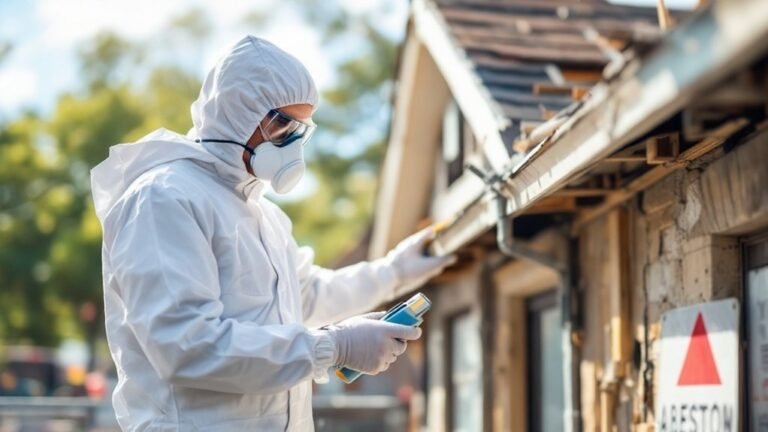
We’ll collect representative samples from suspected materials, such as vinyl tiles, pipe lagging, or roofing, without disturbing them unnecessarily.
Those samples must be analysed by a NATA-accredited laboratory so we can confirm asbestos presence and identify the asbestos class.
This classification matters because friable asbestos requires stricter controls, including a class A removal licence and mandatory air monitoring.
Collect Representative Samples
A representative sample is the evidence we’ll rely on before any suspect material is disturbed. We collect from every suspected material type—vinyl tiles, lino, pipe lagging, kitchen flooring, bathroom tile locks—because a single 1950s finish can hide asbestos across rooms.
For accurate asbestos identification, we follow sampling protocols, take multiple samples from each material, and keep them sealed, labelled, and traceable.
- We target areas likely to differ in age, adhesive, backing, or damage.
- We avoid unnecessary disturbance and use controlled cutting or scraping.
- We record locations, depths, and visible conditions for the demolition file.
- We send samples to a competent laboratory to confirm asbestos type and removal controls.
This record supports our Asbestos Removal Control Plan and helps us prevent unauthorised demolition exposure risks.
Identify Asbestos Class
Laboratory confirmation is the control point that turns suspect material into a defined asbestos class. We send representative samples to a NATA accredited laboratory, because visual checks don’t prove whether material contains asbestos or how it’s bound.
Once the report confirms fibre type and friability, we classify it for demolition controls. Friable asbestos, such as pipe rope lagging, is easily crumbled and carries a high risk of asbestos fibre release, so it requires a Class A removal licence and airborne fibre monitoring.
Non-friable, bonded material, like 1950s dimpled vinyl floor tiles, may need a Class B licence if the removal area exceeds 10 m².
If the type or friability is uncertain, we treat it as the most hazardous form until lab testing proves otherwise.
Hire a Licensed Asbestos Removalist
Once asbestos is found before demolition, we’ll need to engage a licensed asbestos removalist for any work covered by the WHS asbestos removal licensing rules.
We should choose a licensed company that can verify the correct licence class for the asbestos identified. This supports legal compliance and demolition sequencing.
- Non-friable asbestos over 10 m² requires a Class A or Class B asbestos removal licence.
- Friable asbestos always requires a Class A licence, regardless of quantity.
- The removalist must notify Workplace Health and Safety Queensland before licensed removal begins.
- Using an unlicensed contractor can trigger enforcement action, including the $20,000 penalty plus $4,449 costs seen in a Victoria case.
Prepare the Asbestos Removal Control Plan
After we’ve engaged the licensed asbestos removalist, we’ll require them to prepare an Asbestos Removal Control Plan (ARCP) before demolition or licensed removal work commences, in line with the How to safely remove asbestos Code of Practice 2021.
The ARCP must clearly specify controls for friable pipe lagging: Class A licensing, mandatory air monitoring during removal, and decontamination. We’ll check wet spray saturates surfaces to suppress fibre release.
It must also show site security, including warning signs, barricades, and exclusion zones to stop unauthorised access. Decontamination facilities for workers, plant, and equipment need positioning before work starts.
We’ll confirm effective containment, waste handling, and removal of contaminated soil scraped 30–50 mm deep, double-bagged in 200 μm polythene, labelled, and transported to an approved landfill.
Dispose of Asbestos Waste and Get Clearance
The asbestos waste stream then becomes a controlled hazard: we’ll contain every item of asbestos waste in two layers of 200 μm polythene, label it clearly, and send it to an authorised landfill site as soon as practicable.
We won’t release the site for demolition until removal, disposal records, and clearance evidence confirm fibres are controlled and documented for the removal team, regulators, and onsite contractors.
- Class A work requires inspection by an independent licensed asbestos assessor and air monitoring during and after removal.
- The assessor issues a clearance certificate only when inspection and fibre results pass.
- Class B non-friable work requires inspection by an independent competent person.
- Incomplete removal leaves fibres airborne, so we keep the exclusion zone sealed until clearance is signed.
Frequently Asked Questions
Will Finding Asbestos Affect My Demolition Permit or Approval?
Yes, we’ll pause your demolition permit or approval until licensed asbestos professionals survey, classify, remove, and document the material. Regulators may require permit suspension, approval revocation, air monitoring, waste manifests, and clearance before work proceeds.
Does Asbestos Discovery Need to Be Reported to Local Authorities?
Yes, we’d report it immediately, following the asbestos reporting timeline and local jurisdiction notification rules. We’d document findings, notify required agencies, secure the area, and halt demolition until licensed abatement confirms compliance and worker safety.
How Much Can Asbestos Removal Add to Demolition Costs?
It can add 10%–30%, sometimes more, depending on asbestos abatement pricing and removal cost factors: material type, access, containment, air monitoring, waste disposal, and compliance. We’ll assess hazards before demolition to protect workers and occupants.
How Long Might Asbestos Removal Delay the Demolition Schedule?
We’d expect you’ll face delays from a few days to several weeks, depending on asbestos type, quantity, access, and clearance. Our pre abatement timeline and site prep duration must cover containment, removal, air monitoring documentation.
What Legal Liabilities Remain After Asbestos Is Removed?
We’d still retain post removal disclosure duties, documentation obligations, and potential ongoing liability claims if records are incomplete, workers are exposed later, or regulators find disposal, clearance testing, or notification failures after demolition begins onsite.
Final Thoughts
Once asbestos is found, we stop demolition, isolate the zone, and notify competent persons. We confirm the material type through licensed sampling, then engage a licensed removalist to prepare and follow an asbestos removal control plan. We don’t disturb suspect materials, cut, drill, or load waste until clearance is issued. By keeping records, using controlled disposal, and verifying air monitoring results, we protect workers, the public, and the site from ongoing exposure and regulatory breach.