Site Clearing vs Demolition: What Is the Difference?
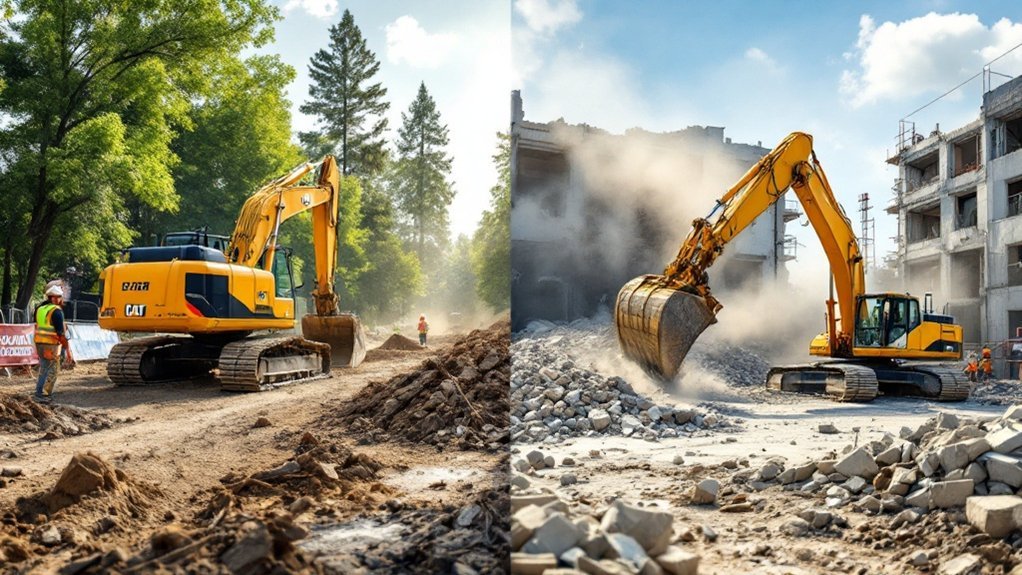
We see site clearing as the removal of vegetation, rocks, and debris to ready land for construction, while demolition focuses on tearing down structures and safely handling hazardous materials like asbestos. Demolition involves strict permits and specialized machinery, whereas site clearing uses equipment like bulldozers and mulchers for terrain prep. Both processes require careful planning, but their goals and regulations differ markedly. Keep exploring our overview to understand their distinct steps and safety measures.
What Site Clearing Means and How It Differs From Demolition
When we talk about site preparation, it’s essential to distinguish between site clearing and demolition since they serve different purposes.
The Site Clearing Definition focuses on removing vegetation, rocks, shrubs, and topsoil to level and prepare the ground for new foundations and access roads.
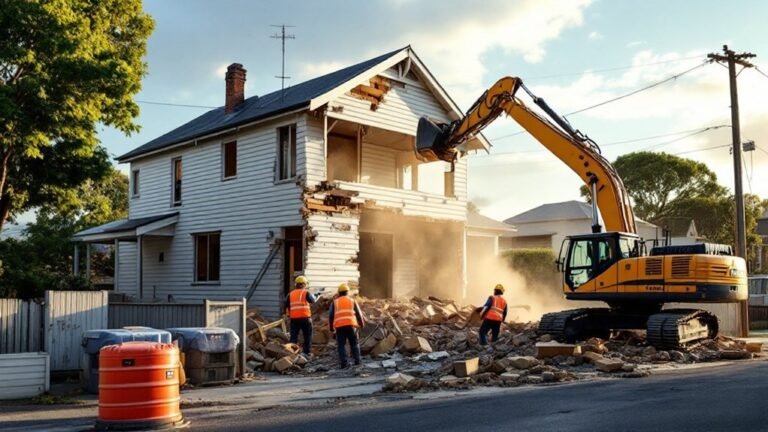
In contrast, demolition specifically targets dismantling or destroying existing structures, such as homes or commercial buildings.
Understanding Demolition vs Clearing hinges on their distinct scopes: demolition addresses building removal and often involves hazardous materials requiring certified disposal, while site clearing handles green waste, uncontaminated soil, and buried debris.
Demolition typically happens first on brownfield sites to remove structures; then site clearing follows to remove remaining vegetation and debris, preparing the site thoroughly for construction.
This clear division guarantees efficient and safe site preparation.
Why Demolition Targets Buildings While Site Clearing Handles Vegetation
Having established how site clearing and demolition serve distinct roles in site preparation, let’s explore why demolition specifically targets buildings while site clearing focuses on vegetation and ground materials.
Demolition requires specific demolition permits because it involves dismantling structures including hazardous materials, making it heavily regulated.
Site clearing, on the other hand, deals with removing non-protected vegetation, rocks, and debris using varied vegetation disposal methods, often after demolition finishes.
Here’s why they differ:
- Demolition focuses on structures to prepare for redevelopment or new construction.
- Site clearing removes organic obstacles, aiming to level and stabilize the ground.
- Demolition handles hazards like asbestos; site clearing manages stumps and debris.
This division guarantees each process safely and efficiently prepares the site for its next phase.
Key Steps Involved in Demolition Versus Site Clearing Processes
Let’s break down the key steps that set demolition and site clearing apart, starting with how demolition involves an initial site assessment and specialized hazard removal before tearing down structures.
In contrast, site clearing focuses on removing vegetation, managing soil contamination, and preparing the land through grading and levelling.
Understanding these distinct processes highlights differences in equipment use, waste management, and safety protocols.
Demolition Process Overview
Although demolition and site clearing share some overlapping steps, their processes diverge markedly in scope and focus. Demolition specifically concentrates on safely dismantling structures, starting with a thorough site evaluation and asbestos abatement by certified experts. The teardown utilizes mechanical, manual, or controlled implosion methods to bring down buildings efficiently.
Key demolition steps include:
- Evaluating hazards and structural stability prior to work
- Removing hazardous materials, including asbestos abatement
- Employing mechanical equipment or implosion methods for teardown
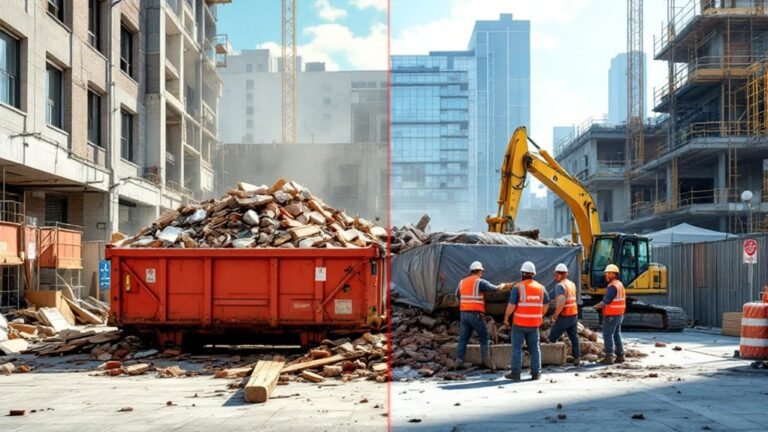
After demolition, debris removal prepares the site for excavation, concentrating on recycling materials like concrete, metal, and timber to reduce landfill waste. This focused process guarantees the safe and effective removal of structures before site clearing or construction begins.
Site Clearing Techniques
Once a structure has been safely dismantled and hazardous materials removed, the next phase focuses on site clearing. This involves removing non-protected trees, stripping vegetation, and eradicating detached structures such as sheds and decks—steps beyond demolition’s scope.
We rely on heavy machinery like excavators, bulldozers, and stump grinders to level the terrain, eliminate buried rubble, and prepare a stable surface for new foundations. Significantly, waste sorting plays a key role; we separate concrete, metal, timber, and green waste to maximize recycling efforts.
Concrete recycling, in particular, helps divert over 99% of debris from landfill. Finally, grading, compaction, and thorough inspection guarantee proper drainage and safety, completing the site clearing process efficiently and responsibly for future construction.
Hazard Management Differences
Managing hazard management requires distinct approaches in demolition versus site clearing processes.
Demolition demands stringent asbestos protocols and structural assessments before teardown, while site clearing focuses on detecting and removing buried hazards like chemical drums and sharps.
Both require compliance but with different priorities and techniques.
Key steps differ sharply:
- Demolition involves certified asbestos removal, submitting legal notices, and digital waste tracking for hazardous materials.
- Site clearing requires surveys for contaminated soil, managing green waste, and safely recycling highly degraded buried materials.
- Unforeseen risks such as underground oil tanks in demolition necessitate immediate client notification and proper decommissioning procedures.
How Safety and Environmental Rules Vary Between Demolition and Site Clearing
Steering safety and environmental rules requires understanding key differences between demolition and site clearing.
Demolition involves contrasting permit requirements, such as submitting a Section 80 Demolition Notice and adhering to asbestos regulations like the UK’s Control of Asbestos Regulations 2012. In contrast, site clearing doesn’t demand these permits but focuses on environmental laws addressing contaminated soil and vegetation waste management under the Environmental Protection Act 1990.
Safety protocols differ too—demolition mandates trained personnel and segregation barriers; site clearing prioritizes identifying hazards like buried sharps.
Disposal policies vary markedly: demolition requires recycling materials like drywall and metal per Metro Vancouver’s DCL Toolkit, whereas site clearing emphasizes soil screening and reuse to reduce landfill impact.
Understanding these distinct frameworks helps us guarantee compliant, safe, and environmentally responsible operations in both activities.
Equipment Used Uniquely in Demolition and Site Clearing Tasks
Although demolition and site clearing sometimes share equipment like excavators, the tools unique to each task highlight their distinct operational needs.
Demolition relies on heavily specialized machinery engineered for destruction and precision dismantling, while site clearing focuses on vegetation removal and land preparation.
Key equipment unique to demolition includes:
- Demolition excavators armored with hydraulic shears and crushers for breaking concrete and steel
- Implosion tools like explosives for bringing down large multi-story structures
- Jackhammers for precise manual dismantling
In contrast, site clearing uses tools customized for earth and vegetation management:
- Site clearing mulchers shredding shrubs and underbrush into mulch
- Stump grinders removing tree roots
- Bulldozers and backhoes pushing debris and leveling ground
These differences underscore how equipment choice aligns with the tasks’ objectives.
When to Hire Professionals for Demolition and Site Clearing Jobs
When dealing with demolition or site clearing, knowing when to hire professionals is essential for safety and efficiency. We recommend bringing in experts when hazardous materials like asbestos are involved since certified handlers must comply with the Control of Asbestos Regulations 2012.
For commercial projects, professionals guarantee regulatory compliance with local rules such as Metro Vancouver’s DCL Waste Management Toolkit and the Environmental Protection Act 1990, helping avoid costly fines.
Hiring a full-service demolition company also guarantees cost efficiency by conducting initial site surveys and soil testing to uncover hidden issues that could delay work.
Plus, their heavy-duty machinery clears sites up to 99% faster and maximizes recycling efforts, diverting over 99% of debris from landfills—all saving you time and money.
Final Thoughts
To conclude, understanding the difference between site clearing and demolition helps us choose the right approach for each project. Site clearing focuses on removing vegetation and preparing land, while demolition involves tearing down buildings and structures. Both require careful planning, specialized equipment, and adherence to safety and environmental regulations. When in doubt, hiring professionals guarantees the job is done efficiently and safely. Let’s always prioritize expertise to protect our investment and the environment.