What to Include When Requesting a Demolition Quote
When we’re requesting a demolition quote, we’ll include site details, photos, measurements, soil, slope, access limits, boundary clearances, overhead wires, easements, shared driveways, and neighbour constraints. We’ll flag asbestos testing, utility disconnections, trees, roots, old footings, tanks, pools, retaining walls, permits, licences, $20 million public liability, workers’ compensation, fencing, traffic management, dust control, rat baiting, grading, compaction testing, termite treatment, and clearance certificates. We’ll ask for itemised costs and what’s checked next as you continue.
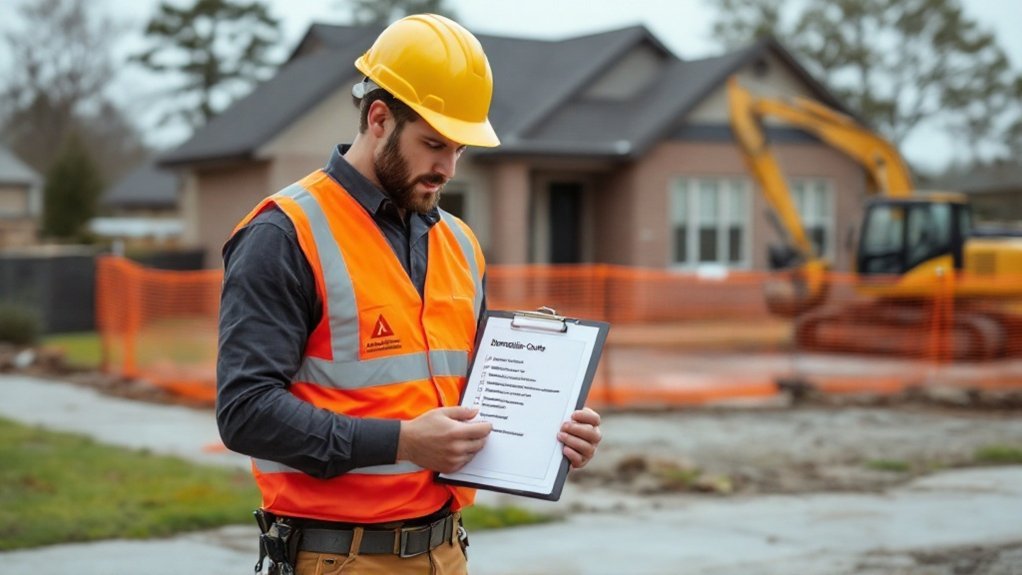
Prepare Your Demolition Quote Checklist
Before we request a demolition quote, we’ll build a property checklist that flags safety risks and variables, including asbestos likelihood in pre-1990 homes, slope, site access limits, underground services, and old footings or roots that could shift pricing by $5,000–$25,000. We’ll note asbestos testing at $400–$800, plus sewer, gas, water, electricity, bores, and septic disconnections; if excluded, they can add $3,000–$8,000.
We’ll record trees needing removal, protected zones, roots, and old footings, because each tree may cost $500–$2,000 and hidden obstacles raise labour and waste disposal. We’ll ask how debris recycling is handled, what fencing, traffic management, dust control, and rat baiting cost, and whether council or environmental controls cost $2,000–$6,000.
We’ll require post-demolition grading within 50mm, soil compaction testing, and final clearance certificate.
Check WA Demolition Licences, Insurance, and Permits
Once we’ve checked the quote checklist, we’ll verify the contractor’s legal and safety credentials before anyone touches the site.
In WA, demolition work must be done by a Demolisher with Building and Energy, DMIRS. We’ll match their class to the job: low rise for up to two storeys, medium rise for up to five, or unlimited for all structures. We’ll also confirm current public liability insurance of at least $20 million and workers’ compensation cover.
Before work starts, the demolition company must have the required local shire or council permit. We’ll check the permit application status. For homes built before 1990, we’ll require an asbestos survey by a licensed assessor. Unlicensed work or missing permits can trigger fines, stop-work orders, voided insurance, and liability.
Include Property Details for Your Demolition Quote
We’ll ask for your property address, block slope, soil type, and construction era so the quote reflects real site risks and testing needs.
Tell us whether it’s a single-storey or two-storey home, and list pools, garages, hard landscaping, or other structures that affect demolition time.
Also note site access issues like narrow streets, overhead power lines, close boundaries, trees, and underground services, because poor access can create safety hazards and major cost changes.
Building Type
When you ask us for a demolition quote, start with the building type—single-storey, two-storey, weatherboard, brick, garage, or commercial—because it shapes the method, access, safety controls, and price.
A two-storey home can add 20–40% to demolition costs, while a 2-car garage costs less than a 3-bedroom home of comparable size because its structure is simpler. Tell us the materials: weatherboard, brick, roofing materials, and bathroom fixtures that affect stripping or asbestos risk. If the home was built before 1990, include asbestos testing; it costs $400–$800 and can prevent $5,000–$25,000 variations later. Pools, hard landscaping, large trees, and underground obstacles matter, as pools can add 20–40% and tree removal can run $500–$2,000 per tree. We use this to plan safe methods properly before pricing accurately.
Site Access
After the building type, we’ll need your site access details to price the demolition safely and accurately. Tell us how trucks and machines enter, where they can turn, whether gates are wide enough, and what could block the path. Tight streets, rear blocks, overhead power lines, and close boundaries can slow work and raise safety risks.
| Access detail | Why we need it | Quote impact |
|---|---|---|
| Narrow streets | Machinery may need smaller equipment | Higher labour time |
| Rear access | Trucks may travel further | Longer debris removal |
| Sloped blocks | Stability and traction matter | Specialist plant needed |
| Coastal sites | Seasonal winds affect safety | Extra protection planned |
Include photos, measurements, and neighbour constraints, so we don’t guess on access, timing, or cost. It keeps quotes realistic and avoids surprise charges.
Share Access and Boundary Constraints
When we request a demolition quote, we’ll clearly note any narrow street access, tight turning areas, or limited entry points.
We’ll also identify the clearance to adjacent boundaries, fences, and nearby structures so the contractor can plan safe access and exclusion zones.
These details help prevent damage, reduce delays, and keep workers, neighbours, and passers-by safe.
Narrow Street Access
Narrow streets can quickly turn a straightforward demolition into a higher-cost job. If we’re quoting a site in Karrinyup, Claremont, Swanbourne, or any established suburb, tell us the exact street width, lane access, and overhead obstacles, especially power lines.
We need shared driveway details, easement limits, and any shared access agreements noted in writing; otherwise, they often become exclusions and can trigger $5,000–$25,000 in variation costs.
Restricted machinery movement can also stretch work from 5 to 10 days, increasing labour and equipment charges. Include boundary constraints, immediate neighbour proximity, dust control needs, council permits, utility disconnections, and fencing, traffic management, and safe access pricing.
Rear blocks and tight lanes may need specialised plant, so clear details protect the written quote and improve site safety.
Adjacent Boundary Clearance
Two metres of clearance can be the difference between a normal demolition and a constrained one, so tell us exactly how close the house sits to side and rear boundaries, retaining walls, neighbouring structures, pools, and hard paving. We need photos and measurements showing fence proximity, gate widths, overhead wires, neighbour walls, and driveways. Tight clearance can restrict machine access, increase dust risk, and push us toward smaller equipment, extra hand work, fencing, and traffic controls.
If pools, slabs, or retaining walls sit close to boundaries, costs can rise because removal takes longer and needs tighter sequencing.
Tell us whether you have rear access, narrow streets, or nearby buildings that must be protected. More detail means we’ll prepare a safer, more accurate demolition quote.
Flag Asbestos, Utilities, Trees, and Obstacles
Transparency keeps demolition quoting safe and accurate, so we’ll ask you to flag asbestos risks, utilities, trees, and site obstacles before pricing begins.
If your home was built before 1990, arrange asbestos testing before we price, because hidden asbestos can add $5,000–$25,000 once found.
Tell us about sewer, gas, water, electricity, bores, and septic tanks needing utility disconnection; together, these can add $3,000–$8,000.
List large trees, since tree removal and root grinding usually costs $500–$2,000 per tree.
Also identify underground tanks, old footings, buried concrete, narrow streets, overhead power lines, and close boundaries.
These issues affect access, disposal, safety controls, and labour time, and they can turn a five-day job into ten.
We need this upfront to prevent unsafe assumptions and late quote variations.
Request an Itemised Demolition Quote
A clear quote is more than a bottom-line price. We’d ask for a clear cost breakdown that shows every major task, so we can compare quotes and spot hidden fees before signing.
For pre-1990 homes, asbestos removal must be listed separately, because licensed removal can range from $3,000 to $45,000 depending on quantity.
Water, gas, electricity, sewer and bore disconnections should be itemised; they commonly add $3,000 to $8,000.
Council and environmental requirements, such as fencing, traffic management, dust control, rat baiting and permits, should appear as separate lines, $2,000 to $6,000.
Tree removal and root grinding, often $500 to $2,000 per tree, must be included.
Finally, we need confirmation that site grading to within 50mm, soil compaction testing and termite treatment are covered.
Frequently Asked Questions
How Long Does the Demolition Process Usually Take?
We’d usually estimate demolition in days to weeks, depending on size, access, and hazards. For you, site preparation and utility disconnection can add time, but we won’t rush safety steps or permits before work starts.
When Can Demolition Work Start After Quote Approval?
We can start once permits, approvals, utility disconnections, and safety plans are confirmed. Permit processing often sets the earliest date, then we’ll follow the site prep timeline for fencing, notices, disconnects, and final checks onsite.
Will Neighbours Need to Be Notified Before Demolition Begins?
Yes, we’ll notify affected neighbours when required, especially if Legal notices, shared access, or property boundaries are involved. We’ll also confirm local rules, set safe exclusion zones, and share timing so everyone knows what’s happening.
Can I Salvage Materials Before Demolition Starts?
Yes, we can salvage reusable materials before demolition starts, but we’ll agree on a salvage timeline, safety limits, and material storage plan. We’ll remove hazards, avoid structural elements, and document items for a smoother job.
What Dust and Noise Controls Will Be Used Onsite?
We’ll use Water suppression, sound barriers, sealed work zones, covered skips, and monitored hours to control dust and noise. We’ll keep neighbours informed, protect workers with PPE, and pause work if controls aren’t enough onsite.
Final Thoughts
We’ll keep our demolition quote requests clear, complete, and safety-focused. By checking licences, insurance, permits, property details, access limits, asbestos, utilities, trees, and obstacles, we’ll help contractors price accurately and avoid surprises. An itemised quote gives us a stronger basis for comparison and better site control. If anything changes, we’ll update the contractor before work starts. That’s how we protect people, property, timelines, and budgets, and reduce avoidable risks throughout project from start to finish.