Asbestos Waste Disposal Rules for Melbourne Projects
We handle asbestos waste disposal in Melbourne by strictly following Environment Protection Regulations 2021. We guarantee asbestos is wet, double-wrapped in thick polythene, and clearly labeled before transport. Only licensed operators with EPA A10a permits manage high-risk waste, while small amounts can be self-disposed at registered sites. Friable asbestos requires Class A removalists and secure containment. Detailed records and disposal receipts are mandatory for compliance. Understanding these rules is key to legally and safely managing your asbestos project.
Legal Requirements for Asbestos Waste Disposal in Melbourne
Regarding disposing of asbestos waste in Melbourne, we must follow strict legal requirements set out by Victoria’s Environment Protection Regulations 2021.
Asbestos waste is classified as reportable priority waste, so specific permissions like A01 for management and A10a for high-risk transport are mandatory.
Friable asbestos removal demands strict controls and often requires licensed professionals under asbestos management plans to reduce health risks.
Commercial entities must use EPA-licensed transporters, such as AAH Contracting, while limited amounts can be disposed of personally at registered sites.
Any removal of non-friable asbestos by employers or self-employed persons is restricted if the area is under 10 square metres and removal time under one hour.
Legal compliance is critical; failing to adhere to regulations, including proper waste classification, invites severe penalties under Victorian law.
How to Safely Package Asbestos Waste for Transport
When transporting asbestos waste, we must confirm it’s packaged following strict safety protocols to prevent contamination and exposure risks.
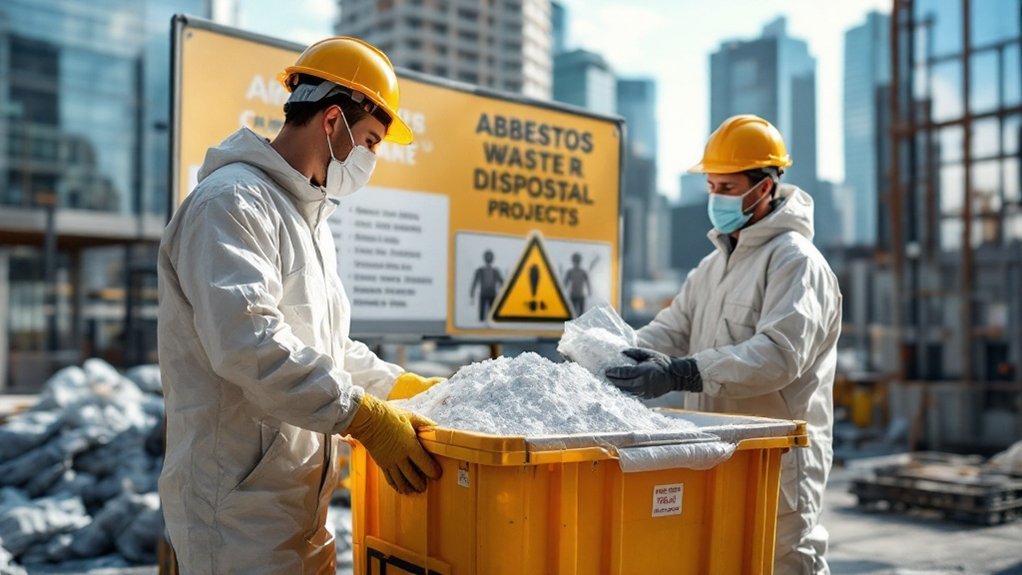
For asbestos cement sheeting, all pieces must be kept in a wet condition until fully sealed to minimise fibre release; cutting or breaking during packaging is prohibited.
We apply double wrapping, using two layers of polythene sheeting at least 0.2mm thick, sealed tightly with adhesive tape.
Friable asbestos requires containment within a securely sealed, polythene-lined drum or bin, also kept wet to reduce airborne fibres.
Every package must be clearly labeled with asbestos warnings.
Following these exact packaging procedures is mandatory under Victorian regulations, ensuring safe handling and legal compliance, and preventing hazardous exposure during transport to approved disposal facilities.
Who Can Transport Asbestos Waste and What Licences Do They Need?
Ensuring asbestos waste is packaged correctly is only part of the process; knowing who’s authorized to transport it’s equally important.
In Victoria, transporting asbestos waste requires strict adherence to Environment Protection Regulations 2021 and an EPA permission such as the A10a permit for high-risk transport.
Only operators holding this licence may legally move asbestos waste to comply with regulatory weight limits—EPA crane trucks by licensed contractors like AAH Contracting can handle up to 3 tonnes per load.
While individuals may dispose of limited quantities themselves, the complexity and licensing costs make engaging EPA-licensed transport services the safest and most compliant option.
This guarantees all legal responsibilities are met, reducing risk and liability on your Melbourne project.
Where and How to Dispose of Asbestos Waste in Melbourne
How should we dispose of asbestos waste safely and legally in Melbourne? We must only use registered disposal sites, as placing asbestos waste in household or commercial bins is illegal due to asbestos risks.
As asbestos waste is classified as reportable priority waste under the Environment Protection Regulations 2021, strict packaging rules apply. For asbestos cement sheeting, wet it, double-wrap in 0.2mm polythene sheeting, seal, and label clearly.
Friable asbestos demands containment in a wet, polythene-lined drum or bin, secure sealing, and transport only by an EPA-licensed removalist holding a Class A license. Services like AAH Contracting offer EPA-compliant removal with crane trucks for up to 3 tonnes, ensuring safe disposal across Melbourne.
While disposal costs reflect regulatory compliance and risk mitigation, adhering to these standards protects public health and the environment effectively.
How to Keep Records and Stay Compliant With Asbestos Disposal Laws
Although asbestos disposal involves rigorous handling protocols, maintaining accurate records is equally critical to comply with Victorian regulations. To mitigate downstream liability, all asbestos waste movements must be documented, starting with Waste Tracker records provided by licensed removalists when transporting waste to EPA-licensed sites.
Even for non-friable removal under 10 square metres, retaining disposal receipts is mandatory. Class A licence holders must also keep exhaustive records of air monitoring, control plans, and final clearance certificates, ensuring zero asbestos hazard remains.
We recommend implementing digital recordkeeping systems to securely store and retrieve these documents, supporting audits and demonstrating compliance. Adhering to these documentation standards not exclusively meets legal requirements but also safeguards project stakeholders from potential liabilities throughout the asbestos disposal process.
Final Thoughts
As we’ve outlined, adhering to Melbourne’s asbestos waste disposal rules is essential for safety and legal compliance. By properly packaging asbestos, using licensed transporters, and disposing of waste at approved sites, we protect ourselves and our communities. Let’s also maintain thorough records to guarantee transparency and accountability. Staying informed and compliant isn’t just regulation—it’s our responsibility. Together, we can manage asbestos risks effectively and uphold Melbourne’s strict environmental and health standards.